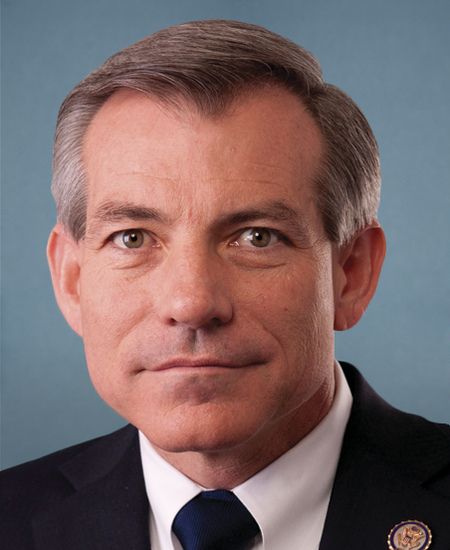
Photo of David Schweikert
R United States House · District 1 · Arizona

Rep. David Schweikert

Compare
Total votes
2,818
all sessions
Attendance
99%
22 missed
Near the chamber average
With party
92%
of cast votes
Near the chamber average
Bipartisan score
4%
crosses aisle rarely
Near the chamber average
Sponsored
503
bills & resolutions
Lower than 90% of chamber peers
Committees
4
assignments
503 bills and resolutions

Sponsored bills

Total
503
Primary
83
Co-sponsor
420
This page
503
matching current filters
Co-sponsor HR 589
Passed · Florida House · Co-sponsor
MAHSA Act

Maddy summaryHR 589, the MAHSA Act, imposes U.S. sanctions on Iran's Supreme Leader, President, and affiliated entities responsible for human rights abuses and terrorism. It targets the Supreme Leader's Office, the President's cabinet, security forces involved in the crackdown following Mahsa Amini's death, and entities financing abuses. The bill requires the President to annually determine and apply existing sanctions - like property blocking and visa bans - against these individuals and entities. This directly affects Iran's top leadership and security apparatus, aiming to hold them accountable for abuses including the Morality Police's role in Amini's detention and the subsequent violent suppression of protests.

Passed Dec 17, 2024 1 co-sponsor
Primary HR 207
In committee · Florida House · Lead sponsor
Advanced Safe Testing at Residence Telehealth Act of 2023

Maddy summaryThe Advanced Safe Testing at Residence Telehealth Act of 2023 establishes a Medicare demonstration program to expand coverage for at-home medical tests and telehealth consultations through Medicare Advantage plans. It requires participating plans to cover specific tests (including cancer screenings, diabetes tests, allergy tests, and respiratory condition diagnostics) and "assistive telehealth consultations" that help patients with at-home testing. The program mandates collection of demographic data on beneficiaries and requires a 5-year evaluation to measure impacts on patient care, hospitalizations, and healthcare costs, with a focus on rural and underserved populations. It also includes a separate pilot program for veterans to access similar services through the Department of Veterans Affairs.

In committee Dec 17, 2024 0 co-sponsors
Co-sponsor HR 7438
Signed into law · Florida House · Co-sponsor
FIFA World Cup 2026 Commemorative Coin Act

Maddy summaryHR 7438 directs the U.S. Treasury to mint commemorative coins for the 2026 FIFA World Cup, including 100,000 $5 gold coins, 500,000 $1 silver coins, and 750,000 half-dollar coins. The coins will be sold to the public at face value plus surcharges ($35, $10, and $5 per coin, respectively), with all surcharge revenue paid to FWC2026 US, Inc. for U.S. soccer programs. These funds must support soccer initiatives, particularly in underserved communities and youth development, as specified in the bill. The coins are legal tender but will only be issued during 2026, with no net cost to the U.S. government.

Signed into law Dec 11, 2024 1 co-sponsor
Co-sponsor HR 190
In committee · Florida House · Co-sponsor
Saving Gig Economy Taxpayers Act

Maddy summaryThis bill reinstates a pre-American Rescue Plan Act (ARP) tax reporting rule for gig economy platforms. It requires third-party payment platforms (like Uber or DoorDash) to report transactions to the IRS only if a gig worker earns over $20,000 in total or completes more than 200 transactions in a year. This directly affects gig workers whose income falls below these thresholds, exempting them from the reporting requirement. The provision effectively reverses a change made by the ARP, reducing administrative burden for both platforms and lower-earning gig workers. The bill amends IRS Code Section 6050W to restore these specific de minimis payment thresholds.

In committee Dec 10, 2024 1 co-sponsor
Co-sponsor HR 6751
Passed · Florida House · Co-sponsor
Roberto Clemente Commemorative Coin Act

Maddy summaryHR 6751 authorizes the U.S. Mint to produce commemorative coins honoring Roberto Clemente, a Hall of Fame baseball player and humanitarian, including 50,000 $5 gold coins, 400,000 $1 silver coins, and 750,000 half-dollar coins. The coins must feature Clemente's image and inscriptions like "Roberto Clemente" and "2027," with all sales including a surcharge ($5-$35 per coin) paid to the Roberto Clemente Foundation. The foundation, which supports youth sports, education, and disaster relief programs, will use these funds for its mission, while the U.S. Treasury must recover all production costs. The coins will be sold exclusively in 2027, with no net cost to the government.

Passed Dec 5, 2024 1 co-sponsor
Co-sponsor HR 807
Signed into law · Florida House · Co-sponsor
Working Dog Commemorative Coin Act

Maddy summaryThe Working Dog Commemorative Coin Act (HR 807) directs the U.S. Treasury to mint three types of commemorative coins honoring working dogs' service: $5 gold coins, $1 silver coins, and half-dollar coins with specific weight and composition requirements. Each coin will carry a surcharge ($35 for $5 coins, $10 for $1 coins, $5 for half-dollars) that will be paid directly to America's VetDogs to support their programs providing service dogs for veterans, the disabled, and others. The coins will be issued in 2027 with designs reflecting working dogs' roles in military, detection, therapy, and assistance work. The legislation specifies that all surcharge revenue must fund America's VetDogs' operations without creating new government programs. This is a commemorative measure focused on honoring working dogs' contributions through coin sales, with all surcharge funds going to a specific nonprofit organization.

Signed into law Nov 25, 2024 1 co-sponsor
Co-sponsor HR 6951
In committee · Florida House · Co-sponsor
College Cost Reduction Act

Maddy summary# Summary of Proposed Higher Education Act Amendments This document outlines significant proposed amendments to the Higher Education Act of 1965, primarily as part of the "College Cost Reduction Act." The key elements include: ## Accreditation Reform - Major overhaul of accreditation standards, requiring accrediting agencies to demonstrate independence from trade associations - New requirements for accrediting agencies to assess student achievement outcomes, including median value-added earnings relative to median total price charged - Introduction of an "Alternative Quality Assurance Experimental Site Initiative" to test non-accredited institutions - Protections for religious institutions, including a new process for appealing accreditation decisions related to religious mission - Removal of "litmus tests" that would require institutions to support specific political viewpoints ## Student Success Initiatives - Establishment of "Postsecondary Student Success Grants" to increase participation, retention, and completion rates for high-need students - Focus on evidence-based practices, with tiered requirements (tier 1, 2, and 3 reforms) - Mandatory inclusion of high-need student populations (low-income, first-generation, military-connected, etc.) - Requirements for institutions to report on completion rates, retention rates, and student demographics ## Regulatory Changes - Repeal of numerous existing regulations including: * Closed school discharges * Borrower defense to repayment * Pre-dispute arbitration * False certification requirements * Ability-to-benefit rules * Financial responsibility regulations - New restrictions on incentive compensation for recruiters - Changes to third-party servicer definitions and regulations ## Transfer and Credit Policies - New requirement that institutions cannot deny transfer credit based solely on the source of accreditation - Requirements for transparent transfer policies - Changes to reverse transfer policies ## Other Key Provisions - Modifications to the National Advisory Committee on Institutional Quality and Integrity (NACIQI) - New definitions for "total price" and "value-added earnings" - Changes to the process for institutions to change accrediting agencies - New requirements for institutions to report on student outcomes The overall focus of these proposed amendments is to reduce regulatory burden on institutions, promote transparency, improve student outcomes (particularly for high-need students), modernize accreditation processes, and protect religious institutions' rights in accreditation decisions.


In committee Nov 18, 2024 1 co-sponsor
Co-sponsor HR 9942
In committee · Florida House · Co-sponsor
Valley Fever Awareness and Vaccine Development and Manufacturing Act of 2024

Maddy summaryThis bill establishes a federal coordinator within the Department of Health and Human Services to advance valley fever (coccidioidomycosis) vaccine development, licensing, and manufacturing by 2034. It requires a national strategy detailing scientific progress, funding needs, and regulatory pathways, with grants of $500,000-$2.5 million for vaccine development and $500,000-$5 million for manufacturing. The bill also creates a National Valley Fever Registry to collect non-identifiable case data and improve diagnosis, funded through $26 million in authorized appropriations. It directly affects researchers, vaccine manufacturers, patients in endemic regions (like the Southwest U.S.), and public health agencies coordinating vaccine efforts.

In committee Oct 8, 2024 1 co-sponsor
Co-sponsor HR 9891
In committee · Florida House · Co-sponsor
To designate the facility of the United States Postal Service located at 765 West Old Route 66 in Ash Fork, Arizona, as the "Fayrene Hume Post Office Building".

Maddy summaryThis bill designates the U.S. Postal Service facility at 765 West Old Route 66 in Ash Fork, Arizona, as the "Fayrene Hume Post Office Building." It directly affects that specific postal facility by changing its official name in all federal references. The key provision requires all federal documents, maps, and records to use the new name instead of the previous designation. This is a purely ceremonial renaming with no policy changes or financial impact.

In committee Oct 1, 2024 1 co-sponsor
Co-sponsor HR 3433
Passed · Florida House · Co-sponsor
Give Kids a Chance Act of 2024

Maddy summaryHR 3433, the "Give Kids a Chance Act of 2024," requires pharmaceutical companies developing certain cancer drugs to conduct pediatric studies if the drugs target molecular pathways relevant to childhood cancers. It directly affects drug manufacturers submitting new applications for cancer treatments, particularly those combining previously approved adult cancer drugs or containing a single new active ingredient. The bill amends FDA regulations to mandate these pediatric investigations only when specific conditions are met, such as when a drug's molecular target is relevant to pediatric cancer growth. The FDA must issue implementing guidance within 12 months, and reports to Congress will track implementation and effectiveness starting 2 years after enactment.

Passed Sep 24, 2024 1 co-sponsor
Showing 161 to 170 of 503 bills
Previous 1 16 17 18 51 Next