

Maddy summaryHR 537 authorizes a Congressional Gold Medal to honor 60 diplomats who saved Jewish lives during the Holocaust by issuing visas and passports against their governments' orders, risking expulsion and personal danger. The medal will be presented to the next of kin of these diplomats, alongside representatives from their home countries, and permanently displayed at the United States Holocaust Memorial Museum. The bill also permits the sale of bronze duplicates to cover production costs, with proceeds going to the U.S. Mint. This legislation recognizes the diplomats' humanitarian actions without creating new government programs or altering existing laws.
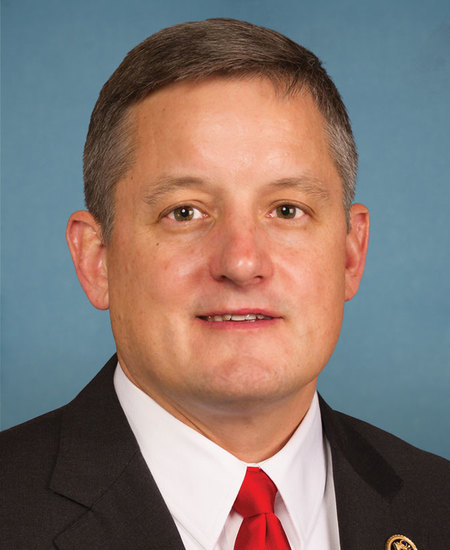
Rep. Bruce Westerman
Sponsored bills
Maddy summaryHR 5403, the CBDC Anti-Surveillance State Act, prohibits the Federal Reserve from issuing or facilitating central bank digital currency (CBDC) directly or indirectly to individuals through financial institutions. It specifically bans Federal Reserve banks from offering digital products to individuals, maintaining individual accounts, or using CBDC for monetary policy implementation. The bill also clarifies that its restrictions do not apply to existing physical cash or private, permissionless digital payment systems. This bill directly affects the Federal Reserve's ability to develop or deploy a government-run digital dollar. The law aims to prevent the Federal Reserve from creating a digital currency that could enable transaction tracking or government oversight of personal financial activity.
Maddy summaryThis resolution (HRES 1252) honors emergency medical services (EMS) personnel across the United States for their critical work. It recognizes their 24/7 service in rural and underserved areas, their role in stabilizing and transporting patients during emergencies, and their dedication to public health care. The resolution specifically expresses appreciation for EMS workers during Emergency Medical Services Week (May 19-25, 2024). As a ceremonial resolution, it contains no new policies, funding, or legal requirements - only symbolic recognition of their contributions.
Maddy summaryHR 3317, the Rolling Stock Protection Act, removes a lifetime exemption in federal procurement rules for railroad equipment (rolling stock). It amends U.S. Code Section 5323(u)(5) to eliminate an exception that previously allowed certain government contracts to bypass standard procurement requirements indefinitely. This change directly affects federal agencies and contractors purchasing railroad equipment, requiring all such contracts to follow standard procurement processes without permanent exemptions. The bill makes a technical adjustment to existing law, ensuring consistent application of procurement rules for all rolling stock contracts.
Maddy summaryThe BUILD Act creates a federal grant program to fund economic development projects led by universities located in economically distressed communities. It targets institutions in areas where median household income is at least 25% below state or national averages, as defined by specific income thresholds. Universities receive planning grants (up to $100,000 annually for 2 years) to develop projects, followed by implementation grants (minimum $25 million, maximum $50 million over 5 years) for approved initiatives like renovating community-accessible buildings, establishing small business support programs, building broadband infrastructure, or creating health clinics. These projects must directly benefit the surrounding distressed community and are restricted to eligible institutions meeting the bill's criteria.
Maddy summaryHJRES 143 is a congressional resolution seeking to block a Department of Labor rule that would amend specific exemptions for retirement investment transactions. The bill targets a rule (published April 25, 2024) that would change how retirement funds can invest, particularly affecting retirement plan providers and fiduciaries managing employee savings. It directs Congress to disapprove the rule under a specific federal law, meaning the rule would not take effect if passed. This is a procedural step to halt the rule's implementation, not a new policy change.
Maddy summaryHJRES 140 is a resolution requesting Congress to disapprove a Department of Labor rule that amended Prohibited Transaction Exemption 2020-02. The rule, published in the Federal Register on April 25, 2024, would have changed how retirement plan fiduciaries can engage in certain investment transactions, specifically affecting retirement account providers and administrators. If approved, this resolution would block the rule from taking effect, directly impacting entities managing retirement funds that rely on the exemption framework. The bill uses the statutory disapproval process under Chapter 8 of Title 5, U.S. Code, to halt the rule’s implementation.
Maddy summaryH.J.Res. 141 is a congressional resolution disapproving a Department of Labor rule (89 Fed. Reg. 32302, April 25, 2024) that amended Prohibited Transaction Exemption 84-24. This rule would have changed regulations governing retirement investment transactions, specifically affecting how financial institutions and retirement plan administrators handle certain transactions. The resolution, if passed, would block the rule from taking effect by invoking the disapproval process under Title 5 of the U.S. Code. It directly impacts retirement plan providers and financial firms that rely on this exemption for investment activities. The bill does not create new policy but seeks to prevent the implementation of the specific Department of Labor rule.
Maddy summaryHRES 1226 is a non-binding resolution honoring 282 law enforcement officers killed in the line of duty during 2023, listed by name in the resolution. It formally acknowledges their sacrifice, expresses unwavering support for current officers, and recognizes the need for adequate resources to protect them. The resolution does not create new laws or policies but serves as a ceremonial tribute to memorialize fallen officers and support their families, aligning with existing National Police Week observances established since 1962.
Maddy summaryHR 7109, the Equal Representation Act, requires the U.S. Census Bureau to add a citizenship status checkbox to the 2030 and future decennial censuses, asking respondents to identify if they are U.S. citizens, U.S. nationals, lawful residents, or unlawful residents. It then mandates excluding noncitizens (both lawful and unlawful residents) from the population count used to determine each state's number of congressional seats and electoral votes starting with the 2030 census. This bill directly affects how states are apportioned representation in Congress and presidential electoral votes, based solely on the citizen population. The key change is shifting the apportionment base from total population to citizen population alone, using the new census data.