

Maddy summaryThis resolution (HRES 1117) is a formal statement by the U.S. House of Representatives opposing efforts to pressure Israel regarding Gaza. It specifically criticizes calls for an immediate ceasefire, including President Biden's April 4, 2024, statement and UN Security Council Resolution 2728, which the resolution claims was adopted due to the U.S. not vetoing it. The resolution affirms Israel’s right to self-defense following the October 7 Hamas attacks and emphasizes the U.S.-Israel relationship as a major strategic partnership. As a non-binding resolution, it does not change laws or policies but expresses the House’s position on diplomatic pressure related to Gaza.
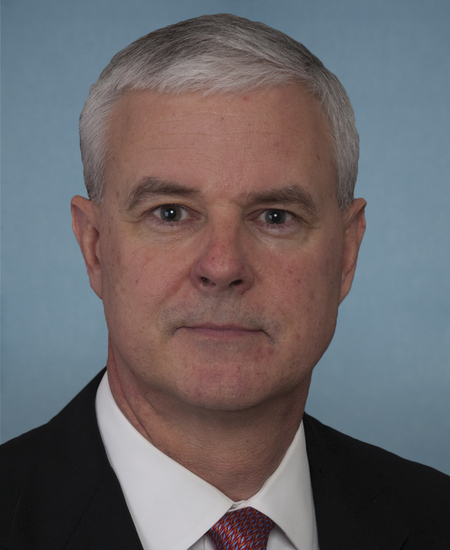
Rep. Steve Womack
Sponsored bills
Maddy summaryHRES 1127 is a symbolic House resolution commemorating the 45th anniversary of the Taiwan Relations Act (TRA) and reaffirming U.S. policy toward Taiwan. It does not create new law but formally reiterates the U.S. commitment to Taiwan under the TRA framework, including regular defense transfers to support Taiwan's self-defense and advocacy for Taiwan's meaningful participation in international organizations. The resolution highlights longstanding U.S.-Taiwan cooperation on trade, security, education, and global challenges like public health and cybersecurity. It specifically calls on the Secretary of State to advance Taiwan's international engagement and supports existing programs like the Taiwan Fellowship Program and the American Institute in Taiwan. As a procedural resolution, it expresses congressional support for current policy without altering legal obligations.
Maddy summaryH.J.Res. 116 seeks to block a Department of Labor rule finalized on January 10, 2024, which aimed to clarify how businesses classify workers as employees or independent contractors under the Fair Labor Standards Act (FLSA). If passed, this resolution would prevent the rule from taking effect, directly affecting businesses that use independent contractors and their workers, who rely on FLSA protections for minimum wage and overtime pay. The bill uses a specific congressional process (under Chapter 8 of Title 5, U.S. Code) to disapprove the rule, rather than creating new policy. This action would maintain the existing classification standards until a new rule is established.
Maddy summaryHR 7801, the Sultana Steamboat Disaster Commemorative Coin Act of 2024, authorizes the U.S. Mint to produce commemorative coins honoring the 1865 Sultana steamboat disaster - the worst maritime disaster in U.S. history, which killed nearly 1,200 people. The bill specifies three coin types ($5 gold, $1 silver, and half-dollar clad) to be minted between January 1, 2027, and December 31, 2027, with surcharges from sales directed to the Sultana Historical Preservation Society for museum development and artifact preservation. The coins will be sold at face value plus surcharges ($5-$35 per coin), and the funds must support constructing a museum, exhibits, and preserving disaster-related history. This bill does not create new laws but enables commemorative coin sales to fund a specific historical preservation effort.
Maddy summaryHRES 987 is a symbolic resolution introduced in the U.S. House of Representatives on January 31, 2024, by multiple Republican members. It formally denounces the Biden administration’s energy policies as "harmful" and "anti-American," citing specific actions like canceling the Keystone XL pipeline, restricting federal land leasing for oil and gas, blocking LNG exports, and implementing mineral extraction rules. The resolution does not create new laws or affect any group directly; it serves only as a formal expression of disapproval by the House. It has no legal effect and is intended to convey political opposition to the administration’s approach to energy development.
Maddy summaryHR 6727 establishes the United States Foundation for International Conservation, a nonprofit organization that will provide grants to support long-term management of protected and conserved areas in eligible countries. The Foundation requires a 2:1 cost match from other sources, demands host country and community consent through binding agreements, and prioritizes areas with high biodiversity or species of significant importance. It will be governed by a Board of Directors including government officials and private sector experts, operate for 10 years with $1 million authorized for 2024 and $100 million annually from 2025-2035, and must follow international conservation standards while prohibiting funding for countries supporting terrorism or violating human rights.
Maddy summaryThe Protecting American Energy Production Act (HR 1121) states that Congress believes states should have primary authority to regulate hydraulic fracturing for oil and gas production on state and private lands. It prohibits the President from declaring a moratorium on hydraulic fracturing without specific authorization from Congress. This bill directly affects federal and state governments by limiting the executive branch’s power to halt hydraulic fracturing operations and reinforcing state regulatory control. The key provision ensures any federal restriction on hydraulic fracturing would require a new law passed by Congress, not a presidential order.
Maddy summaryHCONRES 94 is a procedural bill correcting a clerical error in the title of H.R. 4366, a fiscal year 2024 appropriations bill. It directs the House Clerk to amend the bill's title to read: "Making consolidated appropriations for the fiscal year ending September 30, 2024, and for other purposes." This correction ensures the official record aligns with the bill's actual purpose, which is to fund government operations. The change addresses a technical enrollment error and does not alter the bill's substance or policy.
Maddy summaryHR 7563, the Food Traceability Enhancement Act, modifies FDA food safety rules to ease requirements for certain businesses. It shortens recordkeeping periods from 2 to 1 year and exempts restaurants, retail food establishments, and warehouses from maintaining or sharing traceability lot code information. The bill mandates 9 pilot projects testing outbreak investigations without lot codes and evaluating low-cost tracing technologies, with specific sector and commodity diversity requirements. It delays compliance for existing traceability rules until 2 years after the pilots conclude, and requires a report on FDA information-sharing barriers with food businesses.
Maddy summaryThe Uyghur Policy Act of 2023 establishes a U.S. Special Coordinator for Uyghur Issues within the State Department to coordinate policy and advocate for the protection of Uyghur cultural, religious, and linguistic identity in Xinjiang. It authorizes $250,000 annually for Uyghur human rights advocates to speak at public diplomacy events in Muslim-majority countries and mandates Uyghur language training for U.S. diplomats. The bill also directs the U.S. government to support United Nations monitoring of Xinjiang human rights issues and oppose efforts to block discussions of Xinjiang at the UN. These provisions focus on diplomatic advocacy and information-sharing, not direct sanctions or enforcement actions against China.