

Worker Health Coverage Protection Act This bill provides health insurance premium assistance to individuals who become unemployed or are furloughed during the period beginning on March 1, 2020, and ending on September 30, 2021. Specifically, the bill treats premiums as paid for individuals who (1) are terminated from employment and elect to continue insurance coverage through the COBRA (Consolidated Omnibus Budget Reconciliation Act) program during such period, or (2) receive more than a 30% reduction in work hours during such period but remain eligible for coverage under a group health plan. The bill also specifies requirements for individuals changing, or enrolling in, health plans under the program. Additionally, the bill requires employers to provide eligible individuals specified written notice about this health insurance premium assistance, including, among other information, available health plan enrollment options and the date that such assistance expires. The Department of the Treasury must reimburse employers, group health plans, and insurance issuers through a payroll tax credit or refund for unpaid premiums that were treated as paid under the program. Premium assistance is not considered income for federal income tax purposes or for determining eligibility for federal or state benefits or assistance.
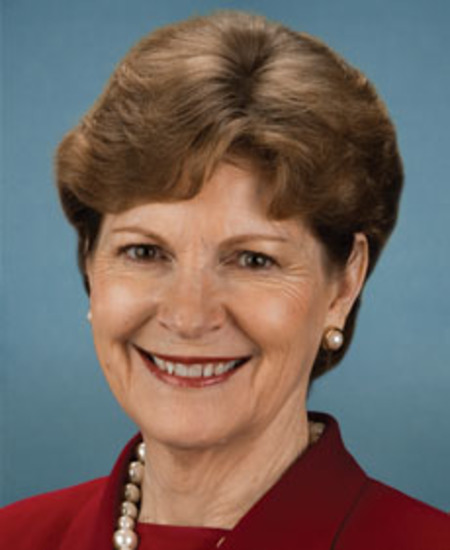
Sen. Jeanne Shaheen
Sponsored bills
This bill provides funds for assistance to homeowners to prevent mortgage defaults, foreclosures, and displacements of individuals and families experiencing financial hardship after January 21, 2020. The Department of the Treasury must disburse the funds to state housing finance agencies, territories, and Indian tribes for the provision of such assistance.
Family and Medical Insurance Leave Act or the FAMILY Act This bill entitles every employee to a family and medical leave insurance (FMLI) monthly benefit payment of two-thirds of the employee's regular pay, limited to a maximum of $4,000, for not more than 60 days of qualified caregiving. The bill establishes the Office of Paid Family and Medical Leave within the Social Security Administration to administer the FMLI program. An FMLI benefit payment must be coordinated with any periodic benefits received under a state or local temporary disability insurance or family leave program. The bill imposes a tax on employers, employees, and self-employed individuals to fund FMLI benefits. It also establishes the Federal Family and Medical Leave Insurance Trust Fund to hold tax revenues.
Fairness in Orphan Drug Exclusivity Act This bill limits which orphan drugs may be granted a market exclusivity period by the Food and Drug Administration (FDA). (Generally, an orphan drug is one that is not economically viable because of the rarity of the disease that it treats; the sponsor of an FDA-designated orphan drug may be granted various incentives, such as a seven-year period in which the FDA may not grant market approval to a different sponsor for the same drug to treat the same disease.) Under this bill, if a drug is designated as an orphan drug on the basis that there is no reasonable expectation that the sponsor will recover the costs of developing and distributing the drug from U.S. sales, the drug shall be granted the seven-year exclusivity period only if the sponsor demonstrates that there is no reasonable expectation that it will recover such costs specifically within its first 12 years of U.S. sales of the drug. This requirement shall also apply retroactively to an orphan drug that was granted such an exclusivity period before this bill's enactment. When deciding whether an orphan drug meets this requirement, the FDA shall consider the sales of all drugs from the sponsor that are covered by the same orphan drug designation.
Emergency Family Stabilization Act This bill establishes a competitive grant program within the Administration for Children and Families (ACF) for family stabilization agencies to provide emergency relief to children, youth, and families experiencing homelessness. These agencies include current ACF grantees or subgrantees, Indian tribes, tribal organizations, Native Hawaiian organizations, and other organizations with expertise providing direct services to those experiencing homelessness. Recipients may use grant funds for, among other purposes, personnel costs, personal protective equipment, and other supplies to mitigate the spread of COVID-19 (i.e., coronavirus disease 2019), as well as payments for security deposits and other housing-related needs. Additionally, the ACF must award the grants based on factors including the need for the services in the area served by the agency and specified allocation and prioritization requirements.
Safe and Affordable Drugs from Canada Act of 2021 This bill requires the Food and Drug Administration (FDA) to allow for the personal importation of prescription drugs from Canada in certain instances. Such a drug must (1) be purchased from an approved Canadian pharmacy and dispensed by a pharmacist licensed in Canada; (2) be purchased by an individual for personal use only and in quantities not to exceed a 90-day supply; (3) be filled using a valid prescription from a physician licensed in a U.S. state; and (4) have the same active ingredients, route of administration, dosage form, and strength as an FDA-approved drug. Certain types of drugs may not be imported under this program, such as controlled substances, biological products, or intravenously injected drugs. An approved pharmacy under this program must be located and licensed in Canada and meet additional requirements, such as participation in ongoing and comprehensive quality assurance programs. The FDA shall publish a list of approved Canadian pharmacies on a website.
This bill expedites the approval process for renewable fuels under the renewable fuel standard (RFS) program. The existing RFS program requires transportation fuel to contain a minimum volume of renewable fuel. Producers must register renewable fuels under the program. The bill considers an application to register a renewable fuel under the RFS program to be approved by the Environmental Protection Agency (EPA) if the fuel has been approved under any state renewable fuel program. It also establishes a deadline for the EPA to make a decision on any pending application for a renewable fuel that has not yet been approved under any state program. In addition, the bill establishes deadlines for the EPA to make decisions on pending pathway petitions by producers to register biofuels. If the EPA does not make decisions on the petitions by the deadlines, then petitions are automatically approved.
Real Economic Support That Acknowledges Unique Restaurant Assistance Needed To Survive Act of 2021 or the RESTAURANTS Act of 2021 This bill temporarily establishes and provides funding for the Restaurant Revitalization Fund, from which the Department of the Treasury shall make grants to eligible food and beverage purveyors to cover specified costs such as payroll, operational expenses, and paid sick leave. For the grant program's initial period, Treasury must (1) prioritize awarding grants to marginalized and underrepresented communities, and (2) only award grants to eligible food and beverage purveyors with annual revenues of less than $1.5 million in 2019. For tax purposes, grant amounts are excluded from the recipient's gross income. An entity that received a loan under the Paycheck Protection Program established to support small businesses in response to COVID-19 (i.e., coronavirus disease 2019) may not apply for or use a restaurant revitalization grant for the same expenses for which the entity received the paycheck protection loan. Further, a grant applicant may request an additional amount to cover the cost of providing 10 days of paid sick leave to its employees. Treasury must report a list of grant recipients with the amount each recipient received, as well as demographics and other specified information.
This resolution expresses the sense of the Senate that the activities of Yevgeniy Prigozhin, his affiliated entities, and the Wagner Group pose a threat to U.S. national security. The resolution calls on the President to work with Congress to develop a strategy to counter these threats. (Prigozhin is a Russian businessman accused of interference in the 2016 U.S. presidential election and the 2018 U.S. midterm elections, and the Wagner Group is a private, Russian paramilitary organization.)
Emergency Care for Veterans During COVID Act This bill requires the Department of Veterans Affairs (VA) to furnish veterans who are enrolled in the VA health care system with emergency treatment at non-VA facilities during the COVID-19 (i.e., coronavirus disease 2019) public health emergency. The VA may not require such veterans to seek authorization for such emergency treatment during this time. The bill also sets forth the payment rates and procedures for such emergency treatment.