

Nationwide Consumer and Fuel Retailer Choice Act of 2025 This bill amends the Clean Air Act to address the limitations on Reid Vapor Pressure (a measure of gasoline's volatility) that are placed on gasoline during the summer ozone season. Specifically, the bill applies the waiver for Reid Vapor Pressure requirements that is applicable to gasoline blended with 10% ethanol (E10) to gasoline blended with up to 15% ethanol (E15). This change allows gasoline that is blended with 10% to 15% ethanol to be sold year-round. Currently, states may be excluded from the waiver for Reid Vapor Pressure requirements by submitting documentation supporting that the waiver would increase air pollution. The bill nullifies existing state exclusions, but states may submit documentation after enactment of the bill to be excluded going forward. The bill also modifies the Renewable Fuel Standard Program, which requires transportation fuel sold or introduced into commerce in the United States to contain minimum volumes of renewable fuel. Under the existing program, obligated parties, such as small refineries, must satisfy the volume obligations by either blending renewable fuels into their gasoline or diesel fuel products or by acquiring credits that represent the required renewable fuel volume. The bill directs the Environmental Protection Agency to return compliance credits to small refineries under certain circumstances.
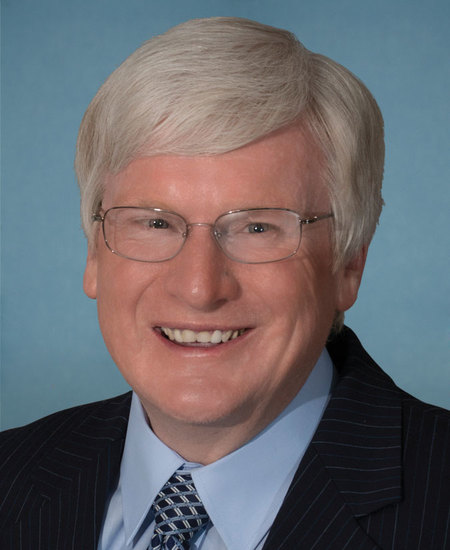
Rep. Glenn Grothman
Sponsored bills
Maddy summaryThis bill would amend federal law to strengthen penalties for organized retail crime by expanding definitions of theft to include digital goods, gift cards, and setting a $5,000 aggregate value threshold for charges over a 12-month period. It would establish a new "Organized Retail and Supply Chain Crime Coordination Center" under Homeland Security to coordinate Federal, State, local, and Tribal law enforcement efforts against cross-jurisdictional theft groups. The Center would share information with retailers, transportation companies, and law enforcement agencies, track crime trends, and produce annual reports on organized retail crime. This legislation directly affects retailers, supply chain businesses, and law enforcement agencies, while targeting organized crime groups responsible for a 93% increase in larceny incidents and rising safety concerns for retail employees. The bill aims to address significant financial losses and supply chain disruptions noted in the National Retail Federation's 2023 data.
Maddy summaryThe PICTURE Act requires the Bureau of Prisons to maintain a photographic directory for all federal prisoners. This directory must include a clear, unobstructed photo of each prisoner's face. The bill amends existing federal law to establish this requirement for record-keeping purposes.
Maddy summaryThis bill fundamentally restructures the U.S. immigration system by replacing the current employment-based visa categories with a new points-based program that prioritizes applicants with high salaries, advanced degrees, English proficiency, and U.S. military service. Under this new system, employers must attest that they have attempted to hire qualified American workers first and guarantee that hiring an immigrant will not result in layoffs of existing U.S. employees. Additionally, the bill eliminates the Diversity Lottery program, restricts certain family sponsorship categories for citizens, and imposes conditional permanent resident status on new immigrants who must prove they are not receiving public benefits and remain employed within two years. The legislation also mandates that undocumented students pay out-of-state tuition rates at colleges and requires immigrants to sign statements affirming their loyalty to U.S. constitutional principles and opposition to specific forms of persecution.
New Source Review Permitting Improvement Act This bill modifies terminology for purposes of the New Source Review (NSR) permitting program of the Environmental Protection Agency (EPA). In order for a change to a stationary source to be a modification (a change to a stationary source that increases the air pollutant emissions or results in new pollutants) for purposes of the NSR permitting program, the maximum hourly emission rate achievable by such source must be higher than the maximum hourly rate achievable by such source during any hour in the 10-year period preceding the change. A change at a stationary source is not considered to be a modification under the bill if it is designed to (1) reduce the amount of any air pollutant emitted; or (2) restore, maintain, or improve the reliability of operations at, or safety of, the source. However, such changes are not excepted if the EPA determines the increase in the maximum achievable hourly emission rate from such change would cause an adverse effect on human health or the environment. Construction , in connection with a major emitting facility (a type of stationary source), does not include a change at such a facility that does not result in a significant emissions increase or a significant net emissions increase. In relation to major emitting facilities in nonattainment areas, the terms modifications and modified do not include changes at such facilities that do not result in a significant emissions increase or a significant net emissions increase.
Maddy summaryThe Fair Air Standards Act allows states to request that the Environmental Protection Agency reclassify certain air zones from "nonattainment" to "attainment" status. This change is permitted if the state proves that its air quality would have met national standards for ozone had pollution from outside the state not been a factor. The process requires the state governor to submit evidence and modeling data, after which the EPA has 180 days to review and approve the redesignation. By shifting the focus to external pollution sources, the bill aims to provide a clearer path for states to improve their air quality designations.
Maddy summaryThis bill, titled the Ending Discrimination in Government Contracting Act, aims to remove specific preferences and goals based on race, ethnicity, and gender from federal government contracting and financial assistance programs. It directly affects small businesses currently classified as socially and economically disadvantaged, women-owned, and women-owned and controlled entities by eliminating their special status in many federal statutes. The legislation repeals various sections of existing laws that mandated set-asides or priority treatment for these groups, while retaining similar protections for veterans and HUBZone businesses. Additionally, it requires federal agencies to update their rules and guidance within 180 days to stop considering race, ethnicity, or sex when awarding contracts.
Maddy summaryThis House Resolution proposes to formally "expunge" the two impeachments of President Donald Trump that passed the House of Representatives on December 18, 2019, and January 13, 2021. If passed, the resolution specifies that these impeachments would be treated "as if such Articles had never passed the full House of Representatives." This action directly affects President Trump by aiming to remove these impeachment proceedings from his official record and would alter the historical legislative record of the House. The resolution's text outlines several reasons for this action, including claims of wrongful accusations, lack of due process, and political bias in the original impeachment proceedings.
Maddy summaryHR 5543, the Baltic Security Assessment Act of 2025, requires the U.S. State and Defense Departments to submit a report within 180 days of enactment. The report will assess emerging military, cyber, hybrid, and political threats to Estonia, Latvia, and Lithuania, including the roles of Russia, Belarus, China, Iran, and other actors. It will also evaluate U.S. and NATO military presence in the region, opportunities for defense cooperation, and recommendations to strengthen deterrence, cybersecurity, and democratic resilience in the Baltic countries. This bill directly affects U.S. foreign policy and defense planning regarding the Baltics, but does not create new programs or funding.
Maddy summaryThe DAIRY PRIDE Act aims to amend the Federal Food, Drug, and Cosmetic Act to establish a specific definition for "dairy product." This bill directly affects food manufacturers and consumers by regulating how certain food names can be used. It defines a "dairy product" as food that is, contains as a primary ingredient, or is derived from, the lacteal secretion of hooved mammals. The act prohibits foods that do not meet this definition, or the requirements for an imitation food, from using names for standardized dairy products (like milk, yogurt, and cheese) in interstate commerce. Additionally, it requires the FDA to issue guidance on enforcement of these provisions and report to Congress on actions taken.