

Next Generation 9–1–1 Act This bill establishes a grant program to support implementation of next generation 9-1-1 (NG9-1-1) systems by state, territorial, and tribal governments and requires other related activities. NG9-1-1 means a secure, interoperable, Internet Protocol-based (IP-based) system for receiving 9-1-1 requests for emergency assistance. (IP-based 9-1-1 systems have capabilities that legacy telephone systems do not, including enhanced location-finding and the ability to receive text and multimedia messages.) Under the bill, the National Telecommunications and Information Administration (NTIA) must provide grants to state, territorial, and tribal governments (and entities established by those governments) to support the implementation and maintenance of NG9-1-1 systems. Grant funds may also be used for public outreach on NG9-1-1, implementation of cybersecurity measures, and, subject to certain limits, training and administrative costs. Entities applying for grants must submit a plan for NG9-1-1 coordination and implementation that ensures interoperability and reliability, incorporates cybersecurity tools, and meets other requirements related to technology and procurement. Applicants must also certify that they have established, or will establish within a specified time frame, a sustainable funding mechanism to support NG9-1-1 and effective cybersecurity resources. The NTIA must advise applicants on the preparation of implementation plans and provide technical assistance to grant recipients. Further, the NTIA must establish (1) an advisory board to provide recommendations with respect to the grant program and other topics related to NG9-1-1; and (2) a cybersecurity center to coordinate with state, local, and regional governments on the sharing of cybersecurity information related to NG9-1-1.
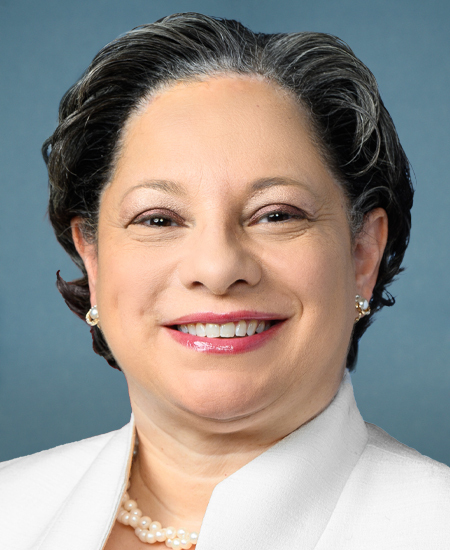
Rep. Jennifer L. McClellan
Sponsored bills
Maddy summaryHRES 996 is a resolution introduced by multiple House members to impeach Kristi Lynn Arnold Noem, the Secretary of Homeland Security, for alleged violations of law and the Constitution. It outlines three articles of impeachment: obstructing congressional oversight by denying access to detention facilities and withholding funds, violating public trust through warrantless arrests and excessive force (including tear gas on children), and self-dealing by awarding federal contracts to associates without competitive bidding. If approved by the House, this resolution would formally charge Noem, triggering a Senate trial to determine her removal from office. The resolution itself does not enact new policy but initiates the constitutional impeachment process against a sitting Cabinet official.
Maddy summaryHRES 995 is a symbolic resolution supporting Korean American Day, commemorating January 13 as the anniversary of the 1903 arrival of the first large wave of Korean immigrants to the U.S. It urges all Americans to recognize Korean Americans' contributions to U.S. society, economy, and U.S.-South Korea relations, honoring their historical journey and ongoing impact. The resolution has no legal effect or policy changes - it serves solely as a formal acknowledgment of cultural heritage.
Maddy summaryHRES 990 is a resolution recognizing the 113th anniversary of Delta Sigma Theta Sorority, Incorporated, founded in 1913 at Howard University. It honors the sorority's century of community service and global initiatives, including its focus on education, economic development, and international outreach. The resolution is symbolic and non-binding, celebrating the organization's legacy without creating new policy or affecting specific groups. It was introduced by multiple House members in January 2026.
Maddy summaryThis bill prohibits U.S. federal funds from being used to support Venezuela's oil and petroleum sector, including financing infrastructure projects, purchasing property, providing insurance, making payments to companies, or government advocacy. It directly affects all federal agencies and programs that manage taxpayer money, preventing them from funding any aspect of Venezuela's oil industry. The bill requires the Secretary of State to submit annual reports to specific congressional committees detailing any related activities and confirming compliance. These provisions aim to restrict U.S. financial involvement in Venezuela's oil sector using clear, non-ambiguous language.
Maddy summaryHR 6088, the *Restoring Food Security for American Families and Farmers Act of 2025*, repeals specific sections (10101-10108) from a prior reconciliation law. This action revives previous provisions related to food security programs that were modified by those repealed sections. The bill directly affects federal food assistance and agricultural support programs by restoring their prior legal framework. It does not create new policies but reverses recent changes to existing food security measures.
Maddy summaryThe MORE Act (HR 5068) would remove cannabis from the federal list of controlled substances, effectively decriminalizing it at the federal level while establishing a new tax on cannabis products. The bill creates an Opportunity Trust Fund that would distribute tax revenues to support communities disproportionately impacted by cannabis prohibition, including funding for expungement programs, job training, and equitable licensing initiatives for minority business owners. It also includes provisions to prevent discrimination based on cannabis use in federal programs, immigration proceedings, and workplace policies. The bill would require federal courts to expunge non-violent cannabis convictions and establish a process for resentencing individuals currently serving time for such offenses. These provisions aim to address racial disparities in cannabis enforcement and create more equitable opportunities in the legal cannabis industry.
Maddy summaryHR 5010, the Farm Credit Adjustment Act, amends the Farm Credit Act of 1971 to allow the Farm Credit Administration (FCA) to extend examination cycles for low-risk Farm Credit System institutions to a maximum of 24 months. This change directly affects rural banks, credit unions, and other Farm Credit System institutions deemed low-risk by the FCA. The key provision removes a previous restriction ("in no event") and gives the FCA discretion to conduct examinations every 24 months instead of more frequently for these institutions. The amendment takes effect on October 1, 2026.
Maddy summaryHR 909, the Crime Victims Fund Stabilization Act of 2025, modifies how funds from the False Claims Act are deposited into the Crime Victims Fund. It specifies that from 2025 through 2029, certain False Claims Act proceeds (specifically those for qui tam plaintiff payments and government damage reimbursements) cannot be deposited into the fund. This change directly affects the composition of the Crime Victims Fund by excluding these specific revenue streams during the specified period. The bill does not create new benefits or alter victim services; it only adjusts fund allocation rules for existing False Claims Act revenues.
Maddy summaryHR 7016, the "No Funds for NATO Invasion Act," blocks federal funding for any U.S. military invasion of a North Atlantic Treaty Organization (NATO) member country or territory covered by NATO's Article 5 mutual defense clause. The bill prohibits using any federal funds for such invasions and bans U.S. officials from executing these actions. It directly affects U.S. military operations and funding decisions involving NATO members. The law applies to all federal spending, preventing the use of existing budgets for this specific purpose.