

Maddy summaryThis resolution formally designates May 10, 2026, as National Asian American, Native Hawaiian, and Pacific Islander Mental Health Day to raise awareness about mental health within these communities. The text highlights that many individuals in this diverse group face barriers to care, including high costs, language differences, and cultural stigma, which result in low rates of treatment utilization. While the measure itself is symbolic and does not create new laws or funding, it encourages federal, state, and local agencies to develop policies that improve access to culturally and linguistically appropriate mental health services.
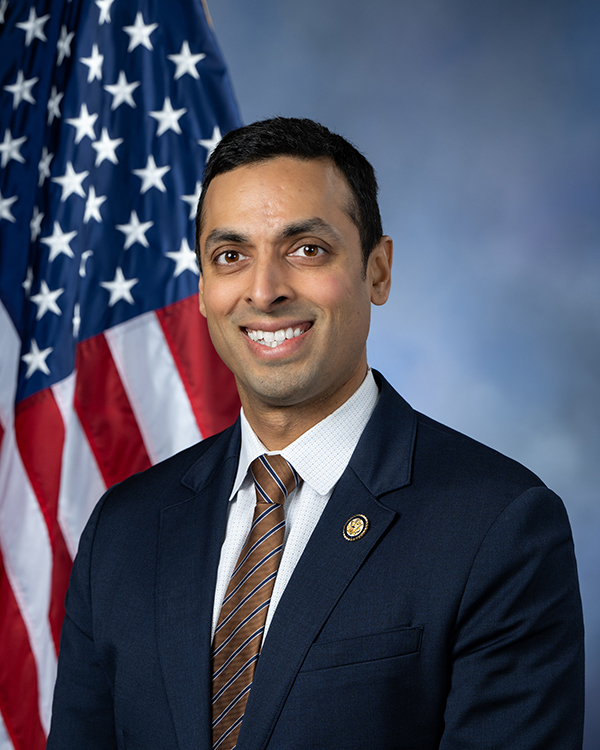
Rep. Suhas Subramanyam
Sponsored bills
Maddy summaryThe National Defense Data Resilience Act requires the Department of Defense to classify its data into three categories based on the severity of potential impacts from loss or destruction. Under this bill, the Defense Secretary must establish specific timelines for recovering critical data within 180 days and other data types within 270 days, while also developing a comprehensive strategy to meet these goals. The legislation mandates the implementation of secure backup systems, continuous monitoring for threats, and regular simulated cyberattack exercises to ensure the military can restore essential functions quickly. Additionally, the act restricts the adoption of new data recovery technologies unless they meet strict security standards and are included in an official inventory of approved tools.
Maddy summaryThis bill prohibits the U.S. government from spending money on military actions against Iran between its enactment and December 31, 2026, unless Congress explicitly approves the use of force. It allows for military action only if Congress declares war, passes a specific authorization, or if the action is necessary to defend the United States or its allies from an imminent attack while following reporting requirements. The law directly restricts the President's ability to deploy troops without legislative approval during the specified timeframe.
Maddy summaryThis bill is a non-binding resolution that expresses the House of Representatives' sentiment to honor public servants for their dedication to the United States. It specifically acknowledges the work of federal, state, and local government employees, as well as uniformed service members, who deliver essential services and support the economy. The resolution calls on the American public to observe Public Service Recognition Week with ceremonies and activities that recognize these contributions. Because it is a symbolic expression of the House's feelings rather than a law with enforceable rules, it does not create new policies or mandate specific actions.
Maddy summaryH.R. 1243 is a House resolution that formally recognizes May as Asian American, Native Hawaiian, and Pacific Islander Heritage Month to celebrate the contributions of these communities to U.S. history. The bill highlights the diverse populations, historical milestones, and significant achievements of Asian Americans, Native Hawaiians, and Pacific Islanders in government, the military, and society. It also acknowledges the ongoing challenges faced by these groups, including a rise in hate crimes and historical discrimination. As a commemorative resolution, the measure does not create new laws or funding but serves to express official congressional appreciation and awareness.
Maddy summaryThis resolution commemorates the 51st anniversary of the Fall of Saigon on April 30, 1975, and the subsequent day known as Black April. It formally acknowledges the historical events of that date, including the displacement of millions of Vietnamese people and the U.S. military's evacuation efforts. The document honors the contributions of Vietnamese Americans to the United States and reaffirms support for democracy and human rights in Vietnam. Additionally, it pays tribute to the service and sacrifice of U.S. and South Vietnamese military personnel who fought during the Vietnam War.
Maddy summaryThis resolution directs the House Committee on Oversight and Government Reform to take legal action in federal court to enforce a subpoena issued to Attorney General Pamela Bondi. The specific goal is to obtain a court order requiring Bondi to provide deposition testimony and documents related to the government's handling of sex trafficking cases and the Jeffrey Epstein investigation. The House Office of General Counsel is authorized to represent the committee in these proceedings and may hire additional private lawyers to assist. If the committee initiates or intervenes in the lawsuit, it must report its actions to the full House of Representatives as soon as possible.
Maddy summaryThis bill, known as the Lowering Utility Bills Act, aims to reduce electricity and natural gas costs by regulating how utility companies calculate their profits and what expenses they can pass on to customers. It requires transmission providers and investor-owned utilities to determine a reasonable profit range based on historical stock market returns from academics, large financial institutions, and major global banks, then generally limits their authorized profit to the lowest point in that range. Additionally, the legislation bans utilities from recovering specific costs in customer rates, including lobbying fees, political contributions, executive travel, and entertainment expenses. The bill also mandates that utilities prioritize lower-cost grid technologies in their planning and requires them to publicly justify any decision to use a higher profit rate than the standard minimum.
Maddy summaryThis resolution expresses support for designating April as Undiagnosed Awareness Month to highlight the challenges faced by the approximately 25 million Americans living with rare diseases that have not yet been identified. The bill aims to raise public awareness about the difficulties these patients endure, such as long diagnostic delays, misdiagnoses, and lack of treatment options, while honoring the work of the Undiagnosed Diseases Network and related research efforts. By acknowledging this month, the House intends to promote greater understanding of the need for improved diagnostic tools and equitable access to medical care for individuals with undiagnosed conditions.
Maddy summaryThe PRICE Act requires third-party food delivery apps to stop using hidden pricing strategies that change delivery fees based on a customer's past order history or willingness to pay. Starting 90 days after enactment, these platforms must calculate delivery fees using a fixed formula based only on the order total and distance, while clearly displaying the base food price and the final total before checkout. The law also mandates that apps explain exactly what each delivery fee covers and whether it is refundable. The Federal Trade Commission is responsible for enforcing these rules, and state attorneys general have the authority to sue platforms that violate the act on behalf of their residents.