

Hearing Protection Act This bill removes silencers from the definition of firearms for purposes of the National Firearms Act. It also treats persons acquiring or possessing a firearm silencer as meeting any registration and licensing requirements of such Act. The Department of Justice must destroy certain records relating to the registration, transfer, or making of a silencer. The bill also revises the definitions of firearm silencer and firearm muffler under the federal criminal code and includes such items in the 10% excise tax category.
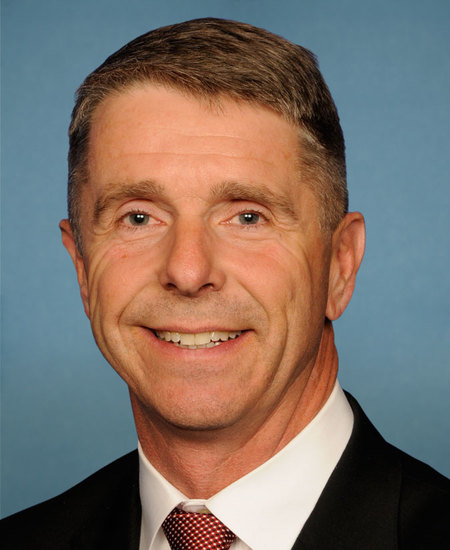
Rep. Robert J. Wittman
Sponsored bills
Concealed Carry Reciprocity Act This bill establishes a federal statutory framework to regulate the carry or possession of concealed firearms across state lines. Specifically, an individual who is eligible to carry a concealed firearm in one state may carry or possess a concealed handgun (other than a machine gun or destructive device) in another state that allows its residents to carry concealed firearms. It sets forth requirements for the lawful concealed carry across state lines. The bill preempts most state and local laws related to concealed carry and establishes a private right of action for a person adversely affected by interference with a concealed-carry right established by this bill.
Broadening Online Opportunities through Simple Technologies Act or the BOOST Act This bill allows an individual taxpayer to elect a tax credit for 75% of qualified signal booster expenditures up to $400 in a single taxable year through 2025. The bill defines qualified signal booster expenditures as amounts paid for the purchase of any communications signal booster for use by the taxpayer in a principal residence located in an underserved area. The booster is designed to increase the strength or range of a broadband communications signal.
National Right-to-Work Act This bill repeals those provisions of the National Labor Relations Act and the Railway Labor Act that permit employers to make an agreement with a labor union to require employees to join such union as a condition of employment. Currently, at least 27 states have enacted laws prohibiting employers from compelling employees to become members of a union as a condition of employment.
Fair and Open Competition Act or the FOCA Act This bill prohibits federal construction contracts or controlling documents for federally supported construction projects from requiring or prohibiting project labor agreements. Such documents also may not discriminate against or give preference to a bidder or contractor who signs or refuses to sign a project labor agreement. An agency may exempt a project from this prohibition to avert an imminent threat to public health or safety or to serve the national security.
Gold Star Altitude Act This bill authorizes the Department of Defense to offer, on a space-available basis, transportation on military aircraft to the children, surviving spouses, parents, and siblings of members of the Armed Forces who die during active service.
Next Generation Entrepreneurship Corps Act This bill establishes the Next Generation Entrepreneurship Corps Program to promote entrepreneurship in the most distressed regions of the United States, including those regions affected by COVID-19 (i.e., coronavirus disease 2019), by awarding participating fellows a two-year stipend to start and grow a new small business. Fellows will receive (1) a $120,000, two-year stipend for living and basic startup expenses; (2) health care; and (3) interest-free federal student loan deferral for two years. Further, fellows shall receive mentorship from the Service Corps of Retired Executives and be matched with a full range of lenders, investors, and insurers. The bill also establishes a fund in the Department of the Treasury from which the SBA may provide loans for qualified investors to support a small business owned and operated under the program by a fellow.
Food Allergy Safety, Treatment, Education, and Research Act of 2021 or the FASTER Act of 2021 This bill expands the definition of major food allergen for purposes of certain food-labeling requirements to specifically include sesame. In addition, the Department of Health and Human Services must report on certain information related to food allergy research and data collection activities.
This resolution congratulates and honors the National Active and Retired Federal Employees Association on the celebration of its 100th anniversary.
Iran Hostages Congressional Gold Medal Act This bill requires the Speaker of the House of Representatives and the President pro tempore of the Senate to arrange for the award of a Congressional Gold Medal commemorating the bravery and endurance of the 53 hostages of the Iran Hostage Crisis. Following its award, the medal shall be given to the National Museum of American History of the Smithsonian Institution for display and research. The Department of the Treasury must strike duplicate medals in silver for presentation to a hostage (or the personal representative of a deceased hostage), and Treasury may also strike and sell duplicate medals in bronze.