

Maddy summaryThe Healthcare Worker Retention Act creates a refundable tax credit of $1,000 annually ($2,000 for joint returns) for eligible healthcare workers. It directly affects employees or contractors working at least 20 hours weekly (averaged over the year) and 3 months in each half of the year at qualifying settings like hospitals, nursing homes, or community health centers, with income under $100,000 ($200,000 for joint returns). The bill establishes semiannual advance payments - half the annual credit paid twice yearly - to provide immediate financial support, with the IRS estimating payments based on expected eligibility. This program applies only to taxable years beginning in 2023 and 2024, ending after December 31, 2024.
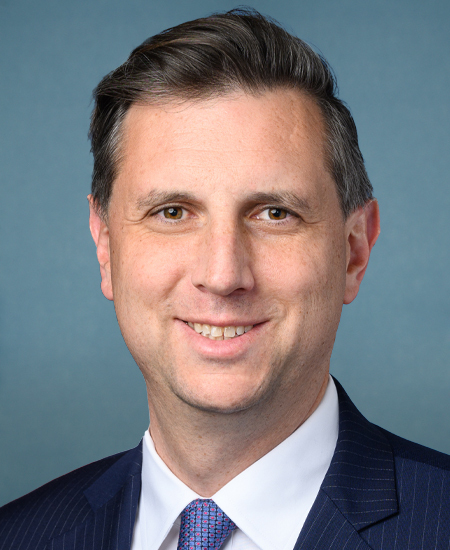
Rep. Seth Magaziner
Sponsored bills
Maddy summaryHR 1202, the REDI Act, amends the Higher Education Act to allow medical and dental residents to temporarily pause federal student loan payments without accruing interest during their internship or residency programs. This directly affects borrowers with federal student loans who are enrolled in qualifying medical or dental training programs. The key provision adds a new rule (paragraph 6) ensuring these borrowers qualify for a deferment period where they don't pay principal and interest accrues at 0%. The change modifies existing loan rules to explicitly include medical/dental residents under the "in-school" deferment category. This policy change provides immediate financial relief during a critical training phase for healthcare professionals.
Maddy summaryThis bill makes it a federal crime to defraud veterans of their benefits, including benefits for dependents or survivors. It targets individuals who create schemes to steal or improperly obtain veterans' benefits, with penalties of up to five years in prison or fines. The law directly affects veterans, their families, and anyone seeking to exploit the benefits system. Key provisions define "veterans' benefits" broadly under federal law and establish criminal penalties for fraud attempts.
Maddy summaryHR 1119, the Freedom to Invest in a Sustainable Future Act, amends the Employee Retirement Income Security Act (ERISA) to allow retirement plan fiduciaries to consider environmental, social, and governance (ESG) factors when making investment decisions. This directly affects fiduciaries managing retirement plans (like 401(k)s), permitting them to factor in ESG considerations alongside financial returns, or use them as tie-breakers when competing investments offer similar economic outcomes. The bill clarifies that fiduciaries won’t need extra documentation for these ESG-informed decisions and ensures ESG-focused investments can still qualify as default options in retirement plans. The key change removes barriers to integrating sustainability into standard fiduciary practices under ERISA.
Maddy summaryThe RISEE Act of 2023 creates a National Oceans and Coastal Security Fund to support coastal communities and ecosystems. It allocates 37.5% of offshore wind revenue directly to eligible coastal states using a formula based on tidal shoreline length, coastal population density, and distance from offshore wind projects. States must use these funds for coastal protection, habitat restoration, infrastructure, or fisheries research, with strict annual reporting requirements to the Department of the Interior. The bill prohibits using these funds for litigation or creating marine monuments, ensuring resources directly support coastal community needs.
Maddy summaryHR 726, the Veterans for Mustangs Act, amends the Wild Free-Roaming Horses and Burros Act to require the Secretary of the Interior to prioritize recruiting military veterans for training in on-range fertility control methods for wild horse and burro populations. The bill mandates that veterans complete a certification program (like the PZP applicator course) and receive appropriate compensation, with the Bureau of Land Management allowed to contract these veterans for management activities without classifying them as federal employees. This directly affects military veterans seeking employment opportunities and the Bureau of Land Management’s approach to managing wild horse populations. The key change is embedding veteran recruitment into the standard process for implementing fertility controls, replacing previous management language with specific veteran-focused provisions.
Maddy summaryThis bill provides financial assistance to help low-income renters cover security deposits and moving costs. It directly affects families using housing choice vouchers (Section 8) and those receiving housing assistance through the HOME program. The law requires public housing agencies to use federal funds to pay for reasonable security deposits and moving expenses, and mandates that unused funds be returned to the agency for future use. It also directs the Department of Housing and Urban Development to study alternatives to traditional security deposits and report findings to Congress within 180 days.
Maddy summaryThis bill directs the Joint Committee of Congress on the Library to obtain a statue of Shirley Chisholm and place it permanently in the U.S. Capitol within two years of enactment. It authorizes the Architect of the Capitol to handle the agreement for the statue under the Committee's terms, with necessary funding approved as needed. The bill does not change laws or affect specific people or groups; it is a procedural measure to honor Shirley Chisholm, the first Black woman elected to Congress, through a permanent Capitol display.
Maddy summaryHR 1088, the Shirley Chisholm Congressional Gold Medal Act, authorizes a posthumous Congressional Gold Medal to honor Congresswoman Shirley Chisholm, the first African-American woman elected to Congress (1968) and the first Black candidate for a major party's presidential nomination (1972). The bill directs the Treasury Secretary to design and strike a gold medal featuring Chisholm's image, which will be presented by Congress and then permanently displayed at the Smithsonian Institution. Duplicate bronze medals may be sold to the public to cover production costs, with proceeds deposited into the U.S. Mint fund. This bill commemorates Chisholm's legacy and achievements without creating new laws or affecting any current policies.
Maddy summaryHR 902, "Ellie’s Law," authorizes $10 million annually from fiscal years 2024 through 2028 for the National Institute of Neurological Disorders and Stroke to conduct broader research on unruptured brain aneurysms. The funding aims to study diverse patient populations by age, sex, and race, supplementing existing research budgets without replacing them. This bill directly affects researchers and future patients by increasing federal investment in a condition impacting 6.6 million Americans, with current federal spending at only $2.08 per affected person yearly. The legislation focuses on advancing scientific understanding to improve prevention and treatment, citing the high mortality rate (50% fatal) and significant healthcare costs ($4.1 billion annually in direct costs) associated with brain aneurysm ruptures.