

Maddy summaryThe High Court Gift Ban Act prohibits federal judicial officers from accepting gifts from sources likely to appear before them, unless the gift is under $50, the total annual value from that source remains $100 or less, or it falls under specific exceptions like gifts from relatives or public events. The law defines a "gift" broadly to include items, services, and reimbursements, while allowing exceptions for personal hospitality within IRS limits and certain professional benefits available to the general public. Enforcement mechanisms include referrals to the Attorney General for violations, which can result in civil or criminal penalties similar to those for other federal ethics breaches. The bill requires the Supreme Court and the Judicial Conference to create implementing regulations within 180 days of enactment to ensure compliance.
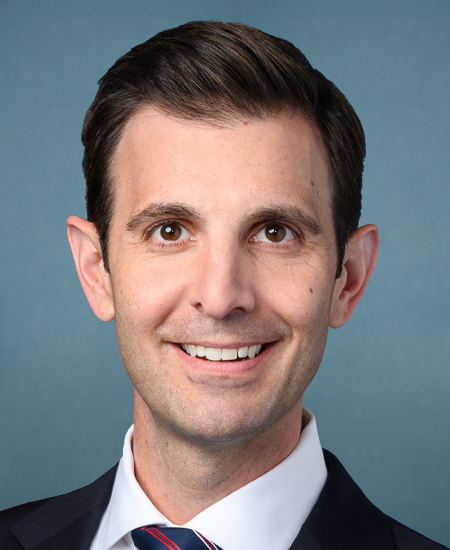
Rep. Christopher R. Deluzio
Sponsored bills
Maddy summaryThis resolution expresses support for designating July 10th as Journeyman Lineworkers Recognition Day to honor the workers who maintain the nation's electrical grid. The bill specifically recognizes the dangerous conditions these employees face, such as working at heights near live power lines and responding to disasters like hurricanes and wildfires. It also commemorates Henry Miller, the first president of the International Brotherhood of Electrical Workers, who died on July 10, 1896, while performing his duties. Ultimately, the measure encourages the public to observe this day with reflection on the contributions of lineworkers.
Maddy summaryThe Find Our Families Act of 2026 requires the Department of Homeland Security to create a public online system that allows families to locate individuals detained by Customs and Border Protection or Immigration and Customs Enforcement. This system must provide search results within eight hours of detention, display information in multiple languages, and include specific details such as names, dates of birth, and facility locations, while excluding data for minors. The bill also mandates that families be notified within five hours if a detainee is transferred for medical care and establishes new reporting requirements for CBP arrests, including details on the circumstances of the arrest and the number of agents involved. Additionally, the legislation creates a process for families to report errors in detainee information and imposes penalties on employees or contractors who fail to comply with these data-sharing and reporting obligations.
Maddy summaryThe Fresh Bucks for Fresh Produce Act establishes a five-year pilot program where the Department of Agriculture provides grants to states to offer monthly $60 payments to low-income households for purchasing fresh fruits and vegetables. To qualify, households must earn 80 percent or less of the area median income, though those already receiving SNAP benefits can enroll with minimal paperwork. The funds can only be used at specific retailers like farmers markets and grocery stores to buy fresh produce, and states must use these grants to cover administrative costs and support local community organizations. The bill requires states to prioritize food-insecure areas and ensures geographic diversity by awarding grants to at least one state in each major U.S. region. Additionally, the program mandates a study to collect data on participant outcomes and barriers to access, with final results and recommendations for expansion due within five years.
Maddy summaryThe Recreation Permitting Improvement Act amends the FAST Act to explicitly include "recreation" as a covered sector for federal permitting improvements. This change directly affects projects related to recreational activities that currently fall under federal jurisdiction. By adding this specific category, the bill ensures that recreational developments receive the same streamlined permitting processes as other sectors previously listed. The legislation does not alter the underlying rules but rather clarifies the scope of projects eligible for these improvements.
Maddy summaryThe Support Our Miners Act updates the monthly disability payments for coal miners suffering from black lung disease to better reflect current living costs. It establishes a new base payment of $1,252.50 per month starting in 2026, which will then increase annually based on inflation data published by the Bureau of Labor Statistics. This legislation directly affects thousands of miners and their families who rely on these benefits for healthcare and financial support, aiming to close the gap between the original 1969 benefit amount and today's economic reality.
Maddy summaryThe LIFT the BAR Act aims to restore access to federal benefits for lawfully present noncitizens by repealing several restrictions imposed by the 1996 welfare reform law and a 2024 reconciliation bill. Specifically, it would allow eligible noncitizens to receive SNAP food assistance, Medicaid, CHIP, and child nutrition programs, while also updating legal terminology to refer to "noncitizens" rather than "aliens" in relevant statutes. The legislation includes provisions to ensure these individuals can qualify for premium tax credits and would require federal agencies to issue implementation guidance within 180 days of enactment.
Maddy summaryHR 4398, the Veteran Burial Timeliness and Death Certificate Accountability Act, requires Veterans Affairs (VA) physicians or nurse practitioners to certify the death of a veteran who dies of natural causes within 48 hours of learning of the death. This directly affects veterans' families, who previously faced delays of up to eight weeks in burial and access to survivor benefits due to slow death certifications. The bill mandates annual reports to Congress on VA compliance with the 48-hour rule, including statistics on delays and their causes. The key change is establishing a strict timeline for death certification to prevent unnecessary delays in honoring veterans' final arrangements.
Creating Resources for Every American To Experiment with Artificial Intelligence Act of 2025 or the CREATE AI Act of 2025 This bill establishes a national program to provide U.S. researchers, educators, and students with access to artificial intelligence (AI) data, computational resources, educational tools and services, and testbeds. The program, to be known as the National Artificial Intelligence Research Resource (NAIRR), must be established by the National Science Foundation (NSF) to improve U.S. AI research capacity and spur the strategic development of AI capabilities. NAIRR may accept and use donated resources from the private sector and federal agencies. Those eligible to use NAIRR resources are (1) researchers, educators, and students based in the United States and affiliated with a U.S. institution of higher education, nonprofit, executive agency, or other specified entity; and (2) employees of U.S. executive agencies or federally funded research and development centers with a demonstrable mission need. NSF must select a nongovernmental organization to operate NAIRR (i.e., an operating entity ) through a competitive and transparent process. The operating entity must ensure that a significant percentage of the annual allotment of computational resources is provided to projects primarily focused on AI privacy, ethics, safety, security, risk mitigation, or trustworthiness. The operating entity must also establish minimum security requirements for all individuals interacting with NAIRR. The operating entity may establish a fee schedule for access to NAIRR, which must include a free tier of access and must ensure that the primary purpose of NAIRR is to support research.
Maddy summaryThe Right to Vote Act establishes legal protections against government actions that make it more difficult for citizens to vote in federal elections. It prohibits any rule or practice that diminishes voting ability unless the government proves it is the least restrictive way to achieve an important interest, and it similarly blocks substantial impairments unless they significantly further a specific government goal. The bill creates a new legal pathway for voters to challenge these restrictions in federal court, requiring judges to expedite these cases and shifting the burden of proof to the government to justify any voting barriers. These protections apply to all U.S. states, territories, and the District of Columbia for elections occurring on or after September 1, 2026.