

Maddy summaryHJRES 133 is a congressional resolution seeking to block an Environmental Protection Agency (EPA) rule titled "Greenhouse Gas Emissions Standards for Heavy-Duty Vehicles-Phase 3." This rule, published in the Federal Register on April 22, 2024, established new emissions requirements for large trucks and commercial vehicles. The resolution, if passed, would prevent the EPA rule from taking effect by formally disapproving it under standard congressional review procedures. The measure directly affects the EPA’s regulatory authority and vehicle manufacturers who would have been required to comply with the proposed standards.
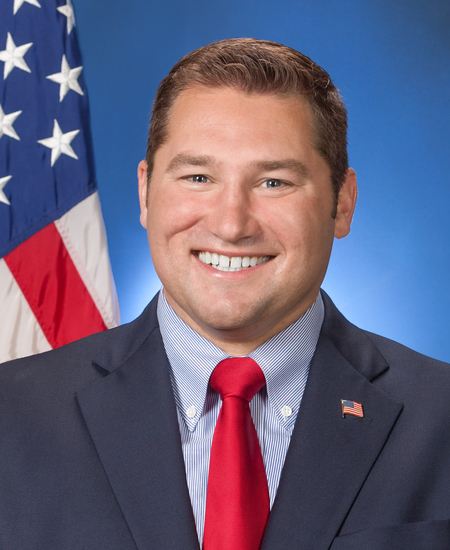
Rep. Guy Reschenthaler
Sponsored bills
Maddy summaryThis bill directs the Joint Committee on the Library to procure a statue of Benjamin Franklin and place it in the U.S. Capitol. The committee must secure the statue within two years of the bill's enactment and install it in a public-accessible location by January 1, 2026, for viewing during Capitol Visitor Center guided tours. It is a procedural measure with no policy changes or direct impact on constituents or legislation.
Maddy summaryHRES 1457 is a symbolic House resolution (introduced September 17, 2024) that condemns Vice President Kamala Harris for her past statements and policy positions related to law enforcement and criminal justice. The resolution cites specific past remarks by Harris (as a U.S. Senator) regarding policing, immigration, and criminal justice reform - including supporting decriminalizing immigration, opposing ICE, and endorsing bail reform groups - and claims these policies "encouraged lawlessness." It does not create new laws or affect anyone legally, as it is purely a non-binding expression of disapproval. The resolution has no policy impact or enforcement mechanism.
Maddy summaryHR 705, the Veterans 2nd Amendment Protection Act, prohibits the Department of Veterans Affairs (VA) from automatically sending veterans' personal information to the national background check system solely because a fiduciary (like a guardian) manages their benefits. It specifically blocks the VA from sharing this data with the Justice Department without a court order finding the veteran a danger to themselves or others. This directly affects veterans who have a fiduciary appointed due to incapacity but are not deemed dangerous, preventing automatic barriers to firearm purchases based only on their fiduciary status. The bill amends 38 U.S.C. § 5501B to require judicial authorization before such data can be transmitted.
Maddy summaryHR 9586 prohibits federal funds from being used to provide or refer for specific medical procedures intended to change a person's physical characteristics to align with their gender identity. It directly affects individuals in U.S. Department of Homeland Security (DHS) or Department of Health and Human Services (HHS) custody, banning federal funding for procedures like hysterectomies, chest implants, puberty blockers, or hormone therapies at supraphysiologic doses. The bill defines "specified gender transition procedures" to include surgeries (e.g., mastectomy, phalloplasty) and certain medications, with "sex" defined by biological factors present at birth. This policy change restricts federal healthcare funding for these specific treatments within immigration and federal detention systems.
Maddy summaryHR 8282, the "Illegitimate Court Counteraction Act," imposes U.S. sanctions on foreign individuals or entities supporting the International Criminal Court (ICC) in investigating or prosecuting "protected persons." Protected persons include U.S. military personnel, officials, and allied personnel (from non-ICC member countries) who are not under ICC jurisdiction. The bill requires the President to block assets and deny visas to targeted foreign persons and their immediate family members within 60 days of the ICC attempting such actions. It mandates congressional notification of sanctions and allows termination if the ICC ceases all such efforts against protected persons. The law focuses on restricting U.S. economic and travel access to ICC supporters targeting specific U.S. and allied personnel.
Maddy summaryThe SAVES Act establishes a 5-year pilot program where the VA awards competitive grants to accredited nonprofits (e.g., Assistance Dogs International or International Guide Dog Federation members) to provide service dogs to veterans with specific disabilities like mobility issues, PTSD, TBI, or visual/hearing impairments. It requires veterans with mental health conditions to undergo a VA mental health evaluation to confirm the dog is the optimal treatment, prohibits nonprofits from charging veterans fees, and mandates VA-provided veterinary insurance for the dogs. The program is funded with $10 million annually for five years and directly affects eligible veterans enrolled in VA care with qualifying disabilities and participating nonprofit service providers.
Maddy summaryThe SAFER at the Border Act prohibits the U.S. Department of Homeland Security from temporarily admitting (paroling) certain individuals at the border. It defines "known terrorists" (those arrested, charged, or convicted for terrorism), "suspected terrorists" (reasonably suspected of terrorism), and "special interest aliens" (those with potential terrorism links based on travel patterns). The bill explicitly bans parole for these individuals, even for humanitarian reasons or public benefit, and also prohibits parole for refugees. Additionally, it allows states to sue the Department of Homeland Security if they suffer financial harm exceeding $100 from the parole of such individuals.
Maddy summaryThis resolution aims to block a rule issued by the National Highway Traffic Safety Administration (NHTSA) that sets new fuel efficiency standards for passenger cars, light trucks (starting in 2027), and heavy-duty pickup trucks/vans (starting in 2030). If passed, it would prevent this specific rule from taking effect by disapproving it under a congressional review process. The rule directly affects vehicle manufacturers by requiring them to meet these updated fuel economy targets for future model years. This is a procedural resolution, not a new law, focused solely on halting the implementation of the existing NHTSA rule.
Maddy summaryHRES 1409 is a symbolic House resolution condemning Nicolás Maduro's regime for alleged election fraud in Venezuela's July 28, 2024 presidential election. It recognizes opposition candidate Edmundo González Urrutia as the president-elect based on observed vote tallies showing his decisive victory, and condemns the regime's refusal to release transparent results. The resolution calls for new sanctions against Maduro and his allies, demands respect for the election outcome, and urges diplomatic pressure to support Venezuela's democratic transition. This resolution directly addresses the Maduro regime's actions and expresses U.S. solidarity with Venezuelan voters and the opposition.