

Maddy summaryThis bill, known as the Medicare Payment Integrity Enhancement Act of 2026, allows contractors hired to audit Medicare claims to review them before payments are made. Under current rules, these auditors can only check claims after money has already been sent out, but this legislation would expand their authority to stop improper payments in advance. To support this new role, the bill changes how these contractors are paid by linking their compensation to the amount of money they successfully prevent from being paid out incorrectly. Additionally, it requires the government to create a specific funding plan that transfers money from Medicare trust funds to cover these prepayment review costs. The law also mandates that the health department issue rules within a year to explain exactly how contractor pay and savings calculations will work.
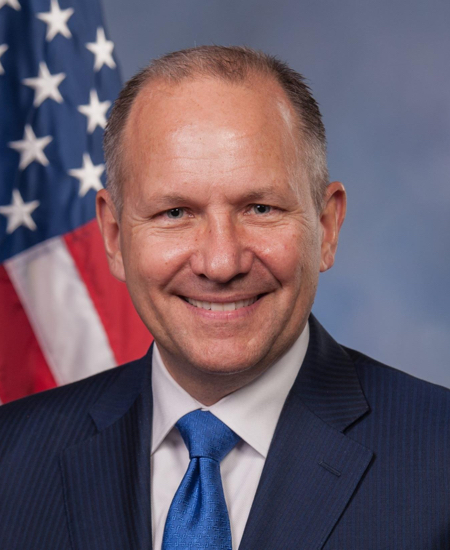
Rep. Lloyd Smucker
Sponsored bills
Clergy Act This bill establishes a two-year window for certain members of the clergy and Christian Science practitioners to revoke their exemption from Social Security and Medicare taxes on ministerial earnings. Under current law, such individuals who object to participation in public insurance programs on religious or conscientious grounds may apply to the Internal Revenue Service (IRS) for an irrevocable exemption and will not receive Social Security or Medicare benefits in retirement unless they have qualifying credits from other employment. The IRS must develop a plan to inform members of the clergy and Christian Science practitioners of their eligibility to revoke prior exemptions, pursuant to the bill's changes.
Maddy summaryThe "Accountable Produce is Medicine Act of 2026" mandates the creation of a new pilot program within the Center for Medicare and Medicaid Innovation. This program requires selected healthcare providers to offer a comprehensive set of "Accountable Produce is Medicine services" to eligible Medicare, Medicaid, and CHIP beneficiaries. These services, provided without patient cost-sharing, include healthy foods (like fruits and vegetables), nutrition counseling, care coordination, and remote monitoring for individuals with specific chronic diseases in underserved areas. Participating programs will screen patients, deliver these services for a year, and track health data to evaluate outcomes and cost savings over a period of at least five years.
Maddy summaryThe Senior Citizens’ Freedom to Work Act of 2026 aims to repeal the Retirement Earnings Test (RET) for Social Security beneficiaries. This means that individuals collecting Social Security benefits, including those under the Railroad Retirement program, would no longer have their benefits reduced if they continue to work and earn above a certain income threshold. The bill achieves this by repealing specific subsections of the Social Security Act and making conforming amendments across related benefit provisions. This change directly affects senior citizens and other beneficiaries who choose to remain employed while receiving their benefits, ensuring they receive their full entitlement. The provisions of this act are set to take effect for taxable years ending after December 31, 2026.
Maddy summaryThis resolution expresses support for the Working Families Tax Cuts, a law already enacted in July 2025 that provides various tax benefits to American taxpayers. The bill directly affects individuals and families by recognizing specific provisions that reduce tax liability, including expanded child tax credits, increased standard deductions, and tax relief for tipped workers and overtime pay. Key provisions include making a four-person household earning under $73,000 generally face zero federal income tax, increasing the child tax credit to $2,200 per child, and allowing 529 accounts to cover K-12 and trade school expenses. The resolution also acknowledges tax relief for seniors, auto loan interest deductions for American-made vehicles, and expanded health savings account access. This is a procedural measure that formally acknowledges existing tax policies rather than creating new legislation.
Maddy summaryThis bill directs the U.S. Trade Representative to investigate whether Canada's Online Streaming Act unfairly targets American streaming companies by imposing discriminatory taxes and content requirements. It authorizes the Trade Representative to consult with affected U.S. businesses and trade partners, then potentially take retaliatory trade actions if Canada does not amend the measures. The legislation also requires regular reporting to Congress on Canada's implementation of these policies and extends similar investigative powers to other countries with comparable digital trade restrictions.
Enhanced Iran Sanctions Act of 2025 This bill imposes sanctions on certain foreign persons (individuals and entities) that are involved in Iran's petroleum sector as well as certain associated persons. The bill also requires or authorizes actions to facilitate the enforcement of sanctions on Iran. Specifically, the bill requires the President to impose visa- and property-blocking sanctions on any foreign person that, after the bill's enactment, knowingly engages in any transaction related to the processing, export, or sale of oil, condensates, gas, liquefied natural gas, or other petrochemical products in whole or in part from Iran. The President must also impose sanctions on certain foreign persons associated with a sanctioned individual or entity. For example, the President must sanction the subsidiaries and corporate officers of a sanctioned business. The bill provides certain exceptions to these sanctions, including specifying that sanctions do not apply to the importation of goods or to conducting or facilitating transactions for humanitarian assistance. The Department of State must establish an interagency working group that shall seek to establish a multilateral contact group to coordinate international efforts to enforce sanctions on Iran. The bill expands the State Department rewards program to authorize a reward payment to any individual who furnishes information leading to the identification of a person (1) subject to sanctions under this bill, or (2) that has attempted or is attempting to evade sanctions under this bill.
Maddy summaryThis bill, titled the Interstate Milk Freedom Act of 2026, would prevent federal agencies from blocking the sale of unpasteurized milk and milk products across state lines. It allows such products to be shipped interstate if they are packaged for direct human consumption, produced in a state that permits their sale, and intended for another state that also allows their distribution. The legislation defines specific terms like "cowshare" to include ownership interests in dairy animals and clarifies what constitutes pasteurization. Importantly, the bill does not override state laws and only restricts federal interference when the product meets the stated conditions.
Maddy summaryThis bill, titled the Stop Unemployment Fraud Act, requires states to verify the identity of unemployment compensation claimants using government-issued IDs and supporting documents like utility bills or lease agreements. It mandates that states use data-matching systems to cross-check claimant information against employment records, new hire directories, and databases of incarcerated or deceased individuals to detect and prevent fraud. The legislation also prohibits relying solely on a claimant's self-attestation to prove eligibility and strengthens work search requirements by mandating that claimants maintain and submit weekly records of job search activities. Additionally, the bill allows states to use up to 5% of recovered overpayments or collected contributions to fund fraud prevention efforts, technology modernization, and proper employment classification programs.
Debt-to-GDP Transparency and Stabilization Act This bill requires the President's annual budget and congressional budget resolutions to include (1) the ratio of the public debt to the estimated gross domestic product (GDP), and (2) the ratio of the surplus or deficit to the estimated GDP.