USPS Fairness Act This bill repeals the requirement that the U.S. Postal Service annually prepay future retirement health benefits.
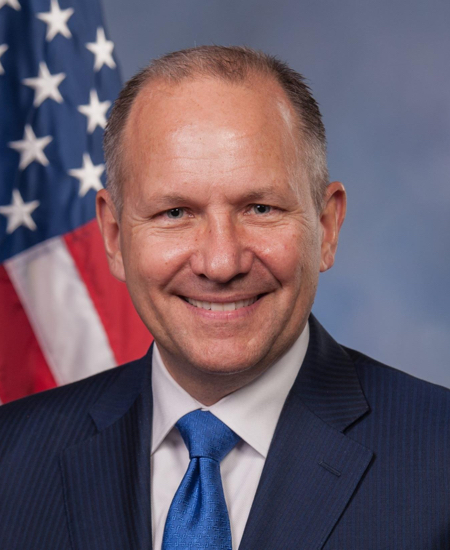
Rep. Lloyd Smucker
Sponsored bills
Reporting Accountability and Abuse Prevention Act of 2021 This bill requires recipients of grants for family planning services to demonstrate their compliance with state and local laws that mandate reporting of child abuse, human trafficking, or other mistreatment. If a grantee does not comply, the Department of Health and Human Services (HHS) must first work with the grantee to remedy violations. For subsequent violations, the bill directs HHS to recoup funds received by the grantee. It also bars the grantee from receiving family planning funds for 36 months.
Ensuring Accurate and Complete Abortion Data Reporting Act of 2021 This bill requires states, as a condition of federal payment under Medicaid for family planning services, to report certain abortion data to the Centers for Disease Control and Prevention (CDC). (Currently, reporting is voluntary.) The CDC must develop standardized questions for states with respect to specified variables (e.g., maternal demographics and methods of abortion).
Second Chance at Life Act of 2021 This bill requires abortion providers to disclose information about the possibility of reversing a medication abortion. This is a procedure that uses a medication regimen to terminate a pregnancy, typically with a two-drug protocol. Providers must inform patients that it may be possible to reverse the effects of a medication abortion after taking the first drug. They must also let patients know that more information and assistance is available on the Department of Health and Human Services (HHS) website. At least 24 hours before the procedure, the provider must share this information with the patient in person or by telephone. The provider must also include the information in written discharge instructions after the first drug is dispensed. The bill sets out an exception to these notification requirements when an abortion is necessary to resolve a physical injury or condition that threatens the life of the woman. The provider must document the circumstances giving rise to the exception in the patient's medical file. Furthermore, providers must post signs with this information in their offices or facilities, and HHS must maintain information about reversing medication abortions on its website.
Defund Planned Parenthood Act of 2021 This bill restricts federal funding for Planned Parenthood Federation of America Inc. or any of its affiliates or clinics for one year. Specifically, it prohibits funding those entities unless they certify that the affiliates and clinics will not perform, and will not provide funds to entities that perform, abortions during that year. If the certification requirement is not met, the Department of Health and Human Services and the Department of Agriculture must recoup any federal assistance received by those entities. However, the bill's funding restriction does not apply to abortions performed in cases of rape or incest or when necessary to resolve a physical condition that endangers a woman's life. The bill also provides additional funding for community health centers for the one-year period. These funds are subject to the same abortion-related restrictions and exceptions.
Title X Abortion Provider Prohibition Act This bill prohibits the Department of Health and Human Services (HHS) from awarding family planning grants to entities that perform abortions or provide funding to other entities that perform abortions. To receive a grant, an entity must certify it will refrain from those activities during the grant period. The bill provides exceptions for abortions (1) in cases of rape or incest; or (2) when the life of the woman is in danger due to a physical disorder, injury, or illness. It also exempts hospitals unless they provide funds to non-hospital entities that provide abortions. HHS must report annually on this prohibition.
Women's Public Health and Safety Act This bill allows a state to exclude from participation in the state's Medicaid program a provider that performs an abortion, unless (1) the pregnancy is the result of rape or incest, or (2) the woman suffers from a physical issue that would place her in danger of death unless an abortion is performed. Under current law, a state plan for medical assistance must provide that any individual eligible for medical assistance may obtain required services from any provider qualified to perform them.
Protecting Life in Crisis Act This bill specifies that federal funds allocated for COVID-19 (i.e., coronavirus disease 2019) response efforts may not, in general, be used for abortions. Current law generally prohibits the use of federal funds for abortions through language included in appropriations bills, such as the Hyde Amendment. The bill also restricts the use of federal tax credits or other federal funding for health insurance coverage if the coverage includes abortions.
This bill establishes in the legislative branch the Election Integrity Commission. The commission must (1) study the integrity and administration of the November 2020 general election; and (2) make recommendations to Congress on improving the security, integrity, and administration of federal elections. The commission terminates 30 days after the submission of its final report.
Nurses Certification And Recognition of Experience Act of 2021 or the Nurses CARE Act of 2021 This bill expands qualifying training and competency requirements for nurse aides in Medicare skilled nursing facilities (SNFs) and Medicaid nursing facilities (NFs) for nurse aides who initially train and work during the public health emergency relating to COVID-19 (i.e., coronavirus disease 2019). Currently, SNFs and NFs may not hire nurse aides for longer than four months unless they meet certain training and certification requirements. The Centers for Medicare & Medicaid Services has waived some of these requirements during the emergency period so as to allow facilities to maintain adequate staffing levels. The bill allows individuals who complete a training program, competency assessment, and at least 80 hours of supervised work experience as a temporary nurse aide during the emergency period, and who meet other specified competency requirements, to qualify for prolonged work as nurse aides in SNFs and NFs beyond the emergency period.