

Medicare Economic Security Solutions Act This bill modifies provisions relating to enrollment periods for Medicare medical services. Among other things, the bill establishes a late enrollment penalty of 15% of monthly premiums and applies the penalty for a period equal to twice the number of months in each 12-month period during which the individual was not enrolled. Currently, the late enrollment penalty is 10% of monthly premiums for each 12-month period during which the individual was not enrolled, and the penalty continues to apply for as long as the individual is enrolled in Medicare medical services. The bill also expands the special enrollment periods to individuals who have health insurance coverage other than through their employer.
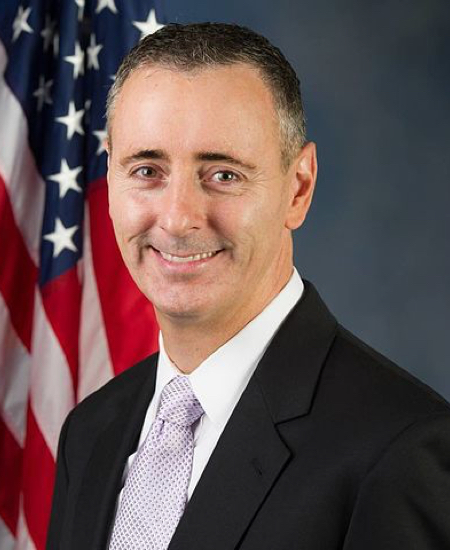
Rep. Brian K. Fitzpatrick
Sponsored bills
Mental Health Access Improvement Act of 2021 This bill provides for coverage of marriage and family therapist services and mental health counselor services under Medicare. It also excludes such services from the skilled nursing facility prospective payment system, and authorizes marriage and family therapists and mental health counselors to develop discharge plans for post-hospital services.
This bill reauthorizes through FY2026 and revises the Energy Efficiency and Conservation Block Grant Program. Under the program, the Department of Energy provides grants to local governments, states, and Indian tribes for energy efficiency and conservation projects and programs. This bill expands the allowable uses of grant funds to include the deployment of energy distribution technologies that significantly expand access to alternative fuels.
Protecting Access to Post-COVID-19 Telehealth Act of 2021 This bill makes permanent several telehealth flexibilities that were initially authorized during the public health emergency relating to COVID-19 (i.e., coronavirus disease 2019), particularly with respect to Medicare coverage of telehealth services. For example, the bill permanently allows federally qualified health centers and rural health clinics to serve as the distant site (i.e., the location of the health care practitioner) for telehealth services under Medicare. Payment must be made in the same manner as for non-telehealth services, rather than in accordance with a separate methodology determined by the Centers for Medicare & Medicaid Services (CMS). The bill also permanently allows beneficiaries to receive Medicare telehealth services at any site, regardless of type or location, and grants the CMS general authority to waive any other requirements during any emergency period.
COVID-19 Mine Worker Protection Act This bill requires the Department of Labor to issue health and safety standards to protect coal miners from occupational exposure to COVID-19 (i.e., coronavirus disease 2019). Labor shall provide for emergency standards within seven days of this bill's enactment, and such emergency standards shall be in force until permanent standards are promulgated. Labor shall also collect data to track and investigate cases of exposure to COVID-19 among coal miners.
This resolution mourns the death of U.S. Capitol Police Officer Brian D. Sicknick, and it honors his lifelong commitment to service and his selfless acts of heroism on January 6, 2021.
This resolution supports the goals of National Catholic Schools Week, an event cosponsored by the National Catholic Educational Association and the U.S. Conference of Catholic Bishops and established to recognize the contributions of Catholic elementary and secondary schools in the United States.
This resolution expresses support for the designation of National Stalking Awareness Month. Additionally, it does the following: applauds the efforts of service providers, police, prosecutors, national and community organizations, campuses, and private sector supporters to promote awareness of stalking; encourages increased awareness of stalking and the availability of services for stalking victims; and urges national and community organizations, private businesses, and the media to promote awareness of the crime of stalking through National Stalking Awareness Month.
This resolution calls for the federal government to establish a national biodiversity strategy, which must include a goal of conserving at least 30% of U.S. lands and waters to protect biodiversity and address climate change by 2030 and other goals necessary to reduce the threats to biodiversity.
This resolution expresses the gratitude of the House of Representatives to the members of the National Guard and law enforcement agencies who were deployed to the District of Columbia to ensure a safe and secure environment for the 59th inauguration.