

Supporting Early-Career Researchers Act This bill authorizes the National Science Foundation to establish a two-year pilot program to award grants to highly qualified early-career investigators to carry out an independent research program at the institution of higher education chosen by such investigator, to last for a period not greater than two years. The NSF shall select grantees from among citizens, nationals, and lawfully admitted permanent resident aliens of the United States. The NSF shall conduct program outreach to recruit fellowship applicants (1) from all regions of the country; (2) from historically underrepresented populations in the fields of science, technology, engineering, and mathematics (STEM); and (3) who graduate from or intend to carry out research at a variety of types of institutions of higher education, including Historically Black Colleges and Universities.
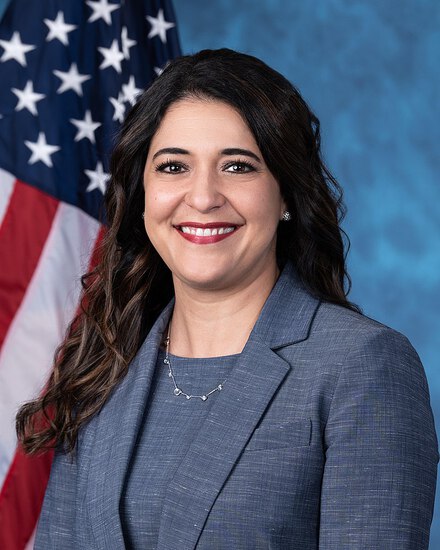
Rep. Stephanie I. Bice
Sponsored bills
This resolution expresses support for the designation of National CASA/GAL Volunteers Day to commend the work of court-appointed special advocate (CASA) and guardian ad litem (GAL) volunteers.
Institutional Grants for New Infrastructure, Technology, and Education for HBCU Excellence Act or the IGNITE HBCU Excellence Act This bill establishes a grant program to support long-term improvements of historically Black colleges and universities (HBCUs) and graduate programs at HBCUs. Specifically, the bill requires the Department of Education (ED) to award grants to HBCUs to improve campus facilities. A recipient must use grant funds for certain activities, such as constructing or renovating facilities, carrying out major repairs, and strengthening the safety and security of a campus. Any new construction, modernization, or renovation projects must meet building code and energy and water conservation requirements. Further, HBCUs must seek to procure contracts from certain small businesses, including those owned and controlled by veterans and service-disabled veterans. The bill prohibits the use of grant funds for specified activities, including for the payment of routine and predictable maintenance costs, minor repairs, and utility bills. The Government Accountability Office must study the implementation of the grant program. The bill also requires ED to repay the outstanding balance of principal, interest, fees, and costs and any related reimbursements for certain capital financing loans.
Regulations from the Executive in Need of Scrutiny Act of 20 21 This bill revises provisions relating to congressional review of agency rulemaking. Specifically, the bill establishes a congressional approval process for a major rule. A major rule may only take effect if Congress approves of the rule. A major rule is a rule that results in (1) an annual effect on the economy of $100 million or more; (2) a major increase in costs or prices for consumers, individual industries, government agencies, or geographic regions; or (3) significant adverse effects on competition, employment, investment, productivity, innovation, or the ability of U.S.-based enterprises to compete with foreign-based enterprises. In addition, the bill establishes a congressional disapproval process for a nonmajor rule. A nonmajor rule may only take effect if Congress does not disapprove of the rule.
STOP II: Classrooms Over Conference Rooms Act This bill increases the authorization of appropriations for FY2022-FY2028 for the Secure Our Schools grant program. The program provides grants to states, local governments, and Indian tribes to improve security, including the placement and use of metal detectors and other deterrent measures, at schools and on school grounds. The bill requires any funds appropriated under the Consolidated Appropriations Act, 2021, which may be used for renting conference rooms in the District of Columbia with respect to the administration of federal education programs, to instead be used for the Secure Our Schools grant program.
Homeland and Cyber Threat Act or the HACT Act This bill allows claims in federal or state court against foreign states that conduct or participate in cyberattacks against U.S. nationals.
Police Officers Protecting Children Act This bill specifies that certain active and retired law enforcement officers who are authorized to carry concealed firearms are not subject to the federal prohibition on possessing (or discharging) a firearm in a school zone.
21st Century NICS Act This bill modifies procedures for conducting firearms-related background checks through the national instant criminal background check system (NICS). Specifically, it permits the NICS to query an additional database—the National Data Exchange—as part of a firearm-related background check.
This bill waives certain eligibility requirements for hospitals participating in the 340B drug discount program (i.e., a program that allows entities to receive covered outpatient drugs at reduced prices from manufacturers) during the COVID-19 (i.e., coronavirus disease 2019) public health emergency. Specifically, the bill waives the required minimum proportion of low-income patients served for hospitals that began participating in the program during or prior to the COVID-19 emergency.
Metastatic Breast Cancer Access to Care Act This bill expedites payment of Social Security Disability Insurance (SSDI) benefits and eligibility for Medicare coverage for those with metastatic breast cancer (i.e., breast cancer that has spread to other sites in the body). Specifically, the bill eliminates the 5-month waiting period for SSDI benefits and the subsequent 24-month waiting period for Medicare coverage for individuals with metastatic breast cancer. Under current law, individuals generally must wait five months after the onset of disability to begin receiving SSDI benefits and an additional 24 months to become eligible for Medicare.