

Maddy summaryThis bill adds Medicare coverage for multi-cancer early detection screening tests (blood or biological tests analyzing cell-free DNA) starting January 1, 2028. It directly affects Medicare beneficiaries aged 68 and older (starting in 2028, with the age limit increasing by 1 year annually), requiring tests to be FDA-cleared and deemed reasonable/necessary by the Secretary for early cancer detection across multiple organ sites. Payment will initially match current stool DNA test rates before 2031, then shift to a lower rate or new payment system after 2031, with limits preventing more than one test per year. The bill explicitly states it does not alter coverage for existing cancer screenings like breast, colorectal, or prostate cancer tests.
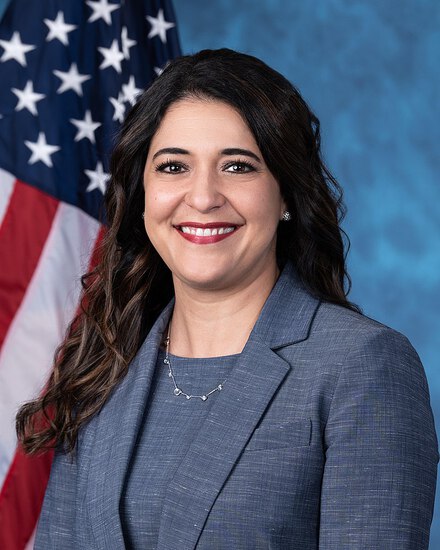
Rep. Stephanie I. Bice
Sponsored bills
Maddy summaryThis bill would require all states to recognize valid concealed carry permits issued by other states, allowing permit holders to carry concealed handguns (excluding machine guns) in any state that either issues such permits or doesn't prohibit concealed carry. It directly affects law-abiding gun owners with valid permits from their home state, ensuring they can carry in states with similar permit systems or no prohibitions. Key provisions include treating valid permit documents as proof of legal carry (reducing officer stops), shifting the burden of proof to prosecutors if challenged, and allowing civil lawsuits for violations with attorney's fee awards. The bill does not override state laws restricting firearms on private property or government land, nor does it affect federal gun restrictions like those in section 922(q).
Maddy summaryHR 5636, the *Protect Consumers from Reallocation Costs Act of 2025*, prevents the Environmental Protection Agency from shifting renewable fuel obligations from small refineries with extended exemptions to other companies. It directly affects small refineries that have received extended exemptions under the Clean Air Act. The bill requires the EPA to include gasoline or diesel refined by these exempt refineries in the total fuel volume calculations for the year, rather than excluding it or reallocating the obligation. This change ensures small refineries’ production is counted toward overall fuel volume, preventing other entities from bearing their renewable fuel requirements. The law modifies Section 211(o)(9) of the Clean Air Act (42 U.S.C. 7545(o)(9)).
Maddy summaryThe SAVES Act (HR 2605) creates a 5-year pilot program where the Department of Veterans Affairs (VA) awards competitive grants to nonprofit organizations to provide service dogs to veterans with specific disabilities. It directly affects veterans with covered conditions like blindness, mobility impairments, PTSD, traumatic brain injury, or other disabilities deemed appropriate for service dog assistance by the VA. Key provisions include: grants capped at $2 million per nonprofit (with $10 million annually authorized), no fees charged to veterans, VA-provided lifetime veterinary insurance for the dogs, and requirements for nonprofits to train veterans and maintain humane animal standards. The program aims to expand access to service dogs as a support tool for veterans managing qualifying disabilities.
Maddy summaryHRES 719 is a House resolution honoring Charles "Charlie" James Kirk, the founder of Turning Point USA who was assassinated on September 10, 2025. The resolution condemns his assassination and all political violence, extends condolences to his family, and calls on Americans to reject violence while promoting civil discourse. It specifically recognizes Kirk's legacy as a defender of constitutional principles and his role in inspiring youth through free speech and faith-based civic engagement. As a commemorative resolution, it does not enact policy changes but formally expresses the House's stance on honoring his life and legacy.
Maddy summaryHRES 744 is a non-binding House resolution supporting the designation of September 21-27, 2025, as "Gold Star Families Remembrance Week." It honors families who lost members in military service (Gold Star Families) and families of veterans, recognizing their sacrifices. The resolution encourages Americans to observe the week through community service and by celebrating the lives of those who died defending the U.S. It does not create new laws or policies but formally recognizes these families annually. This is a commemorative measure, not a legislative change.
Maddy summaryThis non-binding resolution (HRES 735) designates the month of July as "American Families Month" to raise public awareness about the importance of "strong, stably married families." It does not create new laws or policies but formally recognizes the House's view that nuclear families provide optimal conditions for children's outcomes and contribute to societal well-being, citing studies on family structure. The resolution calls for policies supporting "nuclear families" and removing barriers to family formation. It has no direct impact on individuals or existing legislation, serving solely as a symbolic gesture.
Maddy summaryHRES 742 is a ceremonial resolution recognizing the 250th anniversary of the U.S. Navy's founding on October 13, 1775, when the Continental Congress established the first U.S. naval force. It formally acknowledges the Navy's historical role in protecting American interests and its current global presence (over 290 ships, 3,700 aircraft, and 500,000 personnel). The resolution expresses appreciation for Navy personnel past and present and reaffirms congressional support for the Navy as a key element of national defense and global stability. As a commemorative resolution, it has no policy or funding impact - it serves only to honor the Navy's legacy.
Maddy summaryThis federal bill requires abortion providers to inform patients about potential reversal of mifepristone-based chemical abortions (the two-drug process) at least 24 hours before the procedure. After the first drug is dispensed, providers must give written instructions stating that reversal may be possible if the second pill hasn't been taken. Facilities must post visible signs about reversal options, and the government must maintain a website with reversal resources. Violations allow affected patients or family members to sue for damages.
Maddy summaryHR 5456, the NWR Modernization Act of 2025, modernizes the NOAA Weather Radio system to improve nationwide access to weather and hazard alerts. It requires expanding coverage to rural communities, national parks, tribal lands, and areas with poor cellular service while upgrading to internet-based broadcasts and developing backup systems. The bill mandates a 12-month assessment to evaluate access needs, compatibility with third-party apps, and reliability during outages. This directly affects all U.S. residents, particularly those in underserved areas currently lacking reliable access. Key provisions include transitioning to modern infrastructure, enhancing alert systems, and ensuring continuous real-time broadcasts.