

Enhanced Iran Sanctions Act of 2025 This bill imposes sanctions on certain foreign persons (individuals and entities) that are involved in Iran's petroleum sector as well as certain associated persons. The bill also requires or authorizes actions to facilitate the enforcement of sanctions on Iran. Specifically, the bill requires the President to impose visa- and property-blocking sanctions on any foreign person that, after the bill's enactment, knowingly engages in any transaction related to the processing, export, or sale of oil, condensates, gas, liquefied natural gas, or other petrochemical products in whole or in part from Iran. The President must also impose sanctions on certain foreign persons associated with a sanctioned individual or entity. For example, the President must sanction the subsidiaries and corporate officers of a sanctioned business. The bill provides certain exceptions to these sanctions, including specifying that sanctions do not apply to the importation of goods or to conducting or facilitating transactions for humanitarian assistance. The Department of State must establish an interagency working group that shall seek to establish a multilateral contact group to coordinate international efforts to enforce sanctions on Iran. The bill expands the State Department rewards program to authorize a reward payment to any individual who furnishes information leading to the identification of a person (1) subject to sanctions under this bill, or (2) that has attempted or is attempting to evade sanctions under this bill.
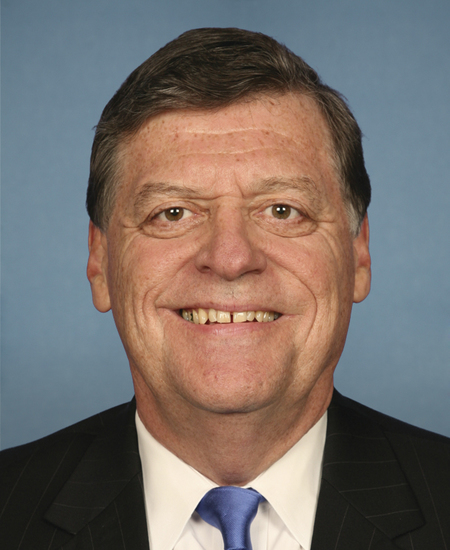
Rep. Tom Cole
Sponsored bills
Department of Homeland Security Appropriations Act, 2026 This bill provides appropriations to the Department of Homeland Security (DHS) for the remainder of FY2026. It also ends the partial DHS shutdown that began on February 14, 2026, because the continuing resolution (CR) that was funding DHS expired and a regular FY2026 DHS appropriations bill had not been enacted. Specifically, the bill provides appropriations to DHS for Departmental Management, Intelligence, Situational Awareness, and Oversight, including the Office of the Secretary and Executive Management; the Management Directorate; Intelligence, Analysis, and Situational Awareness; and the Office of Inspector General. In addition, the bill provides appropriations for Security, Enforcement, and Investigations, including U.S. Customs and Border Protection, U.S. Immigration and Customs Enforcement, the Transportation Security Administration, the U.S. Coast Guard, and the U.S. Secret Service. The bill provides appropriations for Protection, Preparedness, Response, and Recovery, including the Cybersecurity and Infrastructure Security Agency, and the Federal Emergency Management Agency (FEMA). The bill provides appropriations for Research, Development, Training, and Services, including U.S. Citizenship and Immigration Services, the Federal Law Enforcement Training Centers, and the Science and Technology Directorate. The bill also authorizes back pay, in accordance with current law, for federal employees who were affected by the partial DHS shutdown. Finally, the bill ratifies and approves certain obligations that were incurred during the partial DHS shutdown, including obligations incurred to maintain the essential level of activity to protect life and property and bring about an orderly termination of government functions.
Maddy summaryThis bill, known as the Tribal Firearm Access Act, would allow members of federally recognized Tribes to use their Tribal government identification documents instead of state-issued IDs when purchasing firearms from federally licensed dealers. The legislation amends federal law to officially recognize Tribal government IDs as valid forms of identification for firearm transactions, while defining "Tribal government" to include the governing bodies of federally recognized Indian and Alaska Native Tribes. The changes would take effect 90 days after the bill is enacted, directly affecting Tribal members seeking to exercise their right to purchase firearms under current federal regulations.
Maddy summaryThis bill, the Tribal Tax and Investment Reform Act of 2026, treats federally recognized Indian tribes and Alaska Native entities as states for specific tax purposes, allowing them to issue tax-exempt bonds and maintain employee pension plans under the same rules as state governments. It creates a new $175 million annual tax credit allocation for investments in tribal areas, expands existing employment tax credits, and clarifies how tribal general welfare benefits and trust funds are treated for federal assistance programs. The legislation also establishes uniform fiduciary standards for tribal pension plans, provides technical assistance for tribal area investments, and ensures tribal areas qualify for certain affordable housing tax incentives.
Tribal Trust Land Homeownership Act of 2025 This bill sets forth requirements for the processing of a proposed residential leasehold mortgage, business leasehold mortgage, land mortgage, or right-of-way document by the Bureau of Indian Affairs (BIA). The BIA must notify lenders upon receipt of such documentation, perform a preliminary review of such documents not later than 10 days after receipt, and approve or disapprove of such documents within 20 or 30 days, depending on the type of application. Additionally, the bill sets forth requirements for the BIA regarding (1) response times for the completion of certified title status reports, (2) notification of delays in processing, and (3) the form of notices and delivery of certain reports. The bill also provides relevant federal agencies and Indian tribes with read-only access to the Trust Asset and Accounting Management System maintained by the BIA. The Government Accountability Office must report on digitizing documents for the purpose of streamlining and expediting the completion of mortgage packages for residential mortgages on Indian land. Finally, the bill establishes within the BIA's Division of Real Estate Services the position of Realty Ombudsman.
Maddy summaryHR 4304, the FAIR Bet Act, amends the tax code to allow gamblers to deduct 100% of their wagering losses instead of the current 90% limit. This change directly affects individuals who report gambling losses on their federal income tax returns. The key provision modifies Section 165(d) of the Internal Revenue Code to remove the 90% restriction on deducting gambling losses. The bill does not alter how gambling winnings are taxed, only the deduction available for losses.
Maddy summaryThe Tribal Warrant Fairness Act updates federal law to ensure Indian tribes have equal standing with local and state governments in specific law enforcement contexts. It amends the U.S. Marshals Service statute to explicitly include "Tribal fugitive matters" when requested by an Indian Tribe, and revises the Presidential Threat Protection Act to add "Indian Tribes" and "Tribal law" to relevant provisions. These changes directly affect tribal governments by requiring federal agencies to recognize tribal requests and jurisdiction in warrant-related matters and threat protection. The bill makes no new policy but clarifies existing federal procedures to include tribal authorities on par with local and state entities.
Maddy summaryHR 7457, the Nigeria Religious Freedom and Accountability Act of 2026, designates Nigeria as a Country of Particular Concern (CPC) under U.S. law due to ongoing religious persecution. The bill mandates the U.S. Secretary of State to impose targeted sanctions (including visa bans and asset freezes under the Global Magnitsky Act) on specific Fulani militias, officials like former Kano Governor Rabiu Musa Kwankwaso, and groups like MACBAN, and requires annual reports on Nigeria’s compliance with religious freedom standards. Key provisions include urging Nigeria to repeal blasphemy laws, protect religious minorities, investigate violence, and facilitate the return of internally displaced persons. The bill directly affects the Nigerian government, perpetrators of religious violence, and vulnerable religious communities, particularly Christians.
Maddy summaryHR 7391, the Community Health Center Drug Pricing Protection Act, requires that Federally Qualified Health Centers (FQHCs) pay the discounted 340B ceiling price for covered drugs **at the time of purchase**, not later through rebates or adjustments. This directly affects FQHCs, which rely on 340B discounts to provide affordable care to low-income patients. The bill amends the Public Health Service Act to prohibit manufacturers from entering agreements where FQHCs initially pay more than the ceiling price, with later reimbursement. It takes effect immediately upon enactment for all new drug purchases and applies to existing agreements starting then.
Maddy summaryThis bill prevents state or local governments from banning or restricting energy connections (like installation, modification, or access) based on the type or source of energy, such as electricity, natural gas, or renewable fuels. It directly affects consumers choosing energy providers and energy companies seeking to offer services. The key provision prohibits local laws, regulations, or policies that limit energy services sold in interstate commerce, covering all energy types listed in the bill’s definitions. It does not create new programs but limits regulatory authority at the state or local level. The law aims to ensure open access to diverse energy sources without source-based restrictions.