

Creating Opportunities Now for Necessary and Effective Care Technologies (CONNECT) for Health Act of 2021 or the CONNECT for Health Act of 2021 This bill expands coverage of telehealth services under Medicare. Among other provisions, the bill allows the Centers for Medicare & Medicaid Services (CMS) to waive certain restrictions, such as restrictions on the types of technology that may be used; permanently removes geographic restrictions on originating sites (i.e., the location of the beneficiary) and allows the home of the beneficiary to serve as the originating site for all services; permanently allows federally qualified health centers and rural health clinics to serve as the distant site (i.e., the location of the health care practitioner); and allows the CMS to generally waive coverage restrictions during any public health emergency. Additionally, the CMS must report on the effects of expanded telehealth services during the COVID-19 public health emergency, including with respect to the utilization, quality, and outcomes of services. The Center for Medicare and Medicaid Innovation may also test alternative payment models relating to expanded telehealth services.
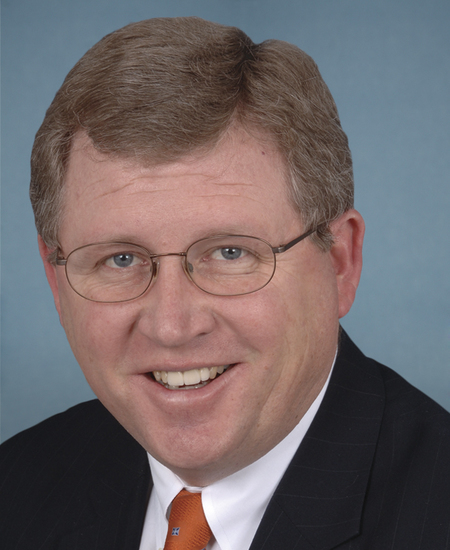
Rep. Frank D. Lucas
Sponsored bills
Pharmacy and Medically Underserved Areas Enhancement Act This bill provides for Medicare coverage and payment with respect to certain pharmacist services that (1) are furnished by a pharmacist in a health-professional shortage area, and (2) would otherwise be covered under Medicare if furnished by a physician.
No Taxpayer Funding for Abortion and Abortion Insurance Full Disclosure Act of 2021 This bill modifies provisions relating to federal funding for, and health insurance coverage of, abortions. Specifically, the bill prohibits the use of federal funds for abortions or for health coverage that includes abortions. Such restrictions extend to the use of funds in the budget of the District of Columbia. Additionally, abortions may not be provided in a federal health care facility or by a federal employee. Historically, language has been included in annual appropriations bills for the Department of Health and Human Services (HHS) that prohibits the use of federal funds for abortions—such language is commonly referred to as the Hyde Amendment. Similar language is also frequently included in appropriations bills for other federal agencies and the District of Columbia. The bill makes these restrictions permanent and extends the restrictions to all federal funds (rather than specific agencies). The bill's restrictions regarding the use of federal funds do not apply in cases of rape, incest, or where a physical disorder, injury, or illness endangers a woman's life unless an abortion is performed. The Hyde Amendment provides the same exceptions. The bill also prohibits qualified health plans from including coverage for abortions. Currently, qualified health plans may cover abortion, but the portion of the premium attributable to abortion coverage is not eligible for subsidies.
This resolution expresses the sense of the House of Representatives that the International Olympic Committee should officially recognize Jim Thorpe's athletic achievements as the sole Gold Medalist in the 1912 pentathlon and decathlon events and correct these inaccuracies in the official Olympic books.
Plastic Waste Reduction and Recycling Research Act This bill establishes the Plastic Waste Reduction and Recycling Research Program to improve the global competitiveness of the U.S. plastics recycling industry and to mitigate any harmful effects of plastic waste on the environment. The bill also provides for an interagency committee to coordinate agency activity in support of the program.
Advanced Recycling Research and Development Act of 2021 This bill requires the Department of Energy to implement research, development, and demonstration programs to (1) accelerate innovation in energy-efficient recyclable plastics, next-generation plastics, and composites recycling and upcycling strategies and technologies; and (2) support the development of advanced materials for batteries and innovative technologies to reclaim and recycle critical materials from advanced and lithium-based battery technologies used in consumer electronics, defense, stationary storage, and transportation applications.
This resolution expresses the sense of the House of Representatives that (1) clean water is a national priority, and (2) the 2020 final rule titled The Navigable Waters Protection Rule: Definition of "Waters of the United States" should not be withdrawn or vacated.
Paris Transparency and Accountability Act This bill restricts the President's authority to unilaterally establish or revise actions the United States plans to take to meet its obligations under the Paris Agreement (a climate change treaty adopted in 2015) and increases congressional oversight of those actions. The bill also prohibits any legal cause of action in U.S. courts pursuant to the Paris Agreement. Specifically, the President must report to Congress before proposing new or revised actions under the agreement. The report must describe the proposed actions, including their impact on global emissions, and outline a detailed plan to address economic effects and related considerations of the actions. If a proposed action results in increased energy or manufacturing costs, the report must include specific policy measures (and timelines for implementing the measures) to prevent (1) job displacement, (2) reduced global competitiveness of U.S. goods, and (3) leaked emissions that may occur as a result of the proposed action. After the President submits a report, the bill provides Congress with a 60-day period to review it. During the review period, Congress may block the actions proposed in the report by enacting a joint resolution of disapproval. The bill also outlines procedures for the introduction and consideration of this type of joint resolution.
BUILDER Act of 2021 or the Building United States Infrastructure through Limited Delays and Efficient Reviews Act of 2021 This bill places limits on the environmental review of proposed major federal actions under the National Environmental Policy Act of 1969 (NEPA) and establishes deadlines and other requirements to expedite the environmental review of such actions. Specifically, the bill limits the scope of the environmental review of major federal actions significantly affecting the quality of the human environment as specified by the bill. The bill also specifies the thresholds that trigger when agencies must issue environmental assessments and environmental impact statements for proposed agency actions, outlines when agencies are not required to prepare environmental documents for such actions, and establishes deadlines to complete such documents. The bill also establishes a process for designating a lead federal agency as well as a joint lead agency, such as a state government, to supervise the environmental review under NEPA. A lead agency may allow a project sponsor to prepare environmental documents under specified circumstances. Additionally, the bill revises requirements concerning the judicial review of NEPA cases, including by establishing deadlines to file lawsuits under NEPA.
Haulers of Agriculture and Livestock Safety Act of 2021 or the HAULS Act of 202 1 This bill modifies exemptions with respect to commercial motor vehicle safety regulations involving the transportation of agricultural commodities and farm supplies. The bill allows the federal hours-of-service rules exemption regarding maximum driving and on-duty time for drivers transporting agricultural commodities and farm supplies to apply year-round. Current law provides an exception from the federal hours-of-service rules for the transportation of agricultural commodities within a 150 air-mile radius of the normal work reporting location only during planting and harvest periods which are determined by each state. Additionally, the Department of Transportation must revise the definition of agricultural commodity to include specific commodities that are covered by the federal hours-of-service rules exception.