

Maddy summaryHR 29, the Border Safety and Security Act of 2023, grants the Secretary of Homeland Security authority to restrict entry at U.S. land or maritime borders for certain immigrants deemed "covered aliens" (those inadmissible under immigration law due to lack of proper documentation). The bill requires the Secretary to suspend entry if they cannot detain or process these individuals as required by existing immigration law. It also allows state attorneys general to sue the Secretary in federal court if they believe border policies harm their state's residents. The law defines "operational control" using terms from the Secure Fence Act of 2006. This bill directly affects immigrants seeking entry who fall under the specified inadmissibility category.
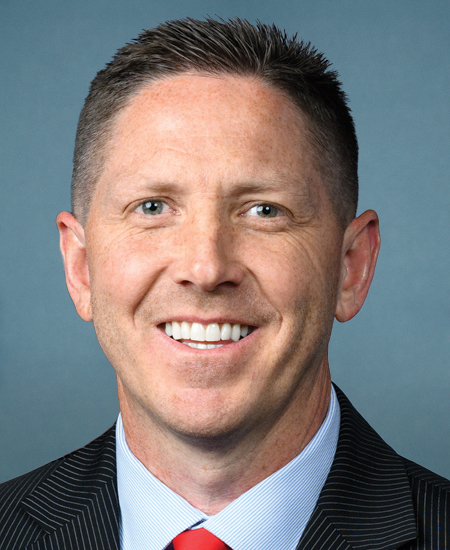
Rep. Josh Brecheen
Sponsored bills
Maddy summaryHCONRES 13 is a concurrent resolution expressing Congress's support for maintaining the current policy that prohibits imposing new fees on local radio stations for playing music. It states that Congress should not impose any performance fee, tax, royalty, or charge on local radio stations for broadcasting sound recordings over the air, or on businesses like bars and restaurants that play music publicly. The resolution argues that such fees would harm local radio stations - critical sources for emergency information and community programming - and jeopardize the economic model that has supported both radio and the music industry for decades. This resolution does not create new law but formally opposes potential legislative changes to the existing fee structure.
Maddy summaryHR 812, titled the "Inflation Reduction Act of 2023," would repeal the Inflation Reduction Act of 2022 (Public Law 117-169) and rescind unobligated funds from that law. This bill does not establish new policy but reverses the existing 2022 legislation, halting its ongoing programs and redirecting unused funding. It directly affects the continuation of the 2022 act's provisions, including climate and healthcare initiatives, by formally terminating them. The key mechanism is the repeal of the 2022 law and the rescission of remaining unobligated balances.
This resolution impeaches Secretary of Homeland Security Alejandro Nicholas Mayorkas for high crimes and misdemeanors related to his actions regarding border security and immigration.
Maddy summaryHR 646, the SHORT Act, clarifies firearm definitions under federal law to exclude antique firearms and certain collector items from the "firearm" category. It removes restrictions on short-barreled rifles and shotguns used lawfully by eliminating specific prohibitions in federal law and preempts state laws imposing taxes or registration requirements on these weapons. The bill also mandates the destruction of federal records related to short-barreled rifles, shotguns, and other weapons defined under the National Firearms Act within 365 days of enactment. This directly affects owners of these specific firearms, particularly collectors and individuals possessing short-barreled weapons legally under federal law. The key mechanisms include revised definitions, federal preemption of state regulations, and record destruction requirements.
Maddy summaryThe Restoring Military Focus Act (HR 678) repeals the Chief Diversity Officer position in the Department of Defense and prohibits the creation of similar roles. It specifically eliminates two existing positions: the Chief Diversity Officer (under pre-2021 Title 10, U.S. Code) and the Senior Advisor for Diversity and Inclusion (under the 2021 National Defense Authorization Act). The bill bans federal funding for any new position that matches or closely resembles these roles. This directly affects the Department of Defense's organizational structure by removing diversity-focused leadership roles and preventing their replacement.
Maddy summaryThis bill would prohibit the FDA from approving new abortion medications or investigational uses of existing ones. It would restrict currently approved abortion drugs to in-person administration only in clinics, hospitals, or medical offices by certified providers who can handle complications like ectopic pregnancy or severe bleeding. The law requires detailed adverse event reporting (excluding patient identifiers) to the FDA by both manufacturers and prescribers, and mandates provider certification covering pregnancy assessment, surgical intervention capabilities, and patient safety documentation. These provisions apply directly to healthcare providers, patients seeking medication abortions, and manufacturers of abortion drugs.
Maddy summaryThis bill prohibits all federal funding from being provided to EcoHealth Alliance, Inc. and its directly controlled subsidiaries, related organizations, or subgranted entities. It directly affects EcoHealth Alliance by cutting its access to federal grants, contracts, or other funding sources. The bill also requires the Government Accountability Office (GAO) to study and report on all federal funds provided to EcoHealth Alliance - whether intentionally or accidentally - to Chinese entities like the Wuhan Institute of Virology or the Chinese Communist Party, during the prior decade. The report must detail these funds and include any related agreements involving foreign entities. The bill focuses on restricting funding flows and requiring transparency, not on policy outcomes or advocacy.
Maddy summaryThis bill requires healthcare providers to give the same medical care to infants born alive during abortions as they would to any newborn, and to immediately admit such infants to a hospital. It mandates reporting of non-compliance to law enforcement and imposes penalties including up to 5 years in prison for violations. Women who undergo abortions can file civil lawsuits seeking money damages for injuries, three times the abortion cost, and punitive damages if care standards are not met. The bill also clarifies that abortion includes intentionally killing an unborn child or terminating pregnancy without specific exceptions (e.g., after viability to preserve life or removing a dead fetus).
Maddy summaryHRES 52 is a non-binding House resolution proposing that the U.S. flag be lowered to half-staff on January 22 each year to memorialize individuals affected by abortion policies since the 1973 Roe v. Wade decision. It specifically references the anniversary of Roe v. Wade (January 22, 1973) and the 2022 overturning of that ruling. The resolution encourages the public to observe this gesture as a memorial and urges lawmakers to support legislation respecting "the sanctity of life." As a symbolic resolution, it does not create new law or directly affect any specific group.