

This bill designates the facility of the United States Postal Service located at 189 East Main Street in Xenia, Ohio, as the "Gilman 'Gil' Whitney Post Office Building".
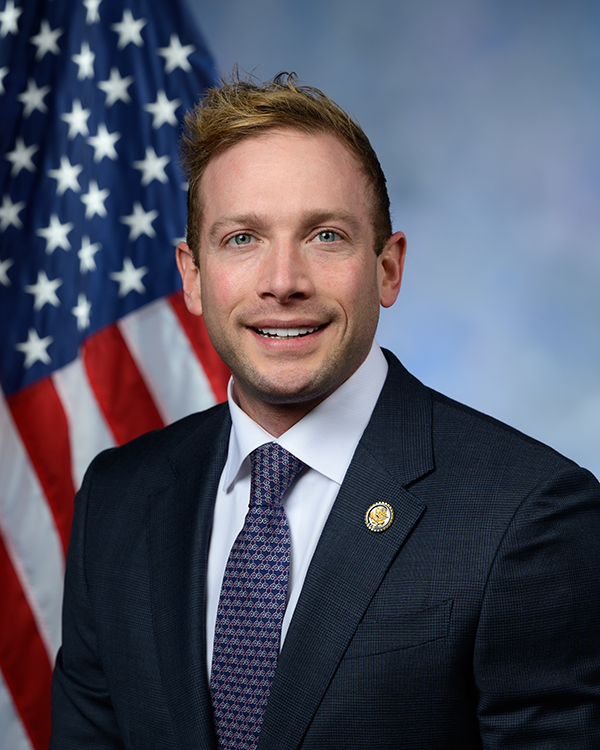
Rep. Max L. Miller
Sponsored bills
Maddy summaryThis bill modifies state unemployment programs to help job seekers start businesses. It removes the requirement that participants must first exhaust regular unemployment benefits before accessing self-employment assistance. States must now approve business plans or require entrepreneurial training/counseling for participants, who must also certify weekly participation. The bill also raises the cap on program participants from 5% to 10% of unemployed individuals. These changes aim to expand access to business ownership support through state unemployment systems.
Maddy summaryThis bill proposes to reverse several tax incentives for energy efficiency and clean energy that were previously extended by a 2024 law. It would end the tax deduction for energy-efficient commercial buildings, shorten the expiration date for the energy-efficient home credit, and delay the deadline for constructing clean hydrogen facilities. Additionally, the legislation would remove limits on the amount of credits available for clean electricity production and change how the phase-out of these credits is triggered. These changes directly affect property owners, builders, and businesses that currently rely on these specific tax breaks to fund green projects.
Maddy summaryThis bill establishes a framework to protect American-owned closed-source AI models from unauthorized extraction by foreign entities, particularly those from China and Russia. It requires the Secretary of State to conduct assessments identifying which foreign entities are conducting model extraction attacks or facilitating them through fraudulent account networks, then publish a public list of these actors for up to five years. The legislation authorizes the President to impose economic sanctions on identified entities and their affiliates, while also creating mechanisms for industry coordination and sharing information about threats. Importantly, the bill distinguishes between legitimate AI research conducted under contractual terms and unauthorized extraction attempts that bypass access controls or violate usage agreements.
Maddy summaryHR 6331, the ADVERSARIES Act, amends export control definitions to clarify which entities face restrictions. It specifically expands the definition of "entity" to include Chinese military companies listed under the 2021 National Defense Authorization Act, entities on Commerce Department lists (Supplements 4 and 7 to Part 744), and their 50%+ owned subsidiaries or affiliates. This change directly affects U.S. exporters and researchers who must now comply with export controls when dealing with these designated entities. The bill does not create new restrictions but formally incorporates existing lists into the legal definition under the Export Control Reform Act. It ensures U.S. export rules explicitly cover these specific strategic entities and their affiliates.
Maddy summaryThe ACCURATE Act establishes a new Commission on Hazard Risk Assessment Tools to improve the quality and consistency of natural hazard risk models used by federal agencies. This commission will include representatives from government agencies, state and local emergency organizations, insurance and banking industries, and various professional sectors to develop standards for hazard maps, flood assessments, and risk scores. The bill requires federal departments to adopt these new standards when purchasing hazard assessment tools from private companies, with specific documentation requirements to ensure the tools meet established quality criteria. The commission will submit regular reports to Congress on its findings and recommendations, and the entire commission will dissolve five years after the law takes effect.
Equal Representation Act This bill requires that the statement sent by the President to Congress after the decennial census indicating the number of persons in each state exclude noncitizens. (This statement is the basis for reapportionment of U.S. Representatives.) The bill also requires any questionnaire used in the decennial census to include a checkbox or other similar option for respondents to indicate whether the respondent and each household member is (1) a U.S. citizen, (2) a U.S. national but not a citizen, (3) a non-U.S. national ( alien under federal law) lawfully residing in the United States, or (4) a non-U.S. national unlawfully residing in the United States. The Department of Commerce must make public the number of persons in each state, disaggregated by each of these four categories.
Maddy summaryHRES 1196 is a House Resolution that formally designates April as "Cancer Prevention and Early Detection Month." The resolution expresses the House of Representatives' support for the goals and ideals of this month, affirming a national commitment to educating the public on disease prevention and commending advancements in multi-cancer early detection efforts.
Maddy summaryThe "Accountable Produce is Medicine Act of 2026" mandates the creation of a new pilot program within the Center for Medicare and Medicaid Innovation. This program requires selected healthcare providers to offer a comprehensive set of "Accountable Produce is Medicine services" to eligible Medicare, Medicaid, and CHIP beneficiaries. These services, provided without patient cost-sharing, include healthy foods (like fruits and vegetables), nutrition counseling, care coordination, and remote monitoring for individuals with specific chronic diseases in underserved areas. Participating programs will screen patients, deliver these services for a year, and track health data to evaluate outcomes and cost savings over a period of at least five years.
Maddy summaryThe "Taxpayer Protection and Somalia Accountability Act of 2026" aims to prevent the misuse of U.S. funds and foreign assistance in Somalia. It recommends that the President restrict certain money transfers from the U.S. to Somalia, particularly if they originate from government support programs or benefit the Somali government or terrorist organizations. The bill also suspends direct U.S. foreign assistance to the national Government of Somalia unless safeguards are established to prevent diversion. Additionally, it mandates visa restrictions and allows for sanctions against Somali officials and their families involved in corruption or aid diversion, while also authorizing rewards for information on fraud. These provisions primarily affect individuals sending money to Somalia, the national Government of Somalia, and specific Somali officials.