

Maddy summaryHR 6600, the Main Street Lending Improvement Act of 2025, orders a study to examine how small business loans are processed across the U.S. It directs the government auditor (Comptroller General) to analyze disbursement times, approval rates, and loan amounts for small businesses in Appalachian and non-Appalachian regions from 2021 to 2024. The study will measure processing steps, accessibility, and efficiency, with a report due to Congress within two years. This bill does not change loan rules or provide funding - it only gathers data to inform potential future improvements to the small business loan system.
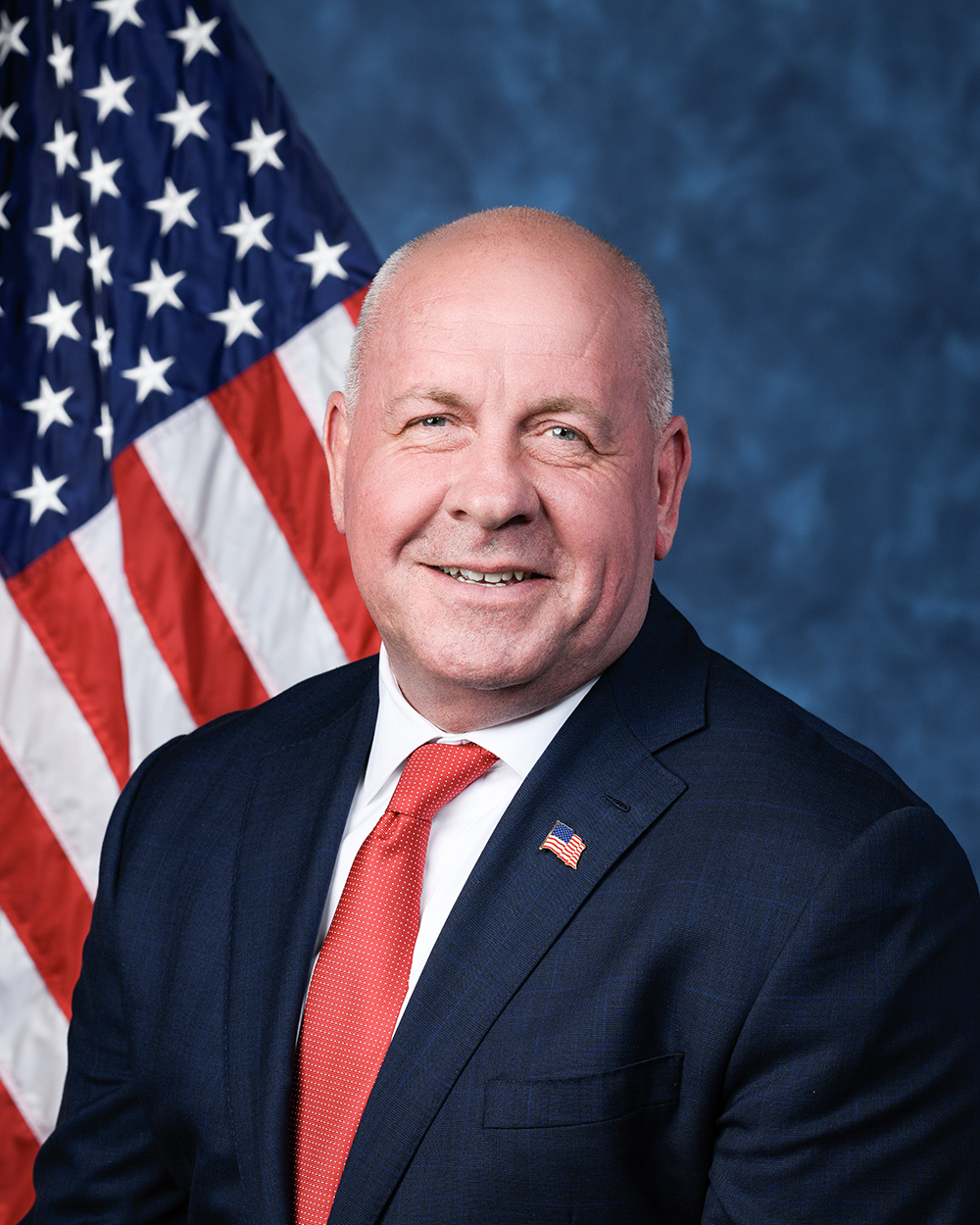
Rep. David J. Taylor
Sponsored bills
Maddy summaryHR 6592 redefines Medicaid-covered "private duty nursing" as "continuous skilled nursing services" for complex-care patients requiring multiple hours of daily nursing care (as determined by states), mandating these services be provided by licensed nurses (RNs or LPNs). It requires the Secretary to develop national quality standards for these services through a stakeholder working group, to be published within one year. The bill also updates Medicaid waiver services and quality measures to include continuous skilled nursing services, with standards reviewed every eight years. This directly affects complex-care Medicaid beneficiaries and their nursing providers across all states.
Maddy summaryThis bill prohibits public elementary and secondary schools receiving federal education funds from accepting money or entering contracts with the Chinese government, Chinese Communist Party, or their agents. Schools must also disclose any foreign funding or contracts within 30 days, including the source's name, country, amount, and terms. It directly affects all public K-12 schools participating in federal education programs. The law focuses solely on restricting funding sources and requiring transparency, with no provisions related to curriculum content or "combating lies" as referenced in the title.
Maddy summaryThe Workforce Flexibility Act amends the Workforce Innovation and Opportunity Act (WIOA) by removing a specific eligibility requirement for youth programs. It eliminates the "out-of-school priority," which previously limited certain workforce services to youth not enrolled in school. This change directly affects youth programs under WIOA, allowing them to serve a broader group of young people without that prior restriction. The bill makes a technical adjustment to program eligibility rules, not a major policy shift.
Give Kids a Chance Act of 2025 This bill expands the Food and Drug Administration’s (FDA’s) authority with respect to research on rare pediatric diseases, including by permitting the FDA to take enforcement action against drug sponsors that fail to satisfy pediatric study requirements and by reauthorizing programs that support pediatric research. Specifically, the bill modifies requirements relating to molecularly targeted pediatric cancer investigations to permit research on new drugs in combination with active ingredients that have already been approved, provided certain conditions are met; permits the FDA to take enforcement action against drug sponsors that fail to comply with pediatric study requirements, if such sponsors demonstrated a lack of due diligence in satisfying the requirement; renews the FDA’s authority to award priority review vouchers to sponsors of new products intended to treat rare pediatric diseases through September 30, 2029; and reauthorizes through FY2027 certain funding for the National Institutes of Health to support priority pediatric research. The bill also provides statutory authority for the FDA’s interpretation of the orphan drug exclusivity period. The bill specifies, consistent with FDA regulations, that the seven-year market exclusivity period for drugs for rare diseases or conditions (i.e., orphan drugs) prohibits the approval of the same drug for the same approved use or indication with respect to the disease or condition. (In Catalyst Pharmaceuticals, Inc. v. Becerra , a court rejected the FDA’s interpretation and held that orphan drug exclusivity extends to all uses or indications for the disease or condition.)
Maddy summaryHR 5563, the DRIVE-SAFE Act, creates a structured apprenticeship program for commercial drivers under age 21. It requires employers to provide a two-phase training program: a 120-hour probationary period focused on basic driving skills (like traffic navigation and safety awareness), followed by a 280-hour period covering advanced tasks (such as pre-trip inspections and load management). During both phases, apprentices must operate vehicles equipped with automatic transmissions, collision mitigation systems, and video capture, and must be accompanied by an experienced driver (26+ years old with no recent accidents or violations). The bill does not change existing commercial driver’s license requirements and mandates employers to maintain records and provide remediation for preventable accidents or violations during training.
Maddy summaryThis bill requires commercial motor vehicle drivers to demonstrate English proficiency to pass knowledge tests or receive certification. Starting two years after enactment, drivers must understand English traffic signs, communicate with safety officers (like border patrol), and exchange directions in English while operating vehicles. It bans administering these tests in any language other than English and mandates the Transportation Secretary to update related regulations within two years. The law directly affects commercial drivers seeking certification or renewing licenses under federal rules.
Maddy summaryThis bill is a commemorative resolution (not a law) recommending the U.S. Navy name a vessel after Rear Admiral Alene Duerk. It directs the Secretary of the Navy to honor her by naming a ship "U.S.S. Rear Admiral Alene Duerk," recognizing her service as the first woman promoted to rear admiral in the Navy. The bill details her WWII nursing service, postwar career progression, and military medals, but does not create new policy or funding. It is a non-binding expression of congressional sentiment regarding naval vessel naming.
Maddy summaryHR 6019 repeals a requirement that Senate offices must be notified when legal requests seek Senate data. Specifically, it removes Section 213 of the 2026 appropriations act, which mandated that Senate offices be informed about legal processes requesting disclosure of Senate data. This change directly affects Senate offices by eliminating a procedural notification step for legal requests involving their data. The bill makes no other policy changes, solely removing this specific administrative requirement.
Maddy summaryThis bill requires all new passenger vehicles manufactured for sale in the U.S. to include AM radio as standard equipment (not an optional add-on) by 2027-2028, depending on manufacturer size. It mandates that AM radio receivers must be easily accessible to drivers and allows compliance through digital AM broadcast technology. During a transition period, manufacturers must clearly label vehicles without AM radio but cannot charge extra for this feature. The bill also mandates a GAO study on AM radio's role in emergency alerts and includes a 10-year sunset provision for the rule. It preempts state laws regarding AM radio access in vehicles.