

Maddy summaryHR 7740, the African American History Act of 2026, authorizes $4 million annually for the National Museum of African American History and Culture to develop educational resources and support teaching about African American history. The bill directs the museum to create digital and print materials, provide teacher training, and expand access to curriculum resources for K-12 and college classrooms. It requires annual reports to Congress on fund usage and expires in 2030. This program directly affects educators and students by enhancing classroom materials and professional development on African American history.
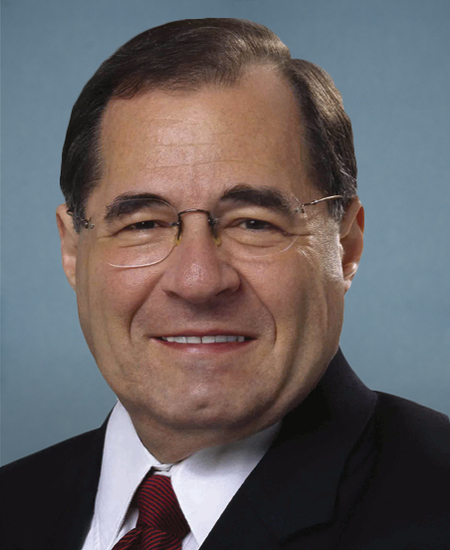
Rep. Jerrold Nadler
Sponsored bills
Maddy summaryThis bill establishes two new offices within the Supreme Court: an Office of Ethics Counsel and an Office of Investigative Counsel, both authorized by the Chief Justice. The Ethics Counsel office would provide guidance to justices and their spouses on judicial ethics matters including financial disclosures, gift acceptance, political activity, and conflicts of interest, while the Investigative Counsel office would review and investigate ethics complaints filed by congressional leaders against justices. Both offices would be staffed by experienced attorneys with competitive salaries, and the Investigative Counsel would have subpoena power to compel testimony and evidence during investigations. The bill also requires annual reports on ethics advice given and mandates that investigation findings be submitted to the Chief Justice and made available to congressional committees.
Maddy summaryHR 7659 designates the Pride flag as an authorized flag eligible for display at all National Park System units, including national monuments and parks. The bill specifically expresses Congress's sense that the Pride flag should be displayed at the Stonewall National Monument in New York City, which commemorates the 1969 LGBTQ rights uprising at the Stonewall Inn. It cites the monument’s significance as the first U.S. national monument dedicated to LGBTQ history and condemns the removal of the Pride flag from the site. The bill does not change existing park regulations but formally recognizes the Pride flag’s eligibility for display under National Park Service policy. It directly affects how the National Park Service manages flag displays at the Stonewall National Monument and other park locations.
Maddy summaryHR 7599 creates a federal framework for extreme risk protection orders (ERPOs), allowing family members or law enforcement to petition courts to temporarily prohibit individuals from possessing firearms when they pose a risk of harm to themselves or others. The bill establishes a process for issuing ex parte orders (up to 14 days) followed by a hearing within 72 hours to determine if a longer-term order (up to 180 days) should be issued, requiring respondents to surrender firearms to U.S. Marshals or designated law enforcement. Courts must consider specific factors like recent threats, violence, substance abuse, or cruelty to animals before issuing orders, with no fees for petitioners. The law requires law enforcement training to address bias, includes annual reporting requirements, and ensures firearms are returned once the order expires and the individual is eligible to own firearms under federal law.
Maddy summaryHRES 1061 is a symbolic resolution recognizing the cultural and historical significance of Lunar New Year in 2026. It does not create new laws or policies, but formally acknowledges Lunar New Year's origins (over 4,000 years in China), its celebration as Seollal in Korea and Tết in Vietnam, and its observance by millions of Asian Americans and others in the U.S. The resolution expresses respect for Asian Americans and extends holiday wishes for a "happy and prosperous new year" during the Year of the Horse. As a non-binding resolution, it has no legal effect or direct impact on any individuals or groups.
Maddy summaryThis bill requires the Department of Defense to obtain a clean audit opinion for its financial statements or face automatic spending reductions. If the Pentagon fails to achieve this by fiscal year 2026, non-exempt programs would lose 0.5% of funding in the first year of failure and 1% annually thereafter, with cuts applied across all programs within the affected department. Military personnel, reserve, National Guard, and Defense Health Program accounts are exempt from these reductions. Any funds saved through these cuts would be deposited into the General Fund for deficit reduction, not redirected to military operations.
Maddy summaryThis bill requires most employers to provide workers with earned paid sick leave. Employees would earn 1 hour of paid sick time for every 30 hours worked, up to 56 hours per year, which can be used for their own illness, medical care, caring for family members (including children, parents, spouses, domestic partners, or other family-like relationships), or addressing domestic violence, sexual assault, or stalking situations. The bill prohibits employers from retaliating against workers who use this leave and requires employers to inform employees about their rights. It ensures that workers who leave and return to the same employer within a year can reinstate their unused sick leave. This law would not override more generous state or local paid leave policies.
Maddy summaryThis bill establishes a 12-member National Council on African American History and Culture within the National Endowment for the Humanities (NEH). The Council, appointed by the President with Senate approval, will include experts in African American history and culture who are not federal employees, with balanced representation (6 Democrats, 6 Republicans) and attention to diversity. Its duties include evaluating NEH programs related to African American history, preparing annual reports, and making recommendations to improve preservation and celebration efforts. The Council will operate for 10 years, with members serving five-year terms and receiving partial compensation for their service.
Maddy summaryHRES 1058 is a non-binding House resolution recognizing the federal government’s duty to develop a Transgender Bill of Rights. It calls for specific policy changes, including amending civil rights laws to explicitly prohibit discrimination based on gender identity in employment, housing, and public accommodations; protecting access to gender-affirming medical care; and streamlining legal recognition of gender identity on federal documents like passports and voter registration. The resolution also proposes expanding protections for transgender and nonbinary individuals in healthcare, education, immigration, and correctional facilities, while emphasizing community-led policy development. As a resolution, it does not create new law but sets a framework for future legislative action.
Maddy summaryThe Firearm Safety Act of 2025 removes an existing exemption that prevents the Consumer Product Safety Commission from regulating firearms as consumer products. By amending the Consumer Product Safety Act, the bill allows the commission to apply its standard safety rules to guns, similar to how it regulates other household items. This change directly affects manufacturers and sellers of firearms by potentially subjecting them to federal safety standards and testing requirements. The legislation does not alter existing gun laws or create new bans, but rather changes the regulatory framework under which firearm safety is overseen.