

Maddy summaryHR 3190, the BRAVE Burma Act, extends sanctions authority for Burma by 10 years and requires annual reports on whether specific Burmese entities - like state-owned enterprises, Myanma Economic Bank, and jet fuel sector operators - meet sanctions criteria. It also limits Burma's potential increase in International Monetary Fund shareholding if the military-led State Administration Council remains in power. The bill creates a U.S. Special Envoy for Burma to coordinate all diplomatic and sanctions policy, develop multilateral sanctions strategies, and work with international partners on issues like arms embargoes and support for Burmese civil society. These provisions directly affect Burmese military entities, Burma's IMF representation, and U.S. diplomatic efforts toward Burma.
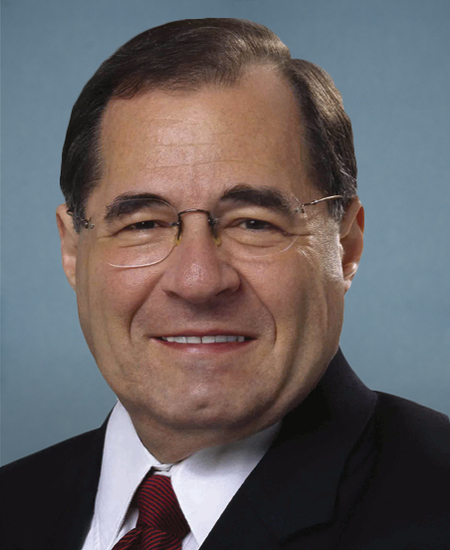
Rep. Jerrold Nadler
Sponsored bills
Maddy summaryThis bill requires the military to approve leave for abortion and fertility care without commanders needing to know the specific procedure. It mandates reimbursement for travel, lodging, meals, and transportation costs when care isn't available nearby, and prohibits punishment for using this leave. It directly affects active-duty service members and their dependents who face barriers to reproductive care due to military restrictions or location. The policy change removes command discretion in approving leave for time-sensitive reproductive health services.
This bill designates the facility of the United States Postal Service located at 15422 NY 104 in Martville, New York, as the "Sergeant Staret J. Engleston Memorial Post Office Building".
Maddy summaryHR 7371 (No Flight, No Fight Act of 2026) bans air carriers from transporting adult roosters as cargo, except for shipments originating from or destined to qualifying commercial farms. The bill requires shippers to provide USDA-certified documentation proving the farm meets the $350,000 annual gross income threshold for commercial operations. It defines "adult rooster" as a male chicken over 6 months old and specifies that exemptions apply only to legitimate agricultural purposes, not to prevent illegal activities like cockfighting. The Department of Transportation will enforce this rule, with violations subject to civil penalties, effective 180 days after enactment.
Maddy summaryHR 7335 establishes comprehensive humanitarian standards for individuals held in U.S. Immigration and Customs Enforcement (ICE) and U.S. Customs and Border Protection (CBP) custody. The bill requires facilities to provide immediate health screenings within 12 hours (6 hours for high-risk individuals like children, pregnant people, or those with medical conditions), ensure access to adequate water, sanitation, food (with 2,000+ calories daily for adults), and age-appropriate shelter. It mandates specific facility standards including separate housing for males and females, accessible accommodations for people with disabilities, daily outdoor access for those detained over 48 hours, and proper medical equipment and personnel on-site. The bill also requires regular inspections, staff training on humanitarian protocols, and public reporting of sexual abuse complaints. These standards directly affect all individuals detained by ICE or CBP, with special protections for vulnerable groups like children, pregnant people, and those with medical needs.
Maddy summaryHR 5658, the Child Care for Every Community Act, establishes a federal framework to create universal, high-quality child care and early learning programs available to all young children not yet required to attend school. The bill requires that covered children (children below compulsory school age) be entitled to participate in these programs, with no fees for low-income families and sliding-scale fees for others based on family income. Key provisions include requiring full-working-day, full-calendar-year care; setting national quality standards for staff qualifications and facilities; mandating comprehensive services including health, nutrition, and family support; and requiring coordination with schools to support children's transitions to kindergarten. The bill directly affects families seeking child care, child care providers, and local communities that would administer these programs through designated "prime sponsors."
Maddy summaryHJRES 144 is a congressional disapproval resolution targeting a specific rule issued by the Department of Veterans Affairs (VA) on December 31, 2025, which addressed "Reproductive Health Services" (90 Fed. Reg. 61310). This resolution directs Congress to disapprove the VA rule under Chapter 8 of Title 5, U.S. Code, meaning the rule would have no legal effect if passed. The bill directly affects the VA's implementation of reproductive health services for veterans, as it seeks to nullify the agency's existing policy. This is a procedural measure, not a substantive policy change, aimed solely at blocking the VA's rule through congressional action.
Maddy summaryHCONRES 68 would require the President to remove U.S. military forces from Venezuela unless Congress has explicitly authorized their use through a declaration of war or a specific law. This applies to any U.S. Armed Forces currently stationed in Venezuela without such authorization. The resolution is based on the War Powers Resolution, which mandates congressional oversight of military deployments. It directs the immediate withdrawal of unapproved forces without adding new time limits or conditions.
Maddy summaryThe NO NATO for Purchase Act bans federal agencies from using government funds to buy land or assets in NATO member countries. It directly affects all federal departments and agencies by prohibiting such acquisitions as defined in the 1949 North Atlantic Treaty. The key provision blocks any action or expenditure related to purchasing territory within NATO nations. This prevents U.S. government purchases of foreign territory belonging to NATO member countries.
Maddy summaryThe Find It Early Act requires most health insurance plans, Medicare, Medicaid, TRICARE, and VA benefits to cover certain breast cancer screenings without cost-sharing for specific at-risk groups. It affects individuals at increased breast cancer risk (as determined by medical guidelines), those with dense breast tissue (as defined by the American College of Radiology), and others requiring screening due to factors like age, race, ethnicity, or family history. The bill mandates coverage for various screening methods including mammograms, ultrasounds, MRI, and other technologies at frequencies recommended by the National Comprehensive Cancer Network. This requirement takes effect for plan years beginning January 1, 2026, removing financial barriers to early detection.