

Maddy summaryThe Universal School Meals Program Act of 2026 mandates that all public schools provide free breakfast and lunch to every enrolled student, regardless of income. It establishes specific funding rates for these meals, adjusts payments based on the use of locally sourced food, and eliminates the ability of schools to collect debt for unpaid charges. Additionally, the bill expands free meal access to summer programs, afterschool care, and incarcerated juveniles while updating poverty measurement standards across various federal education and nutrition laws.
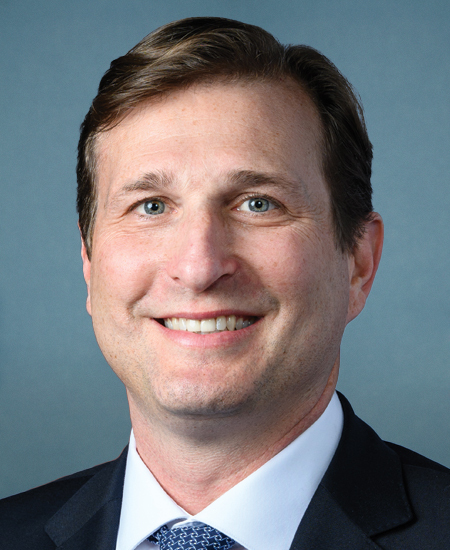
Rep. Daniel S. Goldman
Sponsored bills
Maddy summaryThis bill would amend federal law to strengthen penalties for organized retail crime by expanding definitions of theft to include digital goods, gift cards, and setting a $5,000 aggregate value threshold for charges over a 12-month period. It would establish a new "Organized Retail and Supply Chain Crime Coordination Center" under Homeland Security to coordinate Federal, State, local, and Tribal law enforcement efforts against cross-jurisdictional theft groups. The Center would share information with retailers, transportation companies, and law enforcement agencies, track crime trends, and produce annual reports on organized retail crime. This legislation directly affects retailers, supply chain businesses, and law enforcement agencies, while targeting organized crime groups responsible for a 93% increase in larceny incidents and rising safety concerns for retail employees. The bill aims to address significant financial losses and supply chain disruptions noted in the National Retail Federation's 2023 data.
Maddy summaryThis resolution formally designates May 10, 2026, as National Asian American, Native Hawaiian, and Pacific Islander Mental Health Day to raise awareness about mental health within these communities. The text highlights that many individuals in this diverse group face barriers to care, including high costs, language differences, and cultural stigma, which result in low rates of treatment utilization. While the measure itself is symbolic and does not create new laws or funding, it encourages federal, state, and local agencies to develop policies that improve access to culturally and linguistically appropriate mental health services.
Maddy summaryThe Assault Weapon Financing Accountability Act prohibits the use of "Buy Now, Pay Later" loans to purchase semiautomatic assault weapons. This ban applies to both lenders offering these short-term credit products and dealers who accept such loans for firearm sales. The bill defines "semiautomatic assault weapons" based on specific physical features like pistol grips, forward grips, and high-capacity magazines, and sets a civil penalty of $100,000 for violations by lenders or sellers.
Maddy summaryThis bill proposes a constitutional amendment to limit the tenure of Supreme Court justices to a maximum of 18 years. It would apply to all current justices, terminating their terms if they have already served 18 years or more, and would require the Chief Justice to be replaced according to existing laws if their term ends. The amendment aims to address concerns about judicial longevity by establishing a fixed term for all justices on the nation's highest court.
Maddy summaryThis bill is a non-binding resolution that expresses the House of Representatives' sentiment to honor public servants for their dedication to the United States. It specifically acknowledges the work of federal, state, and local government employees, as well as uniformed service members, who deliver essential services and support the economy. The resolution calls on the American public to observe Public Service Recognition Week with ceremonies and activities that recognize these contributions. Because it is a symbolic expression of the House's feelings rather than a law with enforceable rules, it does not create new policies or mandate specific actions.
Maddy summaryThe Afterschool for All Act significantly increases funding for the Community Learning Centers program, raising the annual appropriation from $1 billion to $10 billion for the fiscal years 2026 through 2035. This expansion aims to support after-school programs in elementary and secondary schools, directly benefiting students and educational institutions that rely on these grants. Additionally, the bill amends the name of the relevant section in the Elementary and Secondary Education Act to remove the term "21st Century," and it raises the corporate income tax rate from 21% to 22% for taxable years beginning after the law is enacted.
Maddy summaryThis bill proposes to ban Members, officers, and employees of the House of Representatives from trading in prediction markets that bet on specific events or contingencies. The rule would prohibit these individuals from entering into contracts or agreements involving excluded commodities, though it explicitly allows for standard insurance policies and legal sports betting. Additionally, the resolution expresses the House's preference that the executive and judicial branches adopt similar restrictions to prevent conflicts of interest.
Maddy summaryH.R. 1243 is a House resolution that formally recognizes May as Asian American, Native Hawaiian, and Pacific Islander Heritage Month to celebrate the contributions of these communities to U.S. history. The bill highlights the diverse populations, historical milestones, and significant achievements of Asian Americans, Native Hawaiians, and Pacific Islanders in government, the military, and society. It also acknowledges the ongoing challenges faced by these groups, including a rise in hate crimes and historical discrimination. As a commemorative resolution, the measure does not create new laws or funding but serves to express official congressional appreciation and awareness.
Maddy summaryThis bill establishes a new federal entity called the Language Access Board to ensure individuals with limited English proficiency can access government programs and services. The Board will be composed of 32 members, including public appointees and heads of federal agencies, who will develop standards for public-facing resources like websites and forms. Federal departments must comply with these accessibility standards, and the Board has the authority to investigate complaints and issue orders of compliance. Additionally, the Board will review existing language access laws and submit regular reports to Congress on progress and enforcement actions.