

Maddy summaryThe PREEMPT Act directs the federal government to issue guidance and provide technical assistance to states regarding Medicaid coverage for preeclampsia screening and detection tests. This legislation aims to improve outcomes for pregnant women by promoting early detection and management of the condition, which is a leading cause of maternal and fetal deaths. Specifically, it requires the Secretary of Health and Human Services to outline best practices and determine which advanced biomarker tests can be covered under state Medicaid plans. The bill does not mandate that states cover these tests but instead establishes a framework for federal support to help states evaluate and implement such coverage.
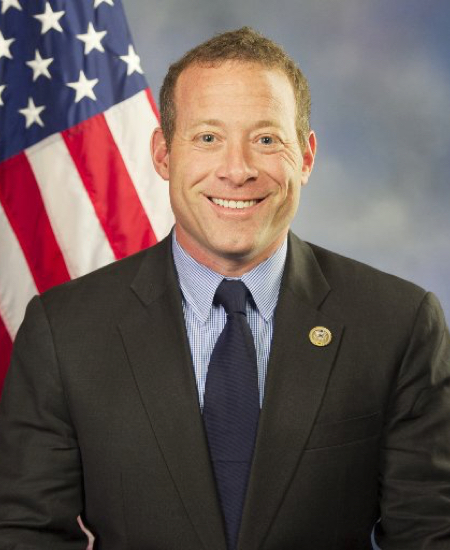
Rep. Josh Gottheimer
Sponsored bills
Maddy summaryThis bill, titled the National Police Athletic/Activities League Youth Enrichment Reauthorization Act, provides federal funding to expand youth programs run by the National Police Athletic/Activities League. The legislation authorizes $16 million annually from 2028 to 2032 to help the organization establish 250 new chapters in distressed areas and expand existing ones to serve more children. Grant funds must be used for after-school activities that include mentorship, academic support, sports, and training to prevent drug use and gang involvement. The program is designed to foster positive relationships between law enforcement and youth while offering alternatives to risky behaviors in communities with high numbers of at-risk children. Recipients of the funds are required to submit reports on their progress and ensure that local communities help design the specific activities offered.
Maddy summaryThe Celiac Safety Act of 2026 officially classifies gluten-containing grains as a major food allergen under federal law, directly impacting the food industry and individuals with celiac disease or gluten intolerance. This change requires manufacturers to label products containing wheat, rye, barley, or their crossbred hybrids with the same prominence as other major allergens like milk. The new labeling requirements will not take effect until 18 months after the law is enacted, giving businesses time to adjust their packaging and production processes.
Maddy summaryThe American High-Speed Rail Act expands federal funding and streamlines regulations to support the development of high-speed and higher-speed rail projects across the United States. It authorizes billions of dollars in grants for corridor planning, technology improvements, and construction, while allowing the federal government to cover up to 100% of project costs under specific conditions. The bill also introduces new provisions to facilitate land acquisition, prioritize border projects, and extend labor protections to workers involved in federally funded rail infrastructure. Additionally, the legislation defines higher-speed rail as trains traveling between 110 and 186 miles per hour and includes tax incentives for rail carriers that sell or lease property to support these projects.
Maddy summaryThis bill prohibits the registration of new broker-dealers and investment advisers in the United States if they are owned, controlled, or managed by entities or individuals from China. The law defines control as owning more than 15% of voting securities and bars registration for firms that receive specific services from Chinese affiliates, such as software development, platform infrastructure, or customer support. These restrictions apply to both the primary firm and its related parties, ensuring that no Chinese-linked entity can operate under these federal securities licenses. The ban is set to expire automatically five years after the law is enacted, at which point the prohibitions will be removed.
Maddy summaryH.Res. 1320 is a non-binding resolution that calls on all Americans to honor military personnel who died while serving in the pursuit of freedom and peace on Memorial Day 2026. The bill does not create new laws or change any policies; instead, it serves as a formal expression of gratitude and remembrance from the House of Representatives. Because it is a commemorative resolution rather than a procedural or funding measure, it has no direct legal effect on individuals or government operations.
Maddy summaryThis joint resolution seeks to officially reject a final rule issued by the Department of Education regarding federal student loan programs. If passed, the measure would prevent the new regulations from taking effect, leaving the previous rules in place. The bill directly impacts borrowers, lenders, and the Department of Education by nullifying the specific changes outlined in the "Reimagining and Improving Student Education" proposal. It is a procedural action that uses the Congressional Review Act to disapprove the agency's policy without altering the underlying law.
Maddy summaryThe Elder Pride Act of 2026 creates a new grant program under the Older Americans Act to support rural outreach initiatives for older individuals, including those from LGBTQI communities and other protected groups. Authorized funding of $5 million per year for fiscal years 2027 and 2028 will be distributed to states, tribal organizations, and nonprofit agencies that submit applications demonstrating a plan to partner with local communities. Recipients must use these funds to provide sexual health services, reduce social isolation, improve cultural competency among service providers, and expand nondiscrimination policies in areas not designated as urbanized. The bill requires that any federal money received supplement, rather than replace, existing state or local funding for related services.
Maddy summaryThis bill, the Provider Reimbursement Stability Act of 2026, aims to create more predictable payment adjustments for physicians and other healthcare providers under the Medicare program. It directly affects medical practices and providers who receive reimbursement for services through the physician fee schedule. The legislation increases a threshold for certain budget neutrality calculations from $20 million to $54.3 million in 2027, with automatic increases every five years thereafter. It also requires the government to correct payment estimates when actual service usage differs significantly from projections, mandates regular updates to cost calculations for practice expenses, and limits how much Medicare payment rates can change from year to year to a maximum of 2.5 percent.
Maddy summaryThis bill would add pharmacist services to Medicare Part B coverage for beneficiaries, specifically covering pharmacist-led testing and treatment for illnesses like flu, COVID-19, or strep throat during public health emergencies. It defines covered services as those performed under state law, often requiring collaboration with a physician, and sets payment at 80% of the lesser of the actual charge or 85% of physician payment rates. Pharmacists would be prohibited from balance billing for these services, ensuring Medicare beneficiaries pay only their standard copayment. The changes would take effect January 1, 2026.