

Maddy summaryHR 4611 (EACH Act of 2025) requires all federally funded health programs - including Medicaid, Medicare, military health plans, and the Indian Health Service - to cover abortion services without restrictions, repealing the Hyde Amendment's long-standing ban on federal funding for most abortions. This directly affects millions of people enrolled in these programs, particularly low-income women, women of color (including 25% of Black women and 22% of Hispanic women on Medicaid), and young people. The bill mandates coverage in all federally administered health plans and prohibits state or private insurers from restricting abortion coverage in health insurance. It aims to eliminate current federal and state barriers that deny abortion access to people who rely on government health programs.
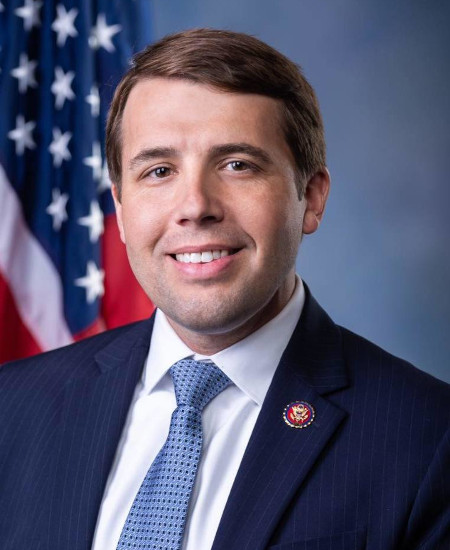
Rep. Chris Pappas
Sponsored bills
Maddy summaryHR 4063 requires the Department of Veterans Affairs (VA) to ensure veterans eligible for hospital care in each of the 48 contiguous states can access care at a VA full-service hospital within that state, or through a comparable contract with non-VA providers if no VA hospital exists there. This directly affects veterans who qualify for VA hospital care across all 48 contiguous states. The law mandates at least one VA hospital per state (or equivalent contracted care) to meet eligibility needs, without restricting veterans from receiving care in another state if needed. The VA must report to Congress within one year on compliance and whether the requirement improved care quality.
Maddy summaryThe RELIEVE Act modifies veterans' access to emergency care reimbursement under VA law. It removes the requirement for veterans to have previously received VA care before qualifying for emergency treatment reimbursement during the first 60 days after enrolling in the VA healthcare system. This change directly affects new VA enrollees seeking emergency medical care within that initial 60-day window, eliminating a prior barrier to immediate coverage. The amendment applies to emergency treatment provided one year after the bill's enactment date.
Maddy summaryHR 6887, the Stop Crimes Against Children Act, amends the PROTECT Our Children Act of 2008 to require federal agencies to develop specific plans. These plans must coordinate with nonprofit child advocacy organizations and universities to prevent, identify, and respond to crimes against children (including abuse, trafficking, and exploitation), and provide evidence-based guidance for supporting victims. The bill also mandates federal recommendations for state, local, and tribal law enforcement on best practices for preventing child crimes and supporting victims. It directly affects federal agencies, law enforcement, and organizations working with child victims. The key change is adding these coordination and recommendation requirements to existing federal strategy.
Maddy summaryHR 6840, the ARMENIA Security Partnership Act, requires the U.S. Secretary of Defense to annually certify whether Azerbaijan has met specific conditions related to Armenia, including withdrawing forces from Armenian territory, releasing prisoners, ending hostilities, and recognizing Armenian rights in Nagorno-Karabakh. If certification fails, the bill mandates an immediate review of U.S. security assistance to Armenia to assess gaps in Armenia’s defense capabilities and identify needed support. The review must evaluate historical U.S. security aid, threats to Armenia, and recommend steps to strengthen Armenia’s self-defense. It also blocks the use of a specific waiver (under the FREEDOM Support Act) that could bypass security aid restrictions if certification is not met. The bill directly affects U.S. security assistance decisions for Armenia based on Azerbaijan’s compliance with these conditions.
Aviation Funding Solvency Act This bill provides continuing appropriations to the Federal Aviation Administration (FAA) if (1) an appropriations bill for the FAA has not been enacted before a fiscal year begins, or (2) a law making continuing appropriations for the FAA is not in effect. Specifically, the bill provides appropriations from the Aviation Insurance Revolving Fund at the rate of operations that was provided for the prior fiscal year to continue programs, projects, and activities that were funded in the preceding fiscal year. The FAA may use the balance of the fund, minus $1 billion. If the FAA determines that the amounts from the fund are insufficient to continue all programs, projects, or activities, then the FAA must prioritize compensation payments for employees of the Air Traffic Organization (e.g., air traffic controllers). The bill provides the appropriations until the date on which either (1) specified appropriations legislation for the fiscal year becomes law, or (2) a bill making continuing appropriations becomes law. Finally, the bill permanently extends the FAA Non-premium War Risk Insurance Program. This program provides aviation insurance without a premium to eligible air carriers at the request of the Department of Defense or another federal agency, provided that the agency agrees to indemnify the FAA from all losses covered under the insurance. Eligible air carriers include those whose operations are under a federal contract and are necessary for national security or to carry out U.S. foreign policy.
Maddy summaryThis bill prohibits using fiscal year 2026 Department of Defense funds to implement hiring freezes, layoffs, or unnecessary delays in filling vacant positions at public shipyards. It directly affects public shipyards and their Federal civilian employees by preventing workforce reductions without justification. The key provision blocks specific personnel actions - hiring freezes, layoffs, and unfounded hiring delays - using Defense Department funding. This is a procedural measure focused on preserving existing workforce stability at these facilities.
Maddy summaryThe Postal Suspension Transparency Act (HR 6811) requires the U.S. Postal Service to create a public website displaying real-time details about post offices temporarily suspended under emergency policies. The site must include each affected location’s address, suspension date, reason for closure, alternative service options (like curbside delivery), nearby service locations, and estimated reopening dates. It will feature searchable tools by address or ZIP code and provide data in open, downloadable formats for public use. The website must be operational within one year of the bill’s enactment. This directly affects USPS operations and the public relying on postal services during temporary closures.
Essential Caregivers Act of 2025 This bill prohibits certain health care facilities from limiting the access of essential caregivers to residents of those facilities, including during designated emergency periods. Specifically, the bill generally prohibits Medicare skilled nursing facilities, Medicaid nursing facilities, Medicaid intermediate care facilities, and associated inpatient rehabilitation facilities from restricting the access of essential caregivers to residents of the facilities, including during emergency periods in which visitation rights are otherwise restricted. During emergency periods, facilities may restrict access for an initial period of up to seven days and for one additional maximum seven-day period (if the additional period is approved by the state health department). Facilities may restrict access for a total of 7 days (or 14 days with the approval of the state health department) during an emergency period. Essential caregivers must agree to comply with any safety protocols set by the facility, which may be no more stringent for caregivers compared to those for staff. Caregivers who fail to comply with these requirements may be denied access, subject to an appeals process.
Maddy summaryThis bill extends the open enrollment period for 2026 health insurance plans from November 2025 to May 2026, giving more time for individuals to enroll. It creates a monthly special enrollment period for people with household income under 150% of the federal poverty line who qualify for premium tax credits. The bill also requires health insurance marketplaces to fund navigators (enrollment assistance organizations) with a physical presence in each state, and allocates $100 million annually for federal exchanges to support these services. These changes directly affect millions of Americans seeking affordable health coverage through the Affordable Care Act marketplaces.