

Maddy summaryHR 1919, the "Anti-CBDC Surveillance State Act," prohibits the Federal Reserve from developing, testing, or issuing any central bank digital currency (CBDC) or similar digital assets. It specifically bans the Fed from offering direct financial products to individuals, maintaining individual accounts, or issuing CBDCs directly or indirectly through intermediaries like banks. The bill also blocks the Fed from using any digital asset for monetary policy and clarifies that physical currency's privacy protections remain intact. This policy directly affects the Federal Reserve System's ability to create or manage digital monetary tools.
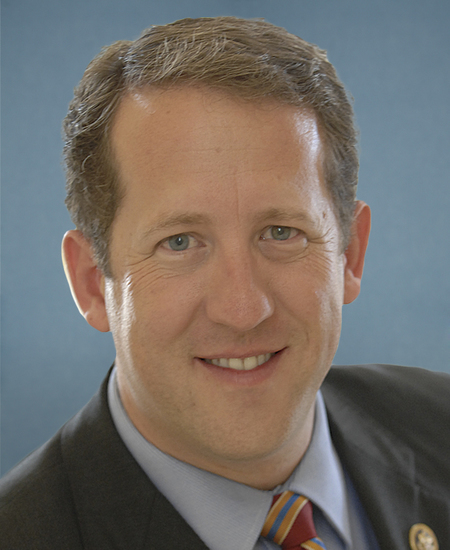
Rep. Adrian Smith
Sponsored bills
Maddy summaryHR 4382 authorizes the U.S. Mint to produce commemorative coins for the 2028 Los Angeles Olympics/Paralympics and 2034 Salt Lake City Winter Olympics/Paralympics. It specifies gold, silver, and half-dollar coin designs with defined mintage limits (e.g., up to 100,000 $5 gold coins for each event), all bearing inscriptions like "2028" or "2034" and standard coin features. A surcharge ($5-$50 per coin) is added to sales, with all funds directed to the respective Olympic committees to support event hosting and legacy programs like youth sports. The bill ensures no net cost to the government by requiring surcharge revenues to cover all design, production, and marketing expenses before funds are disbursed.
Maddy summaryThis bill requires federal agencies to provide detailed information about payments they authorize, including the purpose, funding source, and activity type. It mandates agencies to verify bank account information before payments are made and gives the Treasury Department access to the National Directory of New Hires, tax information, and Social Security data to help identify and prevent improper payments. Agencies must periodically verify payment information accuracy and report on payments exempt from these requirements due to sensitive operations. These provisions apply to all federal agencies using Treasury disbursement systems, aiming to improve government spending efficiency through better data sharing and verification processes.
Maddy summaryHRES 564 is a non-binding House resolution calling on the U.S. government to prioritize the return of Ukrainian children abducted by Russia before any peace agreement is finalized. It cites 19,546 confirmed reports of unlawful child deportations to Russia or occupied territories as of April 2025, noting only 1,274 have been returned. The resolution condemns Russia's actions as violations of the Geneva Convention and Genocide Convention, including forced adoptions and Russification policies. It urges that all abducted children be returned prior to concluding peace talks, emphasizing this as a necessary condition for a just resolution to the war. The resolution does not create new law but expresses congressional position on a key issue in U.S. diplomatic efforts.
Maddy summaryThis bill allows seniors to use tax-free health savings account (HSA) funds for qualified home care services. It defines "qualified home care" as contracts providing three or more specific personal care services (like assistance with bathing, dressing, or medication) from state-licensed providers. The policy change directly affects seniors needing home care who use HSAs, excluding family-provided care and requiring state licensing compliance. A public awareness campaign will also inform seniors about eligible services.
Maddy summaryHRES 527 is a symbolic resolution designating June 2025 as "National Dairy Month" to honor dairy's role in nutrition and the agricultural economy. It recognizes dairy as a key source of calcium and vitamin D (per Dietary Guidelines), supports over 3.2 million jobs, and highlights the industry's $793 billion economic impact. The resolution encourages public support for dairy farmers while condemning unfair regulatory burdens on the sector. As a non-binding expression of support, it does not create new laws or funding.
Maddy summaryThis bill requires major internet companies (including social media, streaming services, and app stores) and broadband providers to contribute to the Universal Service Fund, which subsidizes affordable broadband in rural and high-cost areas. It exempts smaller companies that transmit less than 3% of U.S. broadband data or earn under $5 billion annually. The Federal Communications Commission must create a new support mechanism to help rural broadband providers cover costs, while ensuring contributions remain fair and predictable. The bill explicitly states it does not grant the FCC new authority over these companies.
Maddy summaryHR 3824, the Reducing Regulatory Burdens Act of 2025, removes a requirement for permits under the Clean Water Act for discharges of authorized pesticides into navigable waters. It amends the Federal Insecticide, Fungicide, and Rodenticide Act (FIFRA) and the Clean Water Act to state that EPA or states cannot mandate a permit for pesticide discharges resulting from legally authorized applications. The bill specifically exempts discharges from violations of pesticide law, stormwater, industrial manufacturing effluent, treatment works, and vessel operations. This directly affects pesticide users (like farmers) and regulatory agencies by eliminating a permitting step for routine pesticide applications already approved under FIFRA.
Improving Access to Medicare Coverage Act of 2025 This bill deems an individual receiving outpatient observation services in a hospital as an inpatient for purposes of satisfying the three-day inpatient hospital-stay requirement with respect to Medicare coverage of skilled nursing facility (SNF) services. (Generally, individuals must have been an inpatient at a hospital for at least three days in order to qualify for SNF services. An individual's time spent under observation at a hospital for purposes of determining whether the individual should be admitted does not count towards this requirement.)
Maddy summaryThis bill updates Veterans Health Administration (VHA) anesthesia practice standards to align with Defense Health Agency (DHA) guidelines, directly affecting VA-employed anesthesia providers (including physician anesthesiologists and certified registered nurse anesthetists). It requires VHA to recognize certified registered nurse anesthetists as licensed independent practitioners under DHA’s 2023 standards and mandates certification from specific bodies for all anesthesia staff. Additionally, it sets a 25-hour minimum requirement for direct patient care experience for all VA anesthesia professionals and allows suspension for non-compliance. The bill also requires annual GAO reports comparing outcomes and costs across three anesthesia delivery models (anesthesiologist-led, CRNA-supervised, and CRNA-only) to be submitted to Congress.