

Maddy summaryHR 2382, the First Responders Retirement Parity Act, clarifies that government retirement plans may include firefighters, emergency medical technicians (EMTs), and paramedics without losing their "governmental plan" status under federal tax and retirement laws. The bill amends the Internal Revenue Code and the Employee Retirement Income Security Act to specifically allow public safety agencies (contracted with local governments) to cover these workers - whose primary duties involve firefighting or out-of-hospital emergency medical services - as part of their retirement plans. This change directly affects first responders employed by local public safety agencies, ensuring their retirement benefits remain eligible for the same tax advantages as other government employees. The key mechanism updates legal definitions to prevent plans covering these roles from being disqualified under current rules.
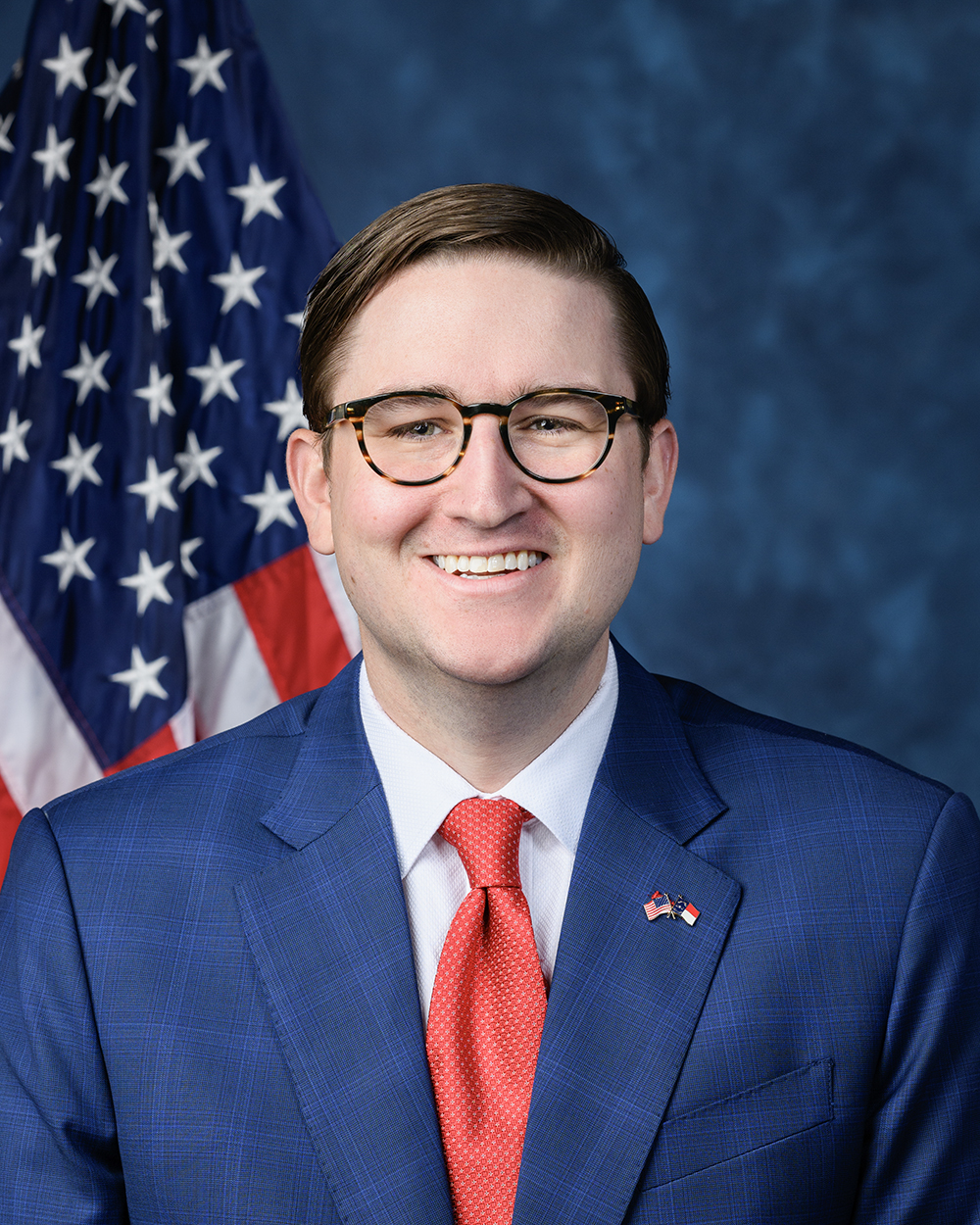
Rep. Addison P. McDowell
Sponsored bills
Maddy summaryThis bill allows schools to use existing public health block grants to purchase naloxone (a medication that reverses opioid overdoses) and provide training for school staff on its use. It directly affects schools, teachers, nurses, administrators, and students by requiring the allocation of funds for naloxone kits, staff training, and fentanyl awareness education. Key provisions include adding specific grant uses for naloxone procurement, training school personnel in administration, and distributing fentanyl safety materials to students. The bill amends the Public Health Service Act to enable these concrete, preventative measures within educational settings.
Maddy summaryHR 2204 requires U.S. universities to immediately report international students on F-1 or J-1 visas who support designated foreign terrorist organizations to the government's Student and Exchange Visitor Information System (SEVIS). If verified, the State Department would revoke the student's visa, and Homeland Security would begin removal proceedings. This bill directly affects international students holding F-1 or J-1 visas who endorse or support groups designated as foreign terrorist organizations under U.S. law. The key mechanism is a mandatory reporting requirement for universities, triggering visa revocation and potential deportation for affected students.
Maddy summaryThis bill amends the tax code to permanently establish a 7-year depreciation period for motorsports entertainment complexes, replacing a temporary provision. It directly affects businesses operating these facilities by allowing them to deduct the cost of qualifying assets over seven years instead of a shorter period. The key change is removing a temporary rule (subparagraph D) from the tax code, making the longer recovery period permanent for these specific properties. The bill focuses solely on clarifying and extending this tax treatment without additional policy changes.
Maddy summaryHR 2217, the Down East Remembrance Act, designates six specific creeks in North Carolina with new names honoring individuals, using precise geographic coordinates for each location. The bill updates all official federal references (including maps, laws, and documents) to these creeks to reflect their new names. This is a commemorative measure with no policy changes, directly affecting only the designated geographic areas and federal records referencing them.
Maddy summaryThe Stop CCP VISAs Act of 2025 would prohibit U.S. visas for Chinese citizens seeking to study or conduct research in the United States. It specifically blocks the issuance of F-1 (academic student), J-1 (exchange visitor), and M-1 (vocational student) visas for these purposes. This bill directly affects Chinese nationals who otherwise qualify for these student visa categories at U.S. educational institutions. The policy change would amend immigration law to implement this visa ban.
Maddy summaryThe FOCA Act of 2025 prohibits federal agencies from requiring or banning contractors from using union agreements in construction project bids or contracts. It directly affects federal agencies, contractors, and subcontractors working on federally funded or assisted construction projects (like buildings or infrastructure). The law requires bid documents to not favor or penalize contractors based on whether they have union agreements, aiming to promote open competition and prevent discrimination. This changes how agencies structure bids but does not affect union agreements themselves. The bill applies to all new contracts and subcontracts after enactment, with limited exemptions only for public health/safety emergencies or national security.
Maddy summaryThis resolution urges the U.S. Secretary of State to designate Nigeria as a Country of Particular Concern (CPC) under the International Religious Freedom Act of 1998, citing ongoing violence against religious minorities. It specifically calls for Nigeria to protect religious minorities, prosecute perpetrators of attacks, and address displacement of millions caused by religiously motivated violence. The resolution also recommends increased U.S. diplomatic engagement with Nigeria and targeted sanctions against those responsible for religious freedom violations. This follows the State Department's omission of Nigeria from its CPC list in 2021-2023 and its 2024 failure to release an annual report.
Maddy summaryThis bill changes how individual investors in mutual funds (regulated investment companies) are taxed on certain dividends. It allows investors to defer paying tax on capital gain dividends that are automatically reinvested in additional fund shares through a dividend reinvestment plan. The deferred tax is recognized later when the investor sells shares or upon their death. It also establishes that shares acquired through this reinvestment are treated as held for over one year from the start, potentially qualifying for long-term capital gains rates. The rule applies only to individual investors (not estates, trusts, or dependents claimed by others).
Maddy summaryHR 2065, the Unmasking Hamas Act of 2025, would make it a federal crime to injure, threaten, or intimidate someone while wearing a disguise (including a mask) in order to interfere with their exercise of constitutional or legal rights. It would impose fines or up to 15 years in prison for such acts, and add a mandatory 2-year prison term for property destruction committed while masked. The bill directly affects individuals who wear masks during protests or demonstrations that disrupt protected rights or damage property, applying to all locations under federal jurisdiction. The law focuses on criminalizing masked conduct that interferes with rights or property, not on the specific content of protests.