

Maddy summaryHR 4559, the Prompt and Fair Pay Act, requires Medicare Advantage (MA) plans to pay healthcare providers the same amount as original Medicare (fee-for-service) for covered services starting in 2027, directly affecting MA plans and providers who treat Medicare patients. It mandates that MA plans pay "clean claims" (claims with no missing information) within 14 days for electronic submissions or 30 days for paper claims, with interest penalties for late payments based on Treasury rates. The bill also requires MA plans to clearly explain claim denials and provide timely notifications about missing information, improving transparency and reducing payment delays. These changes aim to standardize payments between MA plans and traditional Medicare while ensuring providers receive timely compensation.
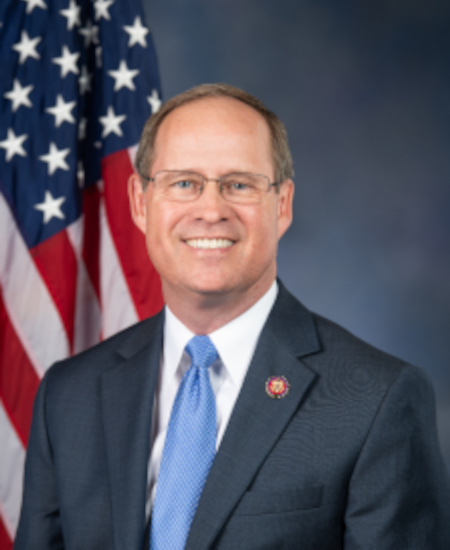
Rep. Gregory F. Murphy
Sponsored bills
Maddy summaryThis bill prohibits Medicare from paying for orthotics or prosthetics delivered directly to patients without in-person training from a qualified provider (a "drop shipment"), ensuring beneficiaries receive proper fitting and use instructions. It expands the list of healthcare providers who can prescribe these devices to include physical therapists, occupational therapists, orthotists, and prosthetists. The bill also specifically requires Medicare to cover replacements for custom-fitted orthotics and custom-fabricated orthotic devices, aligning with existing rules for prosthetic replacements. These changes aim to improve patient safety and access to properly fitted devices under Medicare.
Maddy summaryHR 1919, the "Anti-CBDC Surveillance State Act," prohibits the Federal Reserve from developing, testing, or issuing any central bank digital currency (CBDC) or similar digital assets. It specifically bans the Fed from offering direct financial products to individuals, maintaining individual accounts, or issuing CBDCs directly or indirectly through intermediaries like banks. The bill also blocks the Fed from using any digital asset for monetary policy and clarifies that physical currency's privacy protections remain intact. This policy directly affects the Federal Reserve System's ability to create or manage digital monetary tools.
Maddy summaryThis bill requires the Congressional Budget Office (CBO) to identify potential budget savings from preventive health care in its scoring of proposed legislation. Specifically, it directs the CBO Director to describe and estimate reductions in future federal spending resulting from preventive health interventions - such as screenings or vaccinations - when requested by congressional budget committee leaders. These savings would be included as supplementary information in budget projections, but not used to meet budget enforcement rules. The bill does not change actual health programs or funding; it only modifies how the CBO accounts for potential long-term savings from preventive care in budget analysis.
Maddy summaryHR 4462, the *Protecting Endowments from Our Adversaries Act*, imposes a 50% excise tax on large private colleges and universities when they acquire investments in foreign entities listed on U.S. government watchlists (like Commerce’s Entity List or FCC’s Covered List). It also taxes 100% of net income from such investments annually. The bill targets institutions with over $1 billion in non-exempt assets (excluding assets used for their core educational purpose), excluding public universities. This directly affects the investment strategies of large private institutions by taxing both new acquisitions and annual income from investments in entities deemed national security risks by the government.
Maddy summaryHR 4448, the Restoring Equal Opportunity Act, prohibits lawsuits alleging discrimination based on "disparate impact" in employment and housing. It amends the Civil Rights Act of 1964 and Fair Housing Act to ban claims where a neutral policy (like a test or screening rule) unintentionally disadvantages protected groups (such as race or gender), even if there was no discriminatory intent. The bill also nullifies specific federal regulations implementing civil rights laws, removing legal grounds for such claims under current enforcement rules. This directly affects employers, housing providers, and federal agencies that enforce civil rights laws, changing how discrimination claims can be brought in court.
Maddy summaryThe SHIELD Act would change unemployment benefit eligibility by barring workers from receiving regular unemployment compensation if they are unemployed due to a strike or labor dispute they are participating in, financially supporting, or have a direct interest in (excluding lockouts). This rule would require states to adjust their unemployment programs to deny benefits in such cases. The changes would take effect two years after the bill becomes law, though states could choose to implement them sooner. The bill also repeals a federal tax provision related to unemployment tax rates, but this is a secondary provision.
Maddy summaryHR 4382 authorizes the U.S. Mint to produce commemorative coins for the 2028 Los Angeles Olympics/Paralympics and 2034 Salt Lake City Winter Olympics/Paralympics. It specifies gold, silver, and half-dollar coin designs with defined mintage limits (e.g., up to 100,000 $5 gold coins for each event), all bearing inscriptions like "2028" or "2034" and standard coin features. A surcharge ($5-$50 per coin) is added to sales, with all funds directed to the respective Olympic committees to support event hosting and legacy programs like youth sports. The bill ensures no net cost to the government by requiring surcharge revenues to cover all design, production, and marketing expenses before funds are disbursed.
Maddy summaryHCONRES 43 is a non-binding congressional resolution expressing that public performances of "The Star-Spangled Banner" should use the original English lyrics written by Francis Scott Key. It encourages performers and event organizers to preserve the anthem's historical integrity by using its original English text, rather than translated or adapted versions, as a way to honor its 1814 origins and 1931 designation as the national anthem. The resolution does not create new law or impose legal requirements but formally states Congress's preference for maintaining the anthem's traditional English lyrics in public settings. It directly affects public events where the anthem is performed, such as sports games, ceremonies, and official gatherings.
Maddy summaryHR 4333, the Qualified to Serve Act, changes medical standards for joining the U.S. military. It prohibits disqualifying applicants solely based on a medical condition diagnosed before age 13 that required no treatment in the past five years, provided a current medical evaluation confirms fitness for service and the military determines it won't impact readiness. The bill establishes a uniform review process for medical disqualifications and allows waivers for national security reasons. It also requires the Secretary of Defense to annually report to Congress on disqualifications, approved waivers, and updates to medical standards. This directly affects potential recruits with qualifying childhood medical histories who previously faced disqualification.