

Maddy summaryThis bill would add pharmacist services to Medicare Part B coverage for beneficiaries, specifically covering pharmacist-led testing and treatment for illnesses like flu, COVID-19, or strep throat during public health emergencies. It defines covered services as those performed under state law, often requiring collaboration with a physician, and sets payment at 80% of the lesser of the actual charge or 85% of physician payment rates. Pharmacists would be prohibited from balance billing for these services, ensuring Medicare beneficiaries pay only their standard copayment. The changes would take effect January 1, 2026.
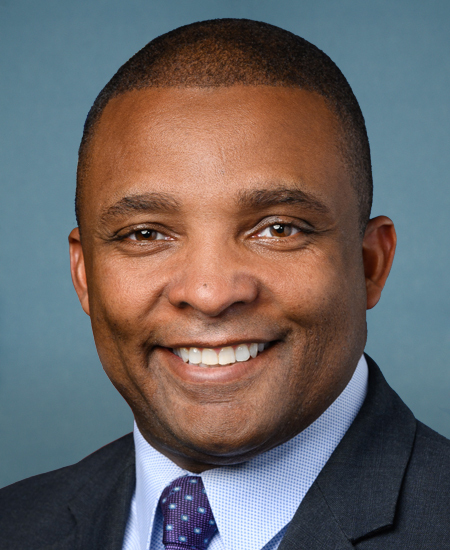
Rep. Donald G. Davis
Sponsored bills
Maddy summaryThis bill authorizes the U.S. Mint to produce commemorative $5 gold and $1 silver coins marking the 25th anniversary of the September 11, 2001, terrorist attacks. The coins must feature designs honoring victims and first responders (including the inscription "Never Forget") and will be sold only during 2027-2028. All surcharges ($35 per gold coin, $10 per silver coin) collected from sales will fund the National September 11 Memorial and Museum at the World Trade Center, with no net cost to the federal government. The coins are legal tender but primarily intended for collectors, not circulation.
Maddy summaryThe Biotechnology Workforce Alignment Act of 2026 directs the National Science Foundation to align its research funding with workforce development efforts in key biotechnology fields such as biomanufacturing, synthetic biology, and bioinformatics. To achieve this, the bill requires the NSF Director to create a workforce framework, support educational pathways with multiple entry points, and foster partnerships between universities, federal labs, and private industry. The legislation also mandates the development of metrics to identify career gaps and barriers to entry, along with a requirement to submit biennial reports to Congress assessing these efforts and the U.S. position in global biotechnology leadership.
Maddy summaryThis bill, known as the Department of Energy Drone Defense Act, expands the authority of the U.S. Secretary of Energy to manage certain drone systems. Specifically, it allows the Secretary to procure, operate, and use federal funds for drones that are classified as "covered" and originate from "covered foreign entities." These changes modify existing restrictions found in the National Defense Authorization Act for Fiscal Year 2024, which previously limited such activities primarily to the Secretary of State. By adding the Department of Energy to the list of authorized agencies, the legislation enables the department to participate in these drone-related activities without violating current prohibitions.
Maddy summaryThe Stop the Doxx Act makes it a federal crime to publicly share personal information, such as home addresses or phone numbers, about law enforcement officers, prosecutors, judges, or their immediate family members with the intent to threaten or intimidate them. Under this law, individuals found guilty face prison sentences of up to 10 years for a first offense, with penalties increasing to 20 years for repeat offenses or up to 40 years if the act results in injury or death. The bill also allows victims to sue for damages and requires the Attorney General to create a free, annual training program to help these public servants protect their personal data online.
Maddy summaryThis resolution designates May 29, 2026, as "Mental Health Awareness in Agriculture Day" to highlight mental health issues within the farming and agricultural workforce. It aims to reduce the stigma surrounding mental illness by acknowledging the unique stressors faced by producers and workers, such as unpredictable weather, labor shortages, and market fluctuations. The bill also draws attention to available support resources, specifically the Farm and Ranch Stress Assistance Network, and encourages the public to observe the day as a way to promote well-being in the industry.
Maddy summaryThe Rural MOMS Act of 2026 modifies how Medicare counts hospital beds, specifically excluding labor and delivery rooms from the total number of acute care inpatient beds used to determine if a facility qualifies as a Critical Access Hospital. This change directly affects rural hospitals that provide maternity services by altering the financial thresholds required to maintain their special status under the Medicare program. By removing delivery rooms from the bed count calculation, the bill aims to prevent these facilities from losing their designation solely because they offer childbirth care. The legislation does not change how these hospitals are funded or operated, but rather adjusts the metric used to evaluate their eligibility for critical access benefits.
Maddy summaryThe Investing in All of America Act of 2025 amends the Small Business Investment Act of 1958 to adjust leverage rules for Small Business Investment Companies (SBICs), which provide capital to small businesses. It lowers the maximum allowable leverage ratio from 300% to 200% and expands eligible investments to include companies in rural areas, critical technology sectors, and small manufacturers. The bill caps excluded leverage at $125 million or 50% of a company’s private capital, whichever is lower, and requires annual inflation adjustments to these dollar amounts. These changes directly affect SBICs, private investment firms that support small business growth nationwide.
Maddy summaryThis resolution formally designates the week of May 11 through May 17, 2026, as National Salvation Army Week to honor the organization's long history of providing social services. It acknowledges the Salvation Army's work in areas such as disaster relief, food assistance, and shelter for vulnerable populations like veterans and those experiencing homelessness. The measure encourages Americans to participate in acts of service and generosity during this designated week, while also recognizing the group's annual fundraising efforts.
Maddy summaryThe Next GEN Act of 2026 modifies the Drug Price Negotiation Program to include a specific category of medications called engineered cyclic peptides. This change extends the time before these drugs can be negotiated for lower prices from seven years to eleven years. The bill defines these peptides as synthetic, amino acid-based drugs that are self-administered and created using genetic library screening methods. By adjusting the timeline, the legislation directly affects pharmaceutical companies and the government agencies responsible for setting drug prices under the program.