

Maddy summaryThe Cyber PIVOTT Act creates a program to build a skilled cyber workforce by providing full tuition scholarships to students in two-year cyber or cyber-relevant associate's degree programs at participating community colleges and technical schools. The program requires scholarship recipients to complete a two-year service obligation in a cyber role for federal, state, local, tribal, or territorial government, with exceptions for military service. It includes mandatory skills-based exercises, internships with government agencies or critical infrastructure sectors, and a database of cyber training resources mapped to job roles. The program aims to enroll 250 students in its first year, doubling annually until reaching 1,000 students per year, with a long-term goal of 10,000 students annually within ten years.
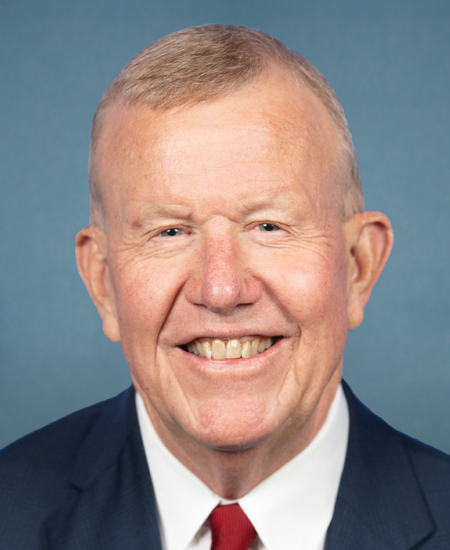
Rep. Mike Ezell
Sponsored bills
Maddy summaryHR 2808, the Homebuyers Privacy Protection Act, restricts how consumer reporting agencies share credit reports during mortgage applications. It prevents agencies from sending these reports to third parties unless the request is tied to a firm credit offer and the recipient has either the homebuyer’s explicit written consent or is directly involved in the mortgage (like the lender, loan servicer, or the homebuyer’s bank holding an active account). This directly affects homebuyers applying for residential mortgages by limiting unsolicited sharing of their credit information. The law amends the Fair Credit Reporting Act to strengthen privacy protections around mortgage-related credit data.
Maddy summary# Summary of Proposed FEMA Reform Legislation (FEMA Act of 2025) This comprehensive legislative document proposes significant reforms to the Robert T. Stafford Disaster Relief and Emergency Assistance Act, with four main sections addressing: ## 1. Disaster Assistance Reforms - **Expanded eligibility** for assistance, including clarifying that absence of a fixed address doesn't disqualify individuals from sheltering assistance - **Improved rental assistance** with consideration of local post-disaster rent increases - **Direct assistance** for those unable to use financial assistance, with no requirement to show other assistance can cover costs (except insurance) - **Enhanced notices** for applicants, including documentation of denial decisions - **Clarification of displacement assistance** eligibility, stating insurance shouldn't be considered a duplication of benefits ## 2. Mitigation Program Enhancements - **Preapproved project mitigation plans** requiring states to develop plans with peer review processes - **Improved allocation of funds** with formulas prioritizing vulnerable communities, high-risk areas, and rural/economically distressed communities - **Resilient buildings** requirements for housing retrofits using the latest building codes - **Streamlined application processes** for hazard mitigation funds across multiple programs - **Study on mitigation benefits** to evaluate cost savings and effectiveness ## 3. Transparency and Accountability Measures - **Public dashboards** for both individual assistance (431) and public assistance (432) showing application status, approvals, denials, and funding - **Transparency requirements** for disaster declarations with detailed justifications for approvals/denials - **GAO studies** on numerous topics including: - Identity theft in disaster assistance (409) - Insurance utilization for public assistance facilities (410) - Wildfire management plans (411) - Effectiveness of alerting systems (412) - Cost savings of repair/rebuilding reforms (415) - **Prohibition on political discrimination** in assistance distribution ## 4. Workforce and Operational Improvements - **Study on workforce retention** in noncontiguous communities - **Pilot program** for preliminary damage assessments in remote communities - **Fast-moving disasters working group** to develop best practices for rapid response The legislation focuses on improving efficiency, transparency, and effectiveness of disaster relief programs while prioritizing vulnerable populations and communities with higher risk of disasters. It also emphasizes data-driven decision making through required studies and reports to continuously improve disaster management policies.
Maddy summaryHR 4018 aims to accelerate U.S. access to critical minerals (like nickel, cobalt, and rare earths) found in seabed resources on the continental shelf. It requires federal agencies to expedite permits for exploration and commercial recovery under the Deep Seabed Hard Mineral Resources Act and the Outer Continental Shelf Lands Act within 60 days of enactment. The bill also mandates a seabed mapping plan, identifies critical minerals for defense/energy use, and directs engagement with allies to support U.S. companies in developing these resources. This directly affects U.S. mining companies seeking seabed mineral rights and federal agencies managing offshore resource development.
Maddy summaryHRES 664 is a non-binding resolution observing the 20th anniversary of Hurricanes Katrina and Rita's 2005 Gulf Coast devastation. It recognizes the progress made in rebuilding affected communities across Louisiana, Mississippi, Alabama, Florida, Texas, and Georgia, citing statistics on population recovery and tourism growth. The resolution expresses support for victims, commends recovery efforts, and reaffirms commitment to the Gulf Coast region. It does not create new laws, allocate funding, or change policy - its sole purpose is commemorative recognition.
Maddy summaryThis bill establishes "cottage family homes" as a new foster care placement option under federal law. It defines these homes to require trauma-informed care, prohibit seclusion/restraints (except brief physical restraint for safety), ensure children can participate in normal activities, and maintain family connections. The bill removes time limits on foster care payments for children in these homes and gives states flexibility to classify them as foster family homes if they serve children's best interests. It directly affects foster children placed in cottage homes and the agencies operating them.
Maddy summaryThis is not a driver's license exam question. The text you've provided is a complete draft of the "Coast Guard Authorization Act of 2025" - a U.S. federal law that would authorize funding and set policies for the U.S. Coast Guard. The document contains numerous legal provisions related to: - Merchant mariner credentialing requirements - Vessel safety regulations - Coast Guard Academy operations - Search and rescue operations - Crew training standards - Reporting requirements for various Coast Guard activities It's a lengthy legislative document with sections amending existing laws (like Title 46 of the U.S. Code) and adding new requirements for the Coast Guard. This is not related to driver's license exams or questions at all. The document contains detailed legal language about maritime operations, vessel inspections, crew certification, and Coast Guard procedures - none of which relate to standard driver's license testing.
Veterans' Assuring Critical Care Expansions to Support Servicemembers Act of 2025 or the Veterans' ACCESS Act of 2025 This bill addresses the administration of the Veterans Community Care Program (VCCP) and other Department of Veterans Affairs (VA) health care matters. Among other provisions regarding the VCCP, the bill establishes in statute access standards that determine when a veteran is eligible to receive non-VA care through the VCCP, requires the VA to notify veterans regarding their eligibility for care within two business days after the VA is aware the veteran is seeking care, and extends the deadline for the submittal of claims under the VCCP by health care entities and providers. The VA must address its mental health treatment programs by establishing a standardized screening process to determine whether a veteran satisfies criteria for priority or routine admission to a mental health residential rehabilitation treatment program or a program for residential care for mental health and substance abuse disorders, tracking the performance of medical facilities and Veterans Integrated Service Networks in meeting the requirements for mental health treatment screenings and timely admission to treatment programs under such screenings, and establishing an appeal process for when a veteran is denied admission to a covered treatment program or is accepted into a program but not offered bed placement in a timely manner. Additionally, the VA must establish an online self-service module for veterans to request and manage appointments, track referrals, and appeal and track decisions related to requests for care.
Maddy summaryThis bill creates two new federal tax credits to support U.S. port crane manufacturing. It offers a 25% tax credit for businesses investing in new port crane manufacturing facilities (e.g., buildings, equipment) and a production credit of 40% or 60% of the sale price for port cranes sold domestically, with the higher rate requiring 90% U.S.-made component materials. The credits apply to facilities and production through 2035, directly affecting manufacturers of port cranes, their components, or related equipment located in the U.S. The legislation specifies exact definitions for "port crane" (e.g., gantry cranes at ports) and "component materials" to determine eligibility.
Maddy summaryHR 1919, the "Anti-CBDC Surveillance State Act," prohibits the Federal Reserve from developing, testing, or issuing any central bank digital currency (CBDC) or similar digital assets. It specifically bans the Fed from offering direct financial products to individuals, maintaining individual accounts, or issuing CBDCs directly or indirectly through intermediaries like banks. The bill also blocks the Fed from using any digital asset for monetary policy and clarifies that physical currency's privacy protections remain intact. This policy directly affects the Federal Reserve System's ability to create or manage digital monetary tools.