

Maddy summaryThe Senior Security Act of 2025 establishes a Senior Investor Taskforce within the Securities and Exchange Commission (SEC) to address challenges faced by senior investors (defined as those over age 65), including financial exploitation and cognitive decline. The Taskforce will identify regulatory gaps, coordinate with agencies like state regulators and law enforcement, and issue biennial reports to Congress with recommendations for improving protections. Additionally, the bill mandates a Government Accountability Office (GAO) study on the economic costs, frequency, and reporting of financial exploitation of seniors, analyzing factors like race, social isolation, and income to inform future policy.
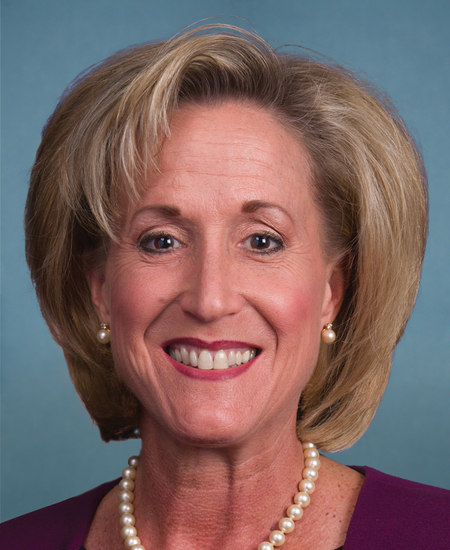
Rep. Ann Wagner
Sponsored bills
Frederick Douglass Trafficking Victims Prevention and Protection Reauthorization Act of 2025 This bill reauthorizes programs and activities that combat international trafficking; establishes a new program to help victims of trafficking; and updates various elements of the federal framework to combat international trafficking. Specifically, this bill reauthorizes through FY2029 programs and activities at various federal departments and agencies to combat international trafficking and reduce the prevalence of modern slavery. The bill also reauthorizes International Megan’s Law through FY2029. Among its provisions, the law requires sex offenders to provide certain information about their intended travel outside of the United States. Additionally, the bill authorizes the Department of Health and Human Services to carry out a new program to help victims of trafficking integrate or reintegrate into society. The bill requires the Department of State's Trafficking in Persons Report to include information about trafficking in persons for the purposes of organ removal. With respect to country rankings for anti-trafficking efforts, the bill narrows the types of countries that are listed on the Tier 2 Watch List and increases the length of time a country may remain on the Tier 2 Watch List after being downgraded to the lowest ranking and then reinstated to the watch list. (The Tier 2 Watch List refers to countries that are making efforts to meet international standards for combatting human trafficking but still have a significant number of severe trafficking cases.) Finally, the bill requires counter-trafficking strategies, activities, and efforts to be further incorporated into U.S. foreign assistance.
Maddy summaryHR 1919, the "Anti-CBDC Surveillance State Act," prohibits the Federal Reserve from developing, testing, or issuing any central bank digital currency (CBDC) or similar digital assets. It specifically bans the Fed from offering direct financial products to individuals, maintaining individual accounts, or issuing CBDCs directly or indirectly through intermediaries like banks. The bill also blocks the Fed from using any digital asset for monetary policy and clarifies that physical currency's privacy protections remain intact. This policy directly affects the Federal Reserve System's ability to create or manage digital monetary tools.
Maddy summaryHR 4474, the Equal Shot Act of 2025, prohibits the Small Business Administration (SBA) from denying financial assistance - such as loans or guarantees - to firearm businesses solely because of their industry. It directly affects firearm manufacturers, distributors, trade associations, and affiliated entities like shooting ranges or training providers. The bill requires the SBA to treat these applicants equally under existing law, removing any policy that would block them based on their connection to firearms. This is a concrete policy change ensuring firearm-related businesses have the same access to SBA programs as other eligible applicants.
Maddy summaryHR 4470, the *Removing Burdens From Organ Donation Act*, requires hospitals to electronically notify organ procurement agencies when a potential donor is deceased or near death, with remote access to updated electronic health records (EHRs). This applies to most hospitals starting two years after the law's enactment, but allows exemptions for rural hospitals lacking reliable internet, those hit by cyberattacks, or disaster-affected facilities. The bill mandates federal guidance for hospitals and EHR companies on implementation, plus annual reports on exemptions and a GAO study on costs, rural challenges, and transplant outcomes. It directly affects hospitals, organ procurement agencies, and EHR providers by streamlining donor notification processes.
Maddy summaryHR 4382 authorizes the U.S. Mint to produce commemorative coins for the 2028 Los Angeles Olympics/Paralympics and 2034 Salt Lake City Winter Olympics/Paralympics. It specifies gold, silver, and half-dollar coin designs with defined mintage limits (e.g., up to 100,000 $5 gold coins for each event), all bearing inscriptions like "2028" or "2034" and standard coin features. A surcharge ($5-$50 per coin) is added to sales, with all funds directed to the respective Olympic committees to support event hosting and legacy programs like youth sports. The bill ensures no net cost to the government by requiring surcharge revenues to cover all design, production, and marketing expenses before funds are disbursed.
Maddy summaryHR 4149 requires the U.S. President to submit biannually a list of foreign individuals or entities undermining Bosnia and Herzegovina's stability, such as those forming illegal parallel institutions or obstructing the Dayton Peace Agreement. It mandates sanctions including asset freezes and visa bans for listed persons, with exceptions for humanitarian aid and national security. The bill specifically targets actions threatening Bosnia's territorial integrity, like those by Republika Srpska officials, and urges EU coordination to sanction figures like Milorad Dodik. Sanctions apply to individuals, their family members (unless they condemn the actions), and entities facilitating transactions for them. The law expires seven years after enactment.
Maddy summaryHR 3422, the Promoting Opportunities for Non-Traditional Capital Formation Act, requires the Securities and Exchange Commission (SEC) to provide educational resources and host events specifically for underrepresented small businesses. This includes women-owned, minority-owned, rural businesses, and those impacted by natural disasters, to raise awareness about capital-raising options. The bill also mandates that the SEC meet annually with state securities commissions to coordinate efforts supporting small businesses and investors. These provisions aim to improve access to capital formation opportunities for groups historically underserved in financial markets.
Maddy summaryHR 3381, the Encouraging Public Offerings Act of 2025, allows any company planning an initial public offering (IPO), follow-on offering, or initial securities listing to confidentially submit draft registration statements to the Securities and Exchange Commission (SEC) for staff review before public filing. The bill removes the previous restriction that limited this confidential review process to "emerging growth companies" and expands it to all issuers. Companies must publicly file the draft and any amendments within specific deadlines: 10 days before an IPO's effective date, 10 days before a securities listing, or 48 hours before a follow-on offering's effective date. This change directly affects businesses preparing to go public by providing a more flexible pre-filing review process.
Maddy summaryHR 2225, the Access to Small Business Investor Capital Act, modifies how investment companies report fees related to business development companies (BDCs). It allows registered investment companies to exclude fees paid indirectly to BDCs (which primarily invest in small businesses) from their "Acquired Fund Fees and Expenses" calculation on SEC registration statements. This change simplifies reporting for investment companies holding BDC shares by removing those specific fees from expense calculations. The bill directly affects investment companies filing SEC forms (N-1A, N-2, N-3) that hold BDC investments, potentially reducing their reported expense ratios. It does not create new funding for small businesses but aims to streamline investment in BDCs by easing reporting burdens.