

Maddy summaryThe PANA Act of 2026 creates a new fund in the U.S. Treasury to support democratic governance, human rights, independent media, and anti-corruption efforts in Venezuela. This fund will be financed by assets forfeited from individuals or entities linked to the regimes of Hugo Chávez or Nicolás Maduro after the bill is enacted. The money can be used by the State Department without needing additional annual approval from Congress, and officials must report annually to Congress on how the funds are being used.
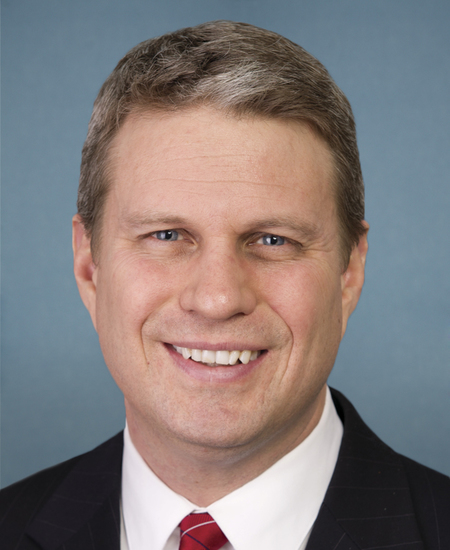
Rep. Bill Huizenga
Sponsored bills
Maddy summaryThis bill authorizes the U.S. Mint to produce commemorative $5 gold and $1 silver coins marking the 25th anniversary of the September 11, 2001, terrorist attacks. The coins must feature designs honoring victims and first responders (including the inscription "Never Forget") and will be sold only during 2027-2028. All surcharges ($35 per gold coin, $10 per silver coin) collected from sales will fund the National September 11 Memorial and Museum at the World Trade Center, with no net cost to the federal government. The coins are legal tender but primarily intended for collectors, not circulation.
Maddy summaryThe Smithsonian American Women’s History Museum Act authorizes the creation of a new Smithsonian museum dedicated to women’s history, to be located within the National Mall Reserve in Washington, D.C. If the site is managed by another federal agency, the bill requires that agency to transfer the land after notifying Congress and relevant committees. The museum must ensure exhibits and programs accurately represent diverse women’s experiences by consulting a broad range of experts and community voices. The Smithsonian will submit biennial reports to Congress detailing how the museum meets these representation standards.
This resolution expresses support for police officers and other law enforcement personnel. The resolution further recognizes law enforcement officers across the United States in the pursuit of preserving safe and secure communities; the need to ensure that such officers have the equipment, training, and resources necessary to protect their health and safety while they are protecting the public; and the law enforcement community for acts of sacrifice and heroism. The resolution expresses condolences and appreciation to the loved ones of each law enforcement officer who has made the ultimate sacrifice in the line of duty.
Maddy summaryThe Connected Vehicle Security Act of 2026 restricts the importation, sale, and manufacture of vehicles and related technology from specific countries, including China, Russia, Iran, and North Korea, to address national security concerns. The law defines prohibited items as connected vehicles, their software, and hardware components and sets different effective dates, with vehicle bans starting in 2027 and hardware restrictions beginning in 2030. A government official can grant exceptions for specific items after reviewing security risks and notifying Congress, while the agency must publish annual reports on enforcement actions and compliance.
Maddy summaryThis bill establishes a new Office of Export Controls and Border Security within the U.S. Department of State to help partner countries prevent the spread of weapons of mass destruction. The Office will train foreign nations on how to better regulate the export of sensitive technologies and goods that could be misused for military purposes. It also requires the Secretary of State to create a coordinated strategy using advanced analytics to identify risks and strengthen global supply chain security. Additionally, the legislation mandates that different parts of the State Department work together to avoid duplicating efforts in border security assistance.
Maddy summaryThe FLEETS Now Act aims to strengthen the U.S. shipbuilding industry by creating new government roles, establishing international partnerships with allies, and investigating unfair practices by Chinese state-owned shipbuilding companies. It creates a new Assistant Secretary position at the State Department to oversee maritime and space affairs, designates a lead official for international shipbuilding investment, and sets up an exchange program for shipbuilding experts between the U.S. and other countries. The bill also requires regular reports on Chinese shipbuilding entities, establishes a framework for allied countries to collaborate on ship production, and directs U.S. diplomats to advocate for changes at the International Maritime Organization regarding environmental regulations and leadership positions.
Maddy summaryThis bill authorizes the Department of Health and Human Services to award grants for creating Community Multi-Share Coverage Programs designed to help small businesses provide affordable health insurance to employees with limited income. These programs would operate through partnerships between hospitals, local employers, and community organizations to offer coverage that includes essential medical services without deductibles and with low co-payments. Eligible individuals are those who earn between Medicaid limits and 400% of the federal poverty line, work for small employers, and currently lack affordable coverage options. The funding structure requires shared financial contributions from the public sector, local healthcare providers, employers, and enrollees to ensure long-term sustainability. Additionally, the bill mandates that programs evaluate their impact on improving participants' health, employment status, and economic self-sufficiency over a four-year grant period.
Maddy summaryThis resolution formally condemns the attempted assassination of President Donald J. Trump on April 25, 2026, as well as previous attempts in 2024, and recognizes the critical role of the Department of Homeland Security. The bill expresses gratitude to law enforcement officers who responded to the attack and affirms the Secret Service's responsibility for protecting the President. Additionally, it calls on Americans to unite against political violence and condemns those who incite attacks against public officials.
Maddy summaryThis bill modernizes housing assistance programs for Native American tribes and Native Hawaiians by streamlining environmental reviews, extending funding authorization through 2032, and expanding loan guarantee options. Key provisions include consolidating environmental review requirements to reduce paperwork for tribes, allowing 99-year leasehold interests on trust lands for housing, and creating new rental assistance specifically for homeless or at-risk Native American veterans. The legislation also clarifies rent rules, waives certain housing counseling certifications for tribal entities, exempts tribal housing projects from some federal civil rights and Buy America requirements, and establishes a direct loan guarantee process for tribal housing projects.