

Maddy summaryThis bill establishes a temporary funding mechanism for the United States Victims of State Sponsored Terrorism Fund by requiring the Treasury Department to loan $3 billion annually to the fund for fiscal years 2027, 2028, and 2029. The borrowed money must be distributed immediately to victims as part of the annual payment and cannot be saved for future use. Interest on these loans will be set by the Treasury based on market rates and will be repaid only from future fines and penalties collected from state sponsors of terrorism after the fund ends. The authority to make these loans expires on September 30, 2029, and the funds are treated as direct spending rather than new appropriations.
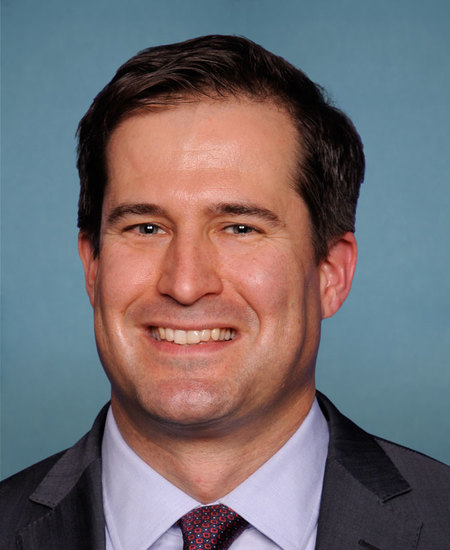
Rep. Seth Moulton
Sponsored bills
Maddy summaryThe Whale CHARTS Act of 2026 establishes a program to protect migratory whales and other large cetaceans through improved mapping, monitoring, and mitigation measures. It requires the creation of detailed, high-resolution maps of whale habitats, including calving grounds and migration routes, which will be integrated into vessel navigation systems to prevent collisions. The bill authorizes $8 million annually through 2030 for mapping, surveys, and a $10 million grant program to fund new detection technologies that reduce harmful interactions between whales and ocean users. It also mandates regular reporting to Congress on the program's effectiveness and progress in filling knowledge gaps about whale habitats.
Maddy summaryThe AADAPT Act reauthorizes and expands Project ECHO grants to improve Alzheimer’s and dementia care through technology-enabled training. It specifically funds grants for healthcare providers in rural, frontier, or medically underserved areas to enhance early diagnosis, quality care, and provider retention for dementia patients. The bill authorizes $1 million annually (2027-2032) for these dementia-focused training programs, requiring funds to supplement - not replace - existing resources. This directly supports primary care providers licensed to serve underserved communities, using collaborative online learning to address care gaps.
Maddy summaryHR 2306 extends the Adams Memorial Commission's authority until 2032 and authorizes $50 million in federal funds for the memorial, requiring a 1:1 non-federal match and limiting administrative costs to 4% of federal funds. It updates location rules to allow the memorial within a designated area mapped by the Commission. The bill primarily affects the Adams Memorial Commission and entities contributing to the memorial's funding. It makes no new policy changes but adjusts procedural timelines and funding requirements for an existing commemorative project.
Maddy summaryThis bill requires Medicare to create separate payment codes for ultralightweight manual wheelchairs based on their frame material (specifically titanium or carbon fiber vs. other materials), starting in 2026. It ensures Medicare pays the standard rate for titanium/carbon fiber wheelchairs regardless of material, while allowing suppliers to charge beneficiaries the difference between Medicare's payment and their actual cost. Beneficiaries must receive a notice about potential additional costs before purchasing or renting such wheelchairs. The bill directly affects Medicare beneficiaries needing these specialized wheelchairs and the suppliers who provide them.
Maddy summaryThe Judicial Integrity Act amends federal law to clarify which judges and Supreme Court justices must recuse themselves from cases involving personal financial interests. It requires that any exemptions from these conflict-of-interest rules be established through a formal regulation issued by the Judicial Conference of the United States, which must include public notice and a comment period. This change ensures that decisions about whether a financial interest is too small to matter are made transparently rather than through individual waivers. The bill directly affects all federal judges and Supreme Court justices by tightening the standards for when they can participate in cases where they have a financial stake.
Maddy summaryThe Duty of Transparency Act requires Members of Congress to publicly disclose when they plan to be absent from their duties for at least 21 consecutive days. Under this bill, lawmakers must submit a statement within five days explaining the reason for their absence, whether they can still work remotely, and providing contact information for a staff member available to constituents. The law mandates that these reports be updated every 30 days and made available on official websites within two days of filing, while also protecting the privacy of any medical information involved. Failure to comply with these transparency requirements would be referred to the relevant congressional ethics committee for review.
Maddy summaryThe SWIFT Act of 2026 modifies Social Security rules to improve benefits for widows, widowers, and surviving divorced spouses. It allows these individuals to receive full survivor benefits at any age if they have a disability, removing previous age restrictions and ensuring their benefits are not reduced if they remarry. The law also raises the age limit for children receiving benefits based on a parent's work record from 16 to 18, or 19 for full-time students. Additionally, the bill increases the maximum amount survivors can receive by offering financial incentives for delaying their claim until full retirement age. To help people understand these changes, the Social Security Administration will publish and mail a new information booklet to affected families.
Maddy summaryThe Stop CHEATERS Act directs the Internal Revenue Service to increase its enforcement efforts against high-income individuals and large corporations by allocating billions of dollars in additional funding for tax audits, criminal investigations, and taxpayer services through fiscal year 2031. A significant portion of this funding is designated for modernizing the IRS's technology and business systems to improve its ability to detect fraud and noncompliance. The legislation also requires the IRS Commissioner to submit regular reports to Congress detailing plans to shift auditing resources toward wealthy taxpayers and analyzing how much unpaid tax is owed by different income groups.
Maddy summaryThis bill requires Medicare Advantage plans to implement electronic pre-approval systems for medical services by 2028 and meet transparency reporting standards starting in 2027. Plans must publicly report data on approval/denial rates, appeal outcomes, response times, and technology use for pre-approval requests, including details on how denials relate to clinical criteria. It establishes a 24-hour response timeframe for certain requests and mandates annual reviews of pre-approval requirements based on data and input from seniors and providers. The law directly affects Medicare Advantage plans, seniors enrolled in these plans, and healthcare providers who submit pre-approval requests. These changes aim to make the pre-approval process faster, more transparent, and more accountable for seniors seeking covered medical services.