

Maddy summaryThis bill requires the U.S. Secretary of State to certify within 30 days of enactment that sufficient food assistance is being provided to Gaza civilians, ensuring all children receive at least three nutritious meals daily and all other civilians receive at least two. It mandates detailed reporting to Congress on food distribution amounts, beneficiaries, donors, and distribution methods, along with coordination protocols with UN agencies, other donors, and the Government of Israel. The bill also requires immediate notification to Congress if food aid is denied entry, diverted, or misused in Gaza, including specific details about the incident and response. The policy directly affects Palestinian civilians in Gaza by setting concrete nutritional standards for aid delivery, while the U.S. government (through the State Department) is the primary entity responsible for implementation and reporting.
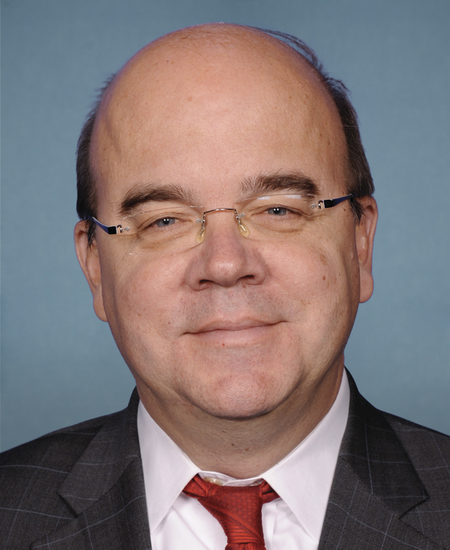
Rep. James P. McGovern
Sponsored bills
Maddy summaryThe Pensions for All Act requires most private sector employers and self-employed individuals to either provide a retirement plan comparable to the Federal Employees Retirement System (FERS) or enroll in FERS. It establishes reduced contribution requirements for smaller employers (with revenue under $100 million) and lower-income self-employed individuals (with income under $125,000), with specific calculation methods based on business size and income. The bill imposes a $10-per-day penalty for failure to provide an adequate retirement plan, with inflation adjustments after 2026, and creates tax credits for eligible retirement contributions through the Internal Revenue Code. The law specifically applies to non-federal workers, as federal employees are already covered by FERS.
Maddy summaryThis bill would add wigs (classified as "cranial prostheses") to Medicare's list of covered durable medical equipment. It directly affects Medicare beneficiaries experiencing hair loss due to medical conditions like cancer, chemotherapy, or autoimmune diseases, requiring a written certification from a dermatologist, oncologist, or treating physician. The key provision mandates that coverage only applies when a doctor certifies the medical necessity as part of treatment or rehabilitation. This change modifies existing Medicare rules to include these prostheses under the same coverage criteria as other medically necessary equipment.
Maddy summaryHR 7545 prohibits U.S. security assistance funds from being used to support Israeli military actions that violate international law, specifically targeting the detention of Palestinian minors, destruction of Palestinian property, and unilateral annexation of occupied land. It requires annual certifications from the State Department confirming U.S. funds aren't supporting these activities and mandates detailed reports on Israeli detention practices, property seizures, and settlement compliance. The bill directly affects U.S. security aid to Israel, including Foreign Military Financing and offshore procurement funds for defense articles. Key mechanisms include funding restrictions, annual reporting requirements, and a GAO report analyzing how offshore procurement funds impact Israel’s military budget and settlement activities.
Maddy summaryHRES 1058 is a non-binding House resolution recognizing the federal government’s duty to develop a Transgender Bill of Rights. It calls for specific policy changes, including amending civil rights laws to explicitly prohibit discrimination based on gender identity in employment, housing, and public accommodations; protecting access to gender-affirming medical care; and streamlining legal recognition of gender identity on federal documents like passports and voter registration. The resolution also proposes expanding protections for transgender and nonbinary individuals in healthcare, education, immigration, and correctional facilities, while emphasizing community-led policy development. As a resolution, it does not create new law but sets a framework for future legislative action.
Maddy summaryHR 7516, the "No Funds for Forced Labor Act," requires the U.S. Treasury to direct American representatives at international financial institutions (like the World Bank) to oppose loans for projects that use or risk using forced labor, particularly those involving state-run entities in Xinjiang. It mandates these institutions to vet projects for forced labor risks, explain their vetting process, and detail mitigation steps before funding. The bill directly affects international financial institutions and the projects they fund, especially those linked to Xinjiang. It does not ban all loans but targets projects with documented forced labor concerns, requiring annual reports to Congress on implementation. The law focuses on policy changes to prevent U.S.-aligned financial support for forced labor practices.
Maddy summaryThis bill requires the military to approve leave for abortion and fertility care without commanders needing to know the specific procedure. It mandates reimbursement for travel, lodging, meals, and transportation costs when care isn't available nearby, and prohibits punishment for using this leave. It directly affects active-duty service members and their dependents who face barriers to reproductive care due to military restrictions or location. The policy change removes command discretion in approving leave for time-sensitive reproductive health services.
Maddy summaryHR 7480, the FAIR Act, sets pay adjustments for federal employees in 2027. It increases base pay by 3.1% for most federal workers under standard pay systems and for employees paid according to local civilian wages in high-cost areas. Additionally, it raises locality pay adjustments by 1% for 2027. The bill directly affects all federal employees covered by these pay systems through concrete, formula-based adjustments.
Maddy summaryThe Breaking the Gridlock Act (HR 1834) contains multiple provisions addressing diverse policy areas. It creates a congressional time capsule to be buried in 2026 and opened in 2276, establishes standard procedures for fire suppression cost share agreements between federal agencies and local fire departments, and requires a strategy to counter Boko Haram threats in Nigeria. The bill also amends funding for the Udall Foundation, prohibits the transfer of sensitive personal data to foreign adversaries, and mandates federal agencies to purchase domestically made U.S. flags. Additionally, it includes appropriations for various government programs and veterans' benefits.
Maddy summaryHR 7417 reauthorizes and expands the WISEWOMAN program to include heart health screenings and education for low-income women. The bill directs the CDC to award grants for blood pressure and cholesterol screenings, health education, and referrals for heart disease prevention, building on existing breast and cervical cancer services. It specifically targets low-income women who are already served by the WISEWOMAN program or meet new eligibility criteria set by the Secretary. The expansion is funded with $250 million over five fiscal years (2027-2031), with services to be provided by current WISEWOMAN grantees or approved alternative providers.