

This joint resolution proposes a constitutional amendment prohibiting total outlays for a fiscal year from exceeding total receipts for that fiscal year unless Congress authorizes the excess by a three-fifths roll call vote of each chamber. The prohibition excludes outlays for repayment of debt principal and receipts derived from borrowing. The amendment requires roll call votes of (1) three-fifths of each chamber of Congress to increase the public debt limit, and (2) a majority of each chamber for legislation increasing revenue. It also requires the President to submit a balanced budget to Congress annually. Congress is authorized to waive these requirements when a declaration of war is in effect or if the United States is engaged in a military conflict which causes an imminent and serious military threat to national security.
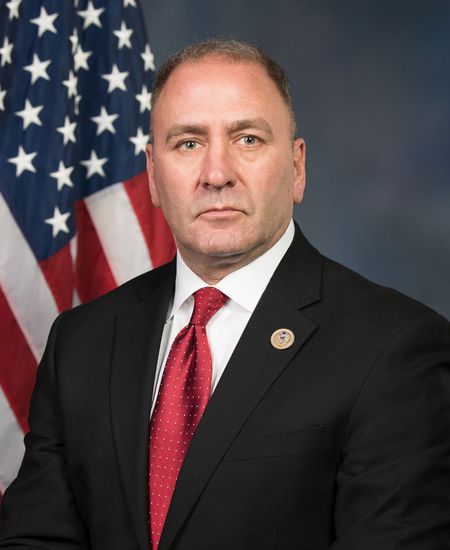
Rep. Clay Higgins
Sponsored bills
This joint resolution proposes an amendment to the Constitution to require that the Supreme Court consist of nine Justices.
Protecting the Right to Keep and Bear Arms Act of 2021 This bill prohibits (1) the President or the Department of Health and Human Services from declaring emergencies or disasters for the purpose of imposing gun control; and (2) a federal officer or employee, or person operating under color of federal law, from banning the manufacture, sale, or transfer of firearms or ammunition while acting in support of relief from a major disaster or emergency.
Protecting American Energy Production Act This bill prohibits the President from declaring a moratorium on the use of hydraulic fracturing unless Congress authorizes the moratorium. The bill also expresses the sense of Congress that states should maintain primacy for the regulation of hydraulic fracturing for oil and natural gas production on state and private lands.
Concealed Carry Reciprocity Act This bill establishes a federal statutory framework to regulate the carry or possession of concealed firearms across state lines. Specifically, an individual who is eligible to carry a concealed firearm in one state may carry or possess a concealed handgun (other than a machine gun or destructive device) in another state that allows its residents to carry concealed firearms. It sets forth requirements for the lawful concealed carry across state lines. The bill preempts most state and local laws related to concealed carry and establishes a private right of action for a person adversely affected by interference with a concealed-carry right established by this bill.
PPP Flexibility for Farmers and Ranchers Act This bill expands eligibility for agricultural producers under the Paycheck Protection Program, established to support small businesses in response to COVID-19 (i.e., coronavirus disease 2019), to include certain agricultural producers organized as partnerships. Currently, only certain agricultural producers that are sole proprietorships, independent contractors, or self-employed individuals may receive support under the program.
Patient Access to Higher Quality Health Care Act of 2021 This bill repeals provisions under the Stark law (i.e., the Physician Self-Referral Law) that limit, for purposes of Medicare participation, self-referrals by newly constructed or expanded physician-owned hospitals.
This resolution urges President Biden to implement the Biden administration's climate agenda at the White House by prohibiting use of petroleum-based products and energy sources.
Fixing America's Bridges Act This bill authorizes the Department of Transportation (DOT) to provide assistance to states to replace or rehabilitate certain bridges. Among other things, the bill authorizes DOT to provide assistance for certain activities on bridges, including painting, seismic retrofit, and installation of scour countermeasures (to prevent erosion of soil around a bridge foundation caused by flooding); includes a set-aside to ensure funding locally-owned bridges that are not on the federal-aid highway system; and provides for a federal cost-share of 90%.
Keystone XL Pipeline Construction and Jobs Preservation Act This bill authorizes the TransCanada Keystone Pipeline to construct, connect, operate, and maintain the pipeline facilities in Phillips County, Montana, for the import of oil from Canada to the United States.