

Reinforcing Utility Restoration After Losses (RURAL) Act This bill provides authority and funding for the Department of Agriculture to establish a loan program for certain rural utility service providers (e.g., electric, telecommunications, or waste disposal service providers) to replace specified losses during a federally declared disaster or emergency. During such a disaster or emergency, interest on the loan shall not accrue, and repayment of principal shall not be required. Borrowers may qualify for partial loan forgiveness if certain requirements are met. The bill also establishes and provides funding for a Rural Utility Bridge Loan Fund to implement the program.
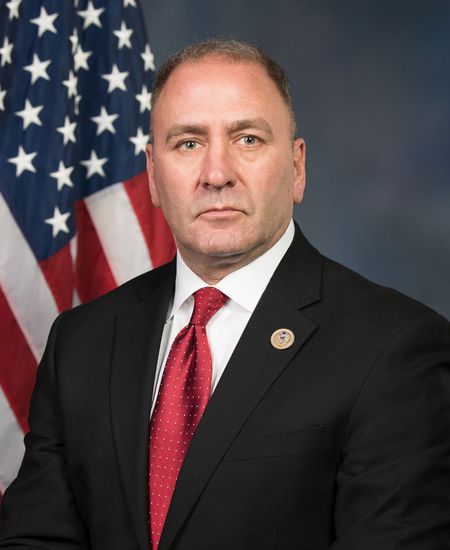
Rep. Clay Higgins
Sponsored bills
State Tax Freedom Act This bill removes a prohibition on states and territories using COVID-19 relief funding under the American Rescue Plan Act of 2021 to offset a reduction in revenue resulting from a reduction in taxes or a delay in the imposition of a tax or tax increase. Additionally, the bill requires the Department of the Treasury to refund the state, territory, or tribal government any money that was repaid to the federal government since enactment of the American Rescue Plan Act of 2021 due to the state cutting taxes.
Veterans Serving Veterans Act of 2021 This bill updates the Department of Veterans Affairs (VA) current recruiting database by requiring the VA to maintain a single searchable database to be known as the Departments of Defense and Veterans Affairs Recruitment Database . With respect to vacant positions for critical jobs or mental health professionals, the database must list (1) the military occupational specialty or skill that corresponds to the position, and (2) each qualified member of the Armed Forces who may be recruited to fill the position before such qualified member has been discharged and released from active duty. Qualified members of the Armed Forces are those service members who (1) are being separated or recently separated from active duty, (2) elect to be listed in the database, and (3) have been determined by the VA to have a military occupational specialty. The database must list the following for each qualified member of the Armed Forces: name, contact information, expected discharge date, and military occupational specialty. The VA must implement direct hiring and appointment procedures for vacant database positions and may authorize relocation bonuses. The bill also requires the VA to train and certify veterans who served as basic health care technicians in the Armed Forces to work as VA intermediate care technicians.
VA Billing Accountability Act This bill authorizes the Department of Veterans Affairs (VA) to waive the requirement that a veteran make co-payments for medications, hospital care, nursing home care, and medical services in certain situations. Specifically, a veteran may have such co-payments waived if (1) an error committed by the VA or a non-VA facility delayed co-payment notification to the veteran, and (2) the veteran received such notification later than 180 days (18 months in the case of a non-VA facility) after the date on which the veteran received the care or services. In requiring a veteran to make a co-payment for care or services provided at a VA or a non-VA medical facility, the VA shall notify the veteran not later than 180 days (18 months in the case of a non-VA facility) after the date on which the veteran received the care or services. If the VA does not provide notification by such date, it may not collect the payment, including through a third-party entity, unless the veteran is provided with (1) information about applying for a waiver and establishing a payment plan with the VA, and (2) an opportunity to make a waiver or establish a payment plan. Finally, the bill requires the VA to review and improve its co-payment billing internal controls and notification procedures.
Border Crisis Prevention Act of 2021 This bill imposes additional requirements on asylum seekers, increases certain time limits related to detained aliens, and addresses other immigration-related issues. The Department of Homeland Security (DHS) must detain certain aliens, such as an alien convicted of an aggravated felony or believed to be a trafficker of controlled substances, beyond certain time limits for detaining an alien. The bill also provides for additional instances when DHS may extend the 90-day removal period (generally the window in which DHS has to remove an alien after a final order of removal). An alien choosing to appeal mandatory detention or detention as part of a removal period extension may do so only by filing for a writ of habeas corpus. DHS shall establish a process to determine whether an alien not subject to mandatory detention and who has tried to comply with a removal order should be detained or released with conditions. Furthermore, under this bill, an alien's credible fear of persecution must be more probable than not in order to be eligible for asylum. DHS may also deny asylum to an applying alien and remove the alien to a country that is not the alien's country of nationality, if the alien would be safe and would be able to apply for asylum from that country. (Currently, an asylum applicant may be removed to a third country only if that country is party to an agreement allowing for such removal.) The Department of Justice may appoint 100 additional immigration judges.
Heartbeat Protection Act of 2021 This bill makes it a crime for a physician to knowingly perform an abortion (1) without determining whether the fetus has a detectable heartbeat, (2) without informing the mother of the results, or (3) after determining that a fetus has a detectable heartbeat. It provides an exception for an abortion that is necessary to save the life of a mother whose life is endangered by a physical (but not psychological or emotional) disorder, illness, or condition. A physician who performs a prohibited abortion is subject to criminal penalties—a fine, up to five years in prison, or both. A woman who undergoes a prohibited abortion may not be prosecuted for violating or conspiring to violate the provisions of this bill.
Born-Alive Abortion Survivors Protection Act This bill establishes requirements for the degree of care a health care practitioner must provide in the case of a child born alive following an abortion or attempted abortion. Specifically, a health care practitioner who is present must (1) exercise the same degree of care as would reasonably be provided to any other child born alive at the same gestational age, and (2) ensure the child is immediately admitted to a hospital. Additionally, a health care practitioner or other employee who has knowledge of a failure to comply with the degree-of-care requirements must immediately report such failure to law enforcement. A health care practitioner who fails to provide the required degree of care, or a health care practitioner or other employee who fails to report such failure, is subject to criminal penalties—a fine, up to five years in prison, or both. An individual who intentionally kills or attempts to kill a child born alive is subject to prosecution for murder. The bill bars the criminal prosecution of a mother of a child born alive under this bill and allows her to bring a civil action against a health care practitioner or other employee for violations.
Shellfish Aquaculture Improvement Act of 2021 This bill limits the ability of an aquaculture worker to bring a civil action against an employer for employment-related injuries. Specifically, the bill limits recovery for injuries sustained by an aquaculture worker if (1) state workers' compensation is available to such individual; and (2) at the time of injury, the individual was engaged in aquaculture in a place where the individual had lawful access. An aquaculture worker is an individual employed by commercial enterprises involved in the controlled cultivation and harvest of aquatic plants and animals, including the cleaning, processing, or canning of fish and fish products, the cultivation and harvesting of shellfish, and the controlled growing and harvesting of other aquatic species.
Death Tax Repeal Act This bill repeals the estate and generation-skipping transfer taxes. It also makes conforming amendments related to the gift tax.
Treatment and Relief through Emerging and Accessible Therapy for PTSD Act or the TREAT PTSD Act This bill requires the Department of Veterans Affairs (VA) and the Department of Defense (DOD) to furnish stellate ganglion block to certain veterans or members of the Armed Forces (including reserve components) diagnosed with post-traumatic stress disorder (PTSD). Blocking the stellate ganglion (a group of nerves at the base of the neck) by injecting a local anesthetic is a treatment that may alleviate PTSD symptoms. The bill authorizes this treatment for any veteran or member of the Armed Forces who (1) is enrolled in the VA health care system or TRICARE program, (2) has been diagnosed with PTSD, and (3) has elected to receive stellate ganglion block after being informed by a physician of the risks and benefits. Such treatment may be furnished at a VA medical center, DOD medical facility, or through health care provider under the Veterans Community Care Program or TRICARE health insurance program. The bill also requires the VA and DOD to update the VA/DOD Clinical Practice Guideline (CPG) for the Management of PTSD to ensure that information about stellate ganglion block is included.