

Maddy summaryHR 401, the "No Taxpayer Funding for the World Health Organization Act," prohibits the U.S. government from providing any assessed or voluntary contributions to the World Health Organization (WHO) starting on the day the bill becomes law. This directly affects the WHO, which would lose U.S. funding through these specific channels, and the U.S. government, which would no longer allocate taxpayer money for this purpose. The key mechanism is a statutory ban that overrides existing law, requiring immediate cessation of such payments without needing additional authorization. The bill does not impact other U.S. international health programs or the WHO's broader operations.
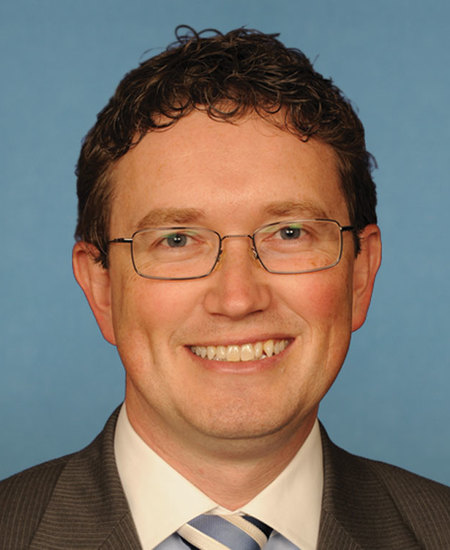
Rep. Thomas Massie
Sponsored bills
Maddy summaryHRES 34 is a non-binding resolution expressing the House of Representatives' view that the federal government should drop all charges against Edward Snowden. It states the House believes the NSA's bulk telephone records program was illegal and unconstitutional, that Snowden's disclosure of it was in the public interest, and that the government should dismiss the espionage and theft charges against him. This resolution does not change any law or affect legal proceedings, as it only states the House's position. It directly relates to Snowden's case and the NSA program's legality, based on prior court rulings and reports.
Maddy summaryThis bill protects individuals charged with nonviolent political protests by preventing pretrial detention for such offenses (unless involving violence), requiring faster trials, and allowing lawsuits for wrongful detention. It also restricts government use of national security powers against U.S. citizens unless they act as foreign agents, mandates disclosure of surveillance investigations upon citizen request, and gives defendants in D.C. trials the right to choose their trial location. Key provisions directly affect people arrested for peaceful protest activities, aiming to limit government overreach in such cases. The bill does not change sentencing guidelines but emphasizes judges should follow standard sentencing ranges for these offenses.
Maddy summaryThis bill, HR 221 (Abolish the ATF Act), would eliminate the Bureau of Alcohol, Tobacco, Firearms and Explosives (ATF) as a federal agency. It directly affects the ATF itself, removing its existence within the U.S. Department of Justice. The bill contains no policy provisions or new mechanisms - it solely directs the abolition of the agency through a single legislative action. As a procedural measure, it does not alter gun laws, enforcement responsibilities, or affect the public.
Maddy summaryThis proposed constitutional amendment would limit Members of Congress to serving a maximum of three terms in the House of Representatives or two terms in the Senate. It directly affects current and future members by preventing those who have already served the maximum terms from seeking re-election. Key provisions include counting vacancies filled for more than a year (House) or three years (Senate) as a full term toward the limit, while excluding terms served before ratification from the count. As a constitutional amendment proposal, it requires approval by three-fourths of state legislatures to become law.
Maddy summaryHRES 15 rescinds three subpoenas issued by the January 6th Select Committee to Stephen Bannon, Mark Meadows, Daniel Scavino Jr., and Peter Navarro, and withdraws the House's prior recommendations that they be found in contempt of Congress. The bill directly affects these four individuals by removing the legal force of the subpoenas and the contempt findings. It accomplishes this by formally withdrawing specific House resolutions (H.Res. 730, H.Res. 1037, and H.Res. 851) that had been adopted. The resolution also directs the Speaker to notify the Department of Justice that the subpoenas are void.
Maddy summaryHR 82, the Social Security Fairness Act of 2023, repeals two provisions that reduce Social Security benefits for certain government workers. It eliminates the Government Pension Offset (GPO), which cuts spousal or survivor benefits for people with pensions from jobs not covered by Social Security (like federal or state government roles), and the Windfall Elimination Provision (WEP), which lowers retirement benefits for those with similar pensions. The law takes effect for benefits paid after December 2023, requiring the Social Security Administration to adjust benefit calculations to remove these reductions. This change directly affects public-sector employees who previously had their Social Security benefits reduced due to their government pensions.
Maddy summaryHR 54, the WHO Withdrawal Act, directs the U.S. President to withdraw the United States from the World Health Organization (WHO) Constitution upon enactment and prohibits all federal funding for U.S. participation in the WHO or any successor organization. The bill repeals the 1948 law that established U.S. membership and funding for WHO participation. This legislation directly affects all federal departments and agencies that handle international health funding and diplomatic engagement, ending U.S. financial and legal ties to the WHO.
Maddy summaryHR 24, the Federal Reserve Transparency Act of 2025, mandates a comprehensive audit of the Federal Reserve Board and Federal Reserve banks by the Government Accountability Office (GAO) within 12 months of enactment. The bill requires the GAO to submit a detailed report to Congress within 90 days of completing the audit, including findings, conclusions, and recommendations for legislative or administrative action. This audit replaces current limitations on reviewing Federal Reserve operations, particularly regarding entities like special purpose vehicles not previously subject to standard audits. The bill directly affects the Federal Reserve System by increasing congressional oversight of its financial activities and reporting mechanisms.
Maddy summaryHR 148, the Keep Your Coins Act of 2025, prohibits federal agencies from restricting how individuals use convertible virtual currency (like cryptocurrency) for personal purchases or self-custody. It directly protects "covered users" - people buying goods/services for themselves - with the right to use crypto for personal transactions and to store it in self-hosted wallets they control. The bill bans federal restrictions on these personal uses, ensuring individuals retain full control over their digital assets without third-party custody. It does not apply to business transactions or commercial crypto services. The law focuses on enabling personal financial autonomy with digital assets, not regulating exchanges or business operations.