

Maddy summaryThe Employee Rights Act (HR 2700) amends key labor laws to strengthen employee rights in collective bargaining and privacy. It requires employers to use secret ballot elections for selecting bargaining representatives and to provide labor organizations with voter lists containing employee names and one form of contact information (chosen by the employee) within two business days of an election. The bill prohibits employers from using employee personal information for non-organizing purposes and mandates written authorization for using union dues on non-bargaining activities, with authorizations expiring after one year. Additionally, it clarifies joint employment standards to prevent misclassification and adds tribal sovereignty protections to labor law definitions.
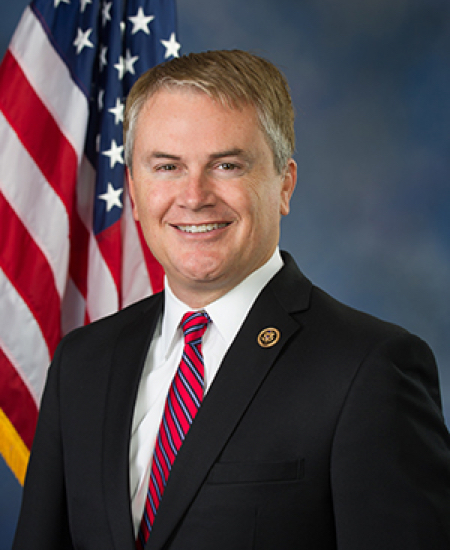
Rep. James Comer
Sponsored bills
Maddy summaryHR 2826, the Save Local Business Act, clarifies when multiple businesses can be held jointly responsible for labor laws. It amends the National Labor Relations Act and Fair Labor Standards Act to state that a business is only a joint employer if it directly controls key employment terms like hiring, pay, schedules, or discipline for another business's workers. This directly affects franchisors, contractors, and similar business models that might previously have been deemed joint employers under broader interpretations. The bill aims to limit joint employer liability to cases where one business has clear, day-to-day control over essential worker conditions.
Maddy summaryHR 734, the Protection of Women and Girls in Sports Act of 2023, amends Title IX to prohibit federally funded schools and athletic programs from allowing individuals assigned male at birth to participate in women's or girls' sports teams. The bill defines "sex" for this purpose as "reproductive biology and genetics at birth," making it a violation of federal law to permit such participation in designated women's or girls' programs. It allows males to train with women's teams only if no female is deprived of a roster spot, competition opportunity, scholarship, or other benefit tied to the team. This law directly affects public and private schools receiving federal financial assistance that operate athletic programs.
Maddy summaryHR 2743 prohibits large financial institutions (over $100 billion in assets) from denying banking services to lawful businesses based on subjective political reasons, industry type, or reputational concerns. It requires these institutions to use objective, risk-based assessments for service decisions and provide written justifications for denials. The law applies to banks, credit unions, and payment networks, with civil penalties for violations including fines up to $10,000 per incident. It specifically ensures businesses operating legally under federal law receive fair access to financial services without discrimination. The bill mandates that denials be based on documented risk factors, not political bias or category-based exclusion.
Maddy summaryHJRES 27 is a congressional resolution seeking to block a federal rule that redefined which waterways fall under the Clean Water Act's protections. It targets a rule submitted by the Army Corps of Engineers, Department of Defense, and Environmental Protection Agency (EPA) on January 18, 2023, which aimed to revise the "Waters of the United States" definition. The resolution would formally disapprove this rule under a specific federal procedure (Chapter 8 of Title 5), preventing it from taking effect. This would directly affect how federal agencies regulate pollution and development near water bodies, including wetlands and smaller streams.
Maddy summaryHR 2620, the Federal Firearms Licensee Protection Act of 2023, increases penalties for crimes targeting firearms licensees. It amends Section 924 of Title 18 to impose mandatory minimum sentences of 3 years for burglaries or 5 years for robberies committed at the business premises of licensed firearms dealers, manufacturers, or importers. The bill specifically targets violations of Section 922(u), which prohibits unauthorized access to these premises, and adds "attempts to do so" to the penalties. This directly affects licensed firearms businesses by strengthening legal protections against theft or violence at their locations. The law creates clearer, harsher consequences for crimes committed during burglaries or robberies at these specific business sites.
Maddy summaryHR 2434, the Next Generation Fuels Act of 2023, requires automobile manufacturers to design vehicles for model years 2028 and later to operate with gasoline containing up to 25% ethanol (2028-2032) or 30% ethanol (2033+) and to be compatible with gasoline having a research octane number of 95 or higher (2028-2032) or 98 or higher (2033+). Fuel retailers must install equipment to ensure compatibility with these high-octane, high-ethanol fuels, while refiners must meet specific requirements for gasoline aromatics content and low-carbon fuel standards. The bill mandates labeling requirements to inform consumers about fuel compatibility and potential consequences of using lower-octane fuels. EPA must determine nationwide availability of 98 octane gasoline by 2031 before the full requirements take effect in 2033, affecting automobile manufacturers, fuel retailers, and refiners through changes in vehicle design, fuel composition, and consumer information standards.
Maddy summaryHR 2427, the Hmong Congressional Gold Medal Act, authorizes Congress to award a gold medal to honor Hmong veterans who served with U.S. forces during the Vietnam War. The bill directs the Treasury Secretary to strike the medal and present it to the Smithsonian Institution for display, recognizing their combat service, heavy casualties, and displacement after the war. Duplicate bronze medals may be sold to cover costs. This procedural bill commemorates the Hmong people's military contributions and their refugee resettlement in the U.S., affecting the Hmong community as a whole.
CBD Product Safety and Standardization Act of 2023 This bill requires the Food and Drug Administration (FDA) to regulate food containing cannabidiol (CBD) derived from hemp as a food additive. (The FDA has determined that food containing added CBD cannot be sold in interstate commerce.) Under this bill, in order to be sold, a food containing CBD derived from hemp must conform with current FDA requirements pertaining to food additives or be generally recognized as safe (GRAS). (Under current law, a food additive with the GRAS designation is not subject to FDA premarket review and approval requirements.) In addition, such a food must comply with all other relevant FDA and labeling requirements. Such a food shall be exempt from an existing provision that prohibits the sale of a food containing an additive that is (1) an FDA-approved drug or biological product, or (2) subject to certain clinical investigations. The FDA must issue regulations pertaining to such foods that specify (1) the maximum amount of CBD derived from hemp per serving, (2) labeling and packaging requirements, and (3) any conditions for intended use.
Hemp and Hemp-Derived CBD Consumer Protection and Market Stabilization Act of 2023 This bill allows the use of hemp, cannabidiol (i.e., CBD) derived from hemp, or any other ingredient derived from hemp in a dietary supplement, provided that the supplement meets other applicable requirements. (Currently, the Food and Drug Administration's position is that CBD products may not be sold as dietary supplements.)