

Maddy summaryHR 7498, the After Hours Child Care Act, creates a new Child Care and Development Innovation Fund to expand child care access for parents working nontraditional hours (like evenings, nights, or weekends). The bill directly affects working parents with young children who struggle to find care outside standard 9-to-5 hours, aiming to help them stay employed and advance in their careers. It authorizes $25,000-$500,000 grants for up to 5 years to eligible entities (such as child care providers or partnerships with businesses) to expand existing programs, establish new onsite workplace child care, or improve facilities and staff training. Grantees must cover 25% of costs, and the Secretary of Health and Human Services must report every two years on the program’s impact, including children served and changes in child care availability.
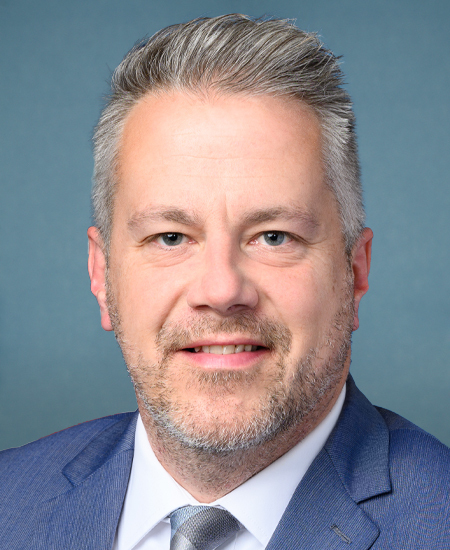
Rep. Eric Sorensen
Sponsored bills
Maddy summaryThis bill requires the military to approve leave for abortion and fertility care without commanders needing to know the specific procedure. It mandates reimbursement for travel, lodging, meals, and transportation costs when care isn't available nearby, and prohibits punishment for using this leave. It directly affects active-duty service members and their dependents who face barriers to reproductive care due to military restrictions or location. The policy change removes command discretion in approving leave for time-sensitive reproductive health services.
Maddy summaryThis bill directs the federal government to conduct a study on co-locating high-voltage power lines on existing highway and rail corridors. The study, led by the Energy Secretary with input from transportation agencies and stakeholders, will assess technical feasibility, safety, costs, and benefits of building transmission infrastructure within these rights-of-way. It will identify suitable corridors, evaluate different line configurations (like overhead or underground), and analyze impacts on grid reliability, energy costs, and transportation operations. The study must produce public reports within three years, including data to help accelerate future transmission projects without requiring immediate construction. This focuses on planning and data-sharing to address grid capacity constraints, directly affecting federal agencies, utilities, and transportation infrastructure owners.
Maddy summaryHR 6635, the Bus Operator Safety and Security Act, requires new fixed-route buses over 30 feet long (with a 10+ year lifespan) purchased using federal transit funds to have physical barriers at the driver's workstation. These barriers must extend from floor to ceiling, fully enclose the workstation to block entry of people or objects, and not obstruct the driver's view. Transit agencies must install these barriers within two years of the law's enactment, unless the labor union representing bus drivers agrees to waive the requirement. The rule applies only to new buses bought with federal funds (excluding those from rural transportation programs) and directly affects transit agencies and bus drivers operating large fixed-route vehicles.
Maddy summaryHJRES 144 is a congressional disapproval resolution targeting a specific rule issued by the Department of Veterans Affairs (VA) on December 31, 2025, which addressed "Reproductive Health Services" (90 Fed. Reg. 61310). This resolution directs Congress to disapprove the VA rule under Chapter 8 of Title 5, U.S. Code, meaning the rule would have no legal effect if passed. The bill directly affects the VA's implementation of reproductive health services for veterans, as it seeks to nullify the agency's existing policy. This is a procedural measure, not a substantive policy change, aimed solely at blocking the VA's rule through congressional action.
Maddy summaryHRES 375 is a symbolic resolution designating May 2025 as "Renewable Fuels Month" to recognize renewable fuels' role in reducing carbon emissions, lowering consumer fuel prices, supporting rural economies, and decreasing reliance on foreign energy sources. The resolution expresses the House's support for this designation without creating new laws or funding. It highlights renewable fuels' economic contributions (e.g., jobs, GDP impact) and environmental benefits as context for the recognition, but does not alter existing policies. As a non-binding resolution, it has no direct legal effect on consumers, industries, or government programs.
Maddy summaryHR 7206, the Farm and Family Relief Act, provides direct financial assistance to agricultural producers facing market challenges during the 2025 crop year. It establishes one-time payments for eligible crop producers (including wheat, corn, soybeans, and cotton) when expected costs exceed expected returns, with payment limits based on farming income (capping at $125,000 or $250,000 depending on farming income percentage). The bill allocates $5 billion for specialty crop producers, $500 million for timber industry assistance, and $330 million for sugar beet producers through cooperative block grants. Additionally, it delays certain cost-shift provisions in food assistance programs and terminates specific tariff-imposing executive orders.
Maddy summaryThe PATH to Education Act creates federal grants to help public transportation providers partner with educational institutions like community colleges, Head Start programs, and career schools to improve transit access for students. Grant funds can be used for adding bus stops or routes near campuses, increasing service frequency, or adjusting schedules to help students and Head Start participants commute. The bill allocates $1 million in 2027, rising to $5 million by 2031, with priority given to projects involving schools where over 25% of students receive Pell Grants. This policy directly affects transit agencies and eligible schools by funding concrete transit improvements to support education access.
Maddy summaryHRES 996 is a resolution introduced by multiple House members to impeach Kristi Lynn Arnold Noem, the Secretary of Homeland Security, for alleged violations of law and the Constitution. It outlines three articles of impeachment: obstructing congressional oversight by denying access to detention facilities and withholding funds, violating public trust through warrantless arrests and excessive force (including tear gas on children), and self-dealing by awarding federal contracts to associates without competitive bidding. If approved by the House, this resolution would formally charge Noem, triggering a Senate trial to determine her removal from office. The resolution itself does not enact new policy but initiates the constitutional impeachment process against a sitting Cabinet official.
Maddy summaryThis bill would increase the base pay for Federal Bureau of Prisons correctional officers by 35 percent, replacing their current base rate for all pay calculations (including retirement and locality adjustments). It applies to officers whose duties involve inmate custody, control, or direct custodial contact, including certain supervisory staff and lower-grade Bureau of Prisons employees with similar duties. The pay increase is capped at the Executive Schedule level V rate and would expire after five years unless a Department of Justice Inspector General review finds progress in reducing non-custodial staff use for custodial duties and excessive overtime. The review, required 180 days before expiration, would assess impacts on recruitment, retention, and institutional safety.