

Maddy summaryHR 3501 would require Medicare providers to screen beneficiaries aged 65 and older for cognitive impairment during annual wellness visits and initial preventive physical exams, using tools approved by the National Institute on Aging. The screening must be documented in the patient’s medical record. This change applies to visits starting January 1, 2026, and aims to support early detection of conditions like Alzheimer’s through standard preventive care. The bill directly affects Medicare beneficiaries, providers, and caregivers by integrating cognitive screening into routine preventive services.
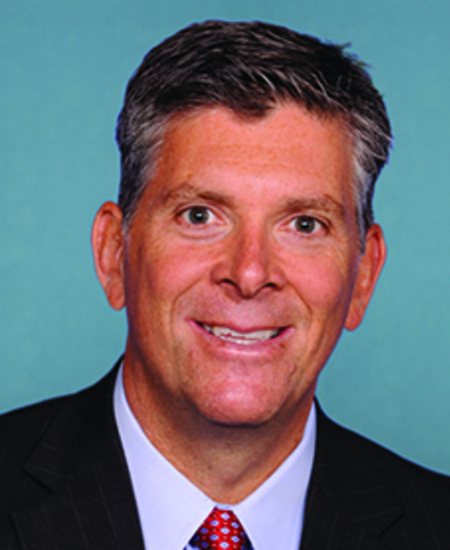
Rep. Darin LaHood
Sponsored bills
Maddy summaryThis bill creates a federal tax credit for businesses that purchase and use retreaded tires manufactured and sold within the United States. The credit equals 30% of qualified retreaded tire expenses, up to $30 per tire, and applies to tires placed in service after December 31, 2025, through 2028. It also requires federal agencies to select retreaded tires from the GSA schedule when available, instead of new tires, and mandates updates to federal procurement rules within one year. The policy directly affects U.S. tire retreading businesses, commercial vehicle operators, and federal procurement offices.
Maddy summaryHR 167, the Community Reclamation Partnerships Act of 2025, allows states to create memoranda with federal agencies to address mine drainage pollution on abandoned mine lands. It establishes "Community Reclaimers" (non-responsible entities like companies not causing pollution) to implement cleanup projects, requiring states to assume liability for project costs and ensure public review. Key provisions mandate detailed project plans, water quality monitoring, technical capability verification, and contingency plans for emergencies. The bill amends the 1977 Surface Mining Act, with projects needing state memoranda approval and specific documentation, and expires September 30, 2032. It directly affects states, Community Reclaimers, and landowners near abandoned mine sites.
Maddy summaryThe CHEERS Act creates a new tax deduction for restaurants, bars, and entertainment venues that purchase energy-efficient draft beer equipment. It amends tax code Section 179D to treat stainless steel or aluminum draft containers and tap systems as "qualified energy-efficient property," allowing businesses to deduct these costs. The deduction applies only to equipment used specifically for distributing and selling alcohol in eligible venues, meeting existing energy efficiency standards. The provision takes effect for equipment placed in service after December 31, 2024.
Maddy summaryHR 3277, the Ensuring Lasting Smiles Act, requires group health plans and health insurance issuers to cover medically necessary outpatient and inpatient treatments for congenital anomalies or birth defects primarily affecting the eyes, ears, teeth, mouth, or jaw. This includes reconstructive procedures, dental/orthodontic support during treatment, and follow-up care, but excludes purely cosmetic surgery not tied to a medical diagnosis. Cost-sharing (like copays) for these services must not be stricter than for other medical benefits. The law takes effect for plan years beginning January 1, 2026, and mandates insurers to provide notice about this coverage to beneficiaries.
Jobs and Opportunity with Benefits and Services (JOBS) for Success Act of 2025 This bill reauthorizes the Temporary Assistance for Needy Families (TANF) program through FY2030, establishes new metrics for measuring states’ performance within the program, and makes other changes to the program’s requirements. Under current law, states participating in TANF are required to meet certain minimum participation rates, or percentages of beneficiaries engaged in work. The bill eliminates minimum participation rates and replaces them with metrics tied to employment outcomes, such as former beneficiaries’ rates of unsubsidized employment and earnings at particular points in time. The Department of Health and Human Services must publish a website with information on each state’s performance. The bill also requires states to create an individual opportunity plan for each beneficiary and to meet with each work-eligible beneficiary at least every 90 days to review the individual’s progress under their plan. (Under current law, individual plans are optional.) Further, the bill prohibits states from using TANF funds to provide benefits to families with monthly incomes that exceed twice the poverty line. Finally, the bill requires states to spend at least 25% of their TANF grant funds on certain activities, including work supports, education and training, and apprenticeships. The bill also lowers the percentage of TANF funds that a state may spend on administrative costs to 10%, with an exception for costs related to case management necessary to assist in the development of individual opportunity plans.
Maddy summaryHR 3137 extends federal tax credits for biodiesel production and use through 2026, directly affecting biodiesel producers, refiners, and businesses that purchase or use biodiesel. The bill updates tax code provisions to keep the biodiesel credit active until 2026 (instead of expiring in 2024) and prevents double benefits by disallowing credits for fuel already covered under a separate clean fuel production credit. It also extends related credits for second-generation biofuels until 2027 and applies to fuels sold or used after December 31, 2024. The changes maintain existing tax incentives without altering eligibility or creating new requirements.
Maddy summaryThis bill expands access to employee ownership by modifying the Small Business Act to allow S corporations owned by employee stock ownership plans (ESOPs) to retain small business status, even when an ESOP owns over 49% of the company. It creates a new Treasury Department office to provide education and technical assistance for S corporations establishing ESOPs, and establishes a Labor Department Advocate for Employee Ownership to coordinate outreach and resolve disputes. These changes directly affect S corporations transitioning to ESOP ownership and their employees, who gain retirement benefits through ESOP accounts. The bill aims to increase employee ownership by removing eligibility barriers and improving support for businesses adopting this model.
Maddy summaryThis resolution (HRES 335) is a symbolic gesture by the House of Representatives to recognize existing home visiting programs. It supports designating the week of April 21-25, 2025, as "National Home Visiting Week" to highlight the work of these programs. The resolution cites statistics showing these programs served over 139,000 parents and children in 2023, emphasizing their role in promoting child development and family well-being. It does not create new policy or funding but aims to raise awareness about established community services that assist families with young children.
Maddy summaryThe Advancing Water Reuse Act creates a 30% tax credit for businesses investing in qualifying water recycling systems. It directly affects industrial, manufacturing, data center, and food processing facilities that replace freshwater use with recycled water from municipal sources, as well as projects building municipal water recycling infrastructure to serve these sectors. The credit covers 30% of the cost for eligible equipment, such as new onsite recycling systems or municipal infrastructure upgrades. This policy is available for projects completed by December 31, 2032, with specific rules allowing businesses to claim the credit even if equipment is later transferred to water utilities.