

Maddy summaryThe COUNTER Act of 2025 requires the U.S. government to assess and counter China's overseas military basing activities. It mandates the Director of National Intelligence to submit a classified risk assessment within 180 days of enactment, focusing on locations where China maintains or seeks military infrastructure. The State Department must then develop a strategy within 180 days, identifying at least five high-risk locations, detailing current efforts to prevent China from establishing bases, and outlining effective actions for partner nations to reject such access. The bill directs the creation of an interagency task force to implement this strategy and conduct quadrennial reviews of the approach. This legislation applies to U.S. government agencies, not directly to foreign nations or citizens.
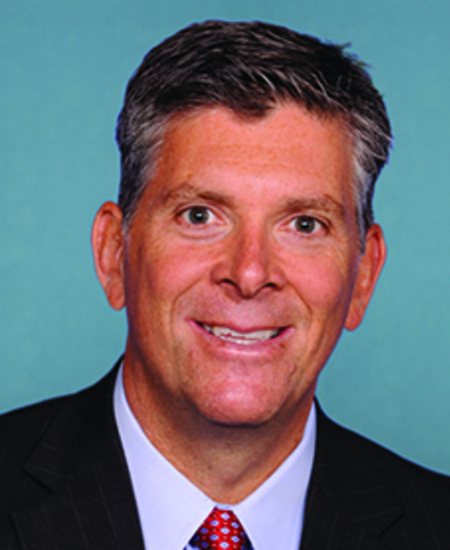
Rep. Darin LaHood
Sponsored bills
Maddy summaryHR 4382 authorizes the U.S. Mint to produce commemorative coins for the 2028 Los Angeles Olympics/Paralympics and 2034 Salt Lake City Winter Olympics/Paralympics. It specifies gold, silver, and half-dollar coin designs with defined mintage limits (e.g., up to 100,000 $5 gold coins for each event), all bearing inscriptions like "2028" or "2034" and standard coin features. A surcharge ($5-$50 per coin) is added to sales, with all funds directed to the respective Olympic committees to support event hosting and legacy programs like youth sports. The bill ensures no net cost to the government by requiring surcharge revenues to cover all design, production, and marketing expenses before funds are disbursed.
Maddy summaryThis bill requires drug manufacturers to pay rebates to Medicare when their "selected drugs" (cancer and complex therapies subject to negotiated maximum fair prices) are used. Manufacturers must calculate rebates based on the difference between current Medicare payment rates (ASP+6) and new negotiated rates (MFP+6), covering the gap for beneficiaries. This lowers patient coinsurance from the current 20% of ASP+6 to 20% of MFP+6 for these specific drugs during the negotiated price period. The rebates are paid to the Medicare trust fund and apply to Medicare Part B beneficiaries using these drugs, directly affecting drug manufacturers and patients covered under Medicare Part B.
Maddy summaryThis bill requires online contact lens sellers to provide a secure electronic method for customers to transmit their contact lens prescriptions, directly affecting online retailers. It mandates that such electronic transmissions comply with HIPAA privacy rules and that any protected health information sent via email must be encrypted. The law updates existing rules to modernize prescription verification for online sales while maintaining privacy protections.
Maddy summaryHR 4142, the "No Adversarial AI Act," prohibits U.S. federal agencies from acquiring or using artificial intelligence (AI) developed by "foreign adversary entities" as defined by the bill. Within 90 days of enactment, agencies must review and remove such AI from their systems, barring exceptions for scientific research, testing, counterterrorism, or mission-critical functions. The bill requires the Federal Acquisition Security Council to create and regularly update a public list of covered AI within 180 days, with removals possible if entities provide certification. This law directly affects federal agencies managing AI systems and aims to mitigate security risks from foreign-sourced AI technology.
Maddy summaryThe Apples to Apples Comparison Act of 2025 requires the Centers for Medicare & Medicaid Services (CMS) to publish detailed Medicare spending data starting in 2025. It mandates that CMS release machine-readable, county- and Metropolitan Statistical Area-level expenditure information for over 30 distinct beneficiary categories (e.g., Part A-only enrollees, Medicare Advantage members, and those with supplemental coverage) on its public website. The law also requires the Medicare Payment Advisory Commission (MedPAC) to analyze Medicare Advantage vs. traditional Medicare spending patterns beginning in 2026, with public methodology and data transparency. Additionally, the Medicare Trustees must include disaggregated expenditure data in their annual reports starting in 2026. This bill directly affects how CMS and federal agencies collect and share Medicare spending data, not beneficiaries' coverage or costs.
Maddy summaryThe Advanced AI Security Readiness Act requires the National Security Agency to develop an AI Security Playbook to protect advanced AI systems that pose national security risks if stolen. The playbook must identify vulnerabilities in AI infrastructure, critical components (like models or training insights) that could be exploited, and strategies to prevent cyber threats from nation-state actors. It mandates both a classified version for government use and an unclassified version for sharing security best practices with private sector AI developers. The NSA must submit an initial report within 90 days and a final report within 270 days after the bill's enactment to Congress.
Maddy summaryThis bill imposes increasing tariffs on Chinese-made drones (starting at 30% and rising to 50%+ over four years) and creates a fund using these tariff revenues. The fund provides grants to first responders (60% of funds), farmers/ranchers (20%), and critical infrastructure providers (20%) to purchase secure drones made outside China. It also requires certification that drones don’t contain Chinese components for importation after 2031. The bill directly affects drone importers, first responders, farmers, and infrastructure providers by reshaping drone procurement and supply chains.
Maddy summaryThis bill extends existing federal reentry programs under the Second Chance Act through 2030, continuing funding for services supporting people returning to communities after incarceration. It specifically maintains grants for state/local reentry projects (including substance use treatment, housing, and peer recovery services), family-based substance abuse treatment, prison/jail educational programs, career training, and community mentoring by nonprofits. The bill updates program timelines from their previous 2019-2023 authorization period to 2026-2030 without altering the core services provided. It directly affects state/local agencies, prisons, and nonprofit organizations administering these reentry programs. The legislation focuses solely on extending current funding mechanisms, not changing program requirements or creating new initiatives.
Maddy summaryHR 3512, the Tackling Predatory Litigation Funding Act, imposes a new annual tax on funds received by third-party investors who finance lawsuits through litigation financing agreements. It directly affects investors (including foreign entities) who provide funding to plaintiffs or law firms in exchange for a share of settlement or judgment proceeds, excluding small agreements under $10,000 or standard loans. The tax equals the top individual income tax rate plus 3.8 percentage points, with 50% withheld from settlement payments by parties involved in the lawsuit. The law also clarifies that such funds cannot offset losses and excludes certain typical legal fee reimbursements from taxation. The provisions take effect for taxable years beginning after December 31, 2025.