

Maddy summaryHR 10090 would impose a 10 percent excise tax on private colleges and universities that allow individuals defined as biologically male to participate in intercollegiate athletic programs designated for females. The bill defines sex strictly by biological reproductive systems, excluding state institutions from this requirement. To prevent the financial burden of the tax from being shifted to students, the legislation prohibits affected schools from raising tuition or mandatory fees as a result of the liability. These provisions would take effect for taxable years beginning after December 31, 2025.
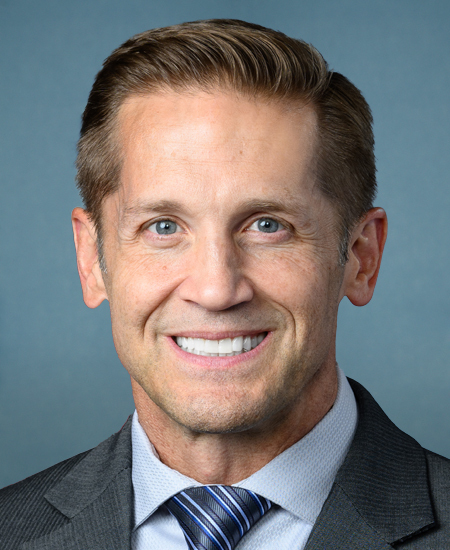
Rep. Richard McCormick
Sponsored bills
Maddy summaryHR 7008, the Stop Insider Trading Act, restricts Members of Congress, their spouses, and dependent children from purchasing certain investments like stocks in publicly traded companies. It requires 7-14 days' advance public notice before selling any such investment, including the sale date, description, and number of shares. Exceptions apply for work-related transactions (e.g., employer compensation) and reinvesting dividends. Violations trigger a fee of $2,000 or 10% of the investment’s value (whichever is greater), plus any net gain, paid from personal funds - not congressional allowances or campaign donations. The bill aims to prevent conflicts of interest by increasing transparency around congressional financial dealings.
Maddy summaryThis bill, titled the Permanent CBDC Ban Act, aims to permanently prohibit the Federal Reserve from issuing a central bank digital currency. It achieves this by amending the Federal Reserve Act to remove the specific legal authority that allows the Reserve to create such a digital currency. The legislation directly affects the Federal Reserve by stripping away its power to launch a digital version of the dollar. By deleting the relevant subsection of the law, the bill ensures that the Reserve cannot issue a CBDC in the future.
Maddy summaryThe STOP the SWAMP Act strengthens penalties for witnesses who refuse to answer questions during congressional investigations or are convicted of lying, adding mandatory fines, jail time, and a ban on future federal employment. It also creates a streamlined process that allows any member of Congress to quickly introduce a resolution to cut off salary funds for federal employees who appear as witnesses in these investigations. By setting strict deadlines for committee reviews and votes, the bill aims to ensure that decisions to rescind these funds happen rapidly and are subject to judicial review.
Maddy summaryThe FASTER Act of 2026 expands the list of major food allergens regulated by the FDA to include barley, rye, and oats alongside wheat. This change requires food manufacturers to clearly label these gluten-containing grains, helping consumers with allergies and Celiac disease identify potential triggers. The law also mandates that the FDA update its compliance guides within a year to reflect these new allergen categories. Additionally, the bill directs the Department of Health and Human Services to produce a comprehensive report on Celiac disease, covering data on prevalence, diagnostic methods, prevention strategies, and potential treatments. These provisions apply to all foods entering the market starting one year after the law is enacted.
Maddy summaryThis bill, known as the Ban Birth Tourism Act of 2026, aims to prevent non-immigrants from entering the United States specifically to give birth and secure citizenship for their children. It directly affects foreign nationals who plan to visit the U.S. with the primary goal of having a child there to obtain a U.S. passport. Under the new rules, immigration officials can deny entry to anyone suspected of engaging in birth tourism or deport those who have already entered for that purpose. The law defines birth tourism as entering the country with the main intent of obtaining citizenship for a child or being likely to give birth within 10 months of arrival to achieve that status. Decisions on whether someone is engaging in birth tourism will be based on the reasonable judgment of government officials such as those at the Department of Homeland Security.
Maddy summaryThis bill directs the Department of Defense to create designated airspace corridors specifically for testing and training small drones and the systems used to detect or neutralize them. These zones would allow military personnel to safely practice operating various drone technologies, such as sensors and autonomous software, alongside counter-drone measures like electronic warfare and directed energy weapons. The Secretary of Defense must identify suitable locations, potentially building new facilities or using existing ones, while consulting with other government agencies to ensure safety and address regulatory hurdles. Additionally, the bill requires the Pentagon to report to Congress within 90 days of establishing a corridor, providing details on its location, necessary resources, and any agreements with other federal partners.
Maddy summaryThis bill, known as the D.C. Taxing Authority Review Act, modifies the rules for how new taxes and fees proposed by the District of Columbia government are reviewed by Congress. It requires that any D.C. law imposing or increasing a tax or fee must receive explicit approval from a joint resolution passed by both the House of Representatives and the Senate within 60 days, or else the law will not take effect. Additionally, the bill limits the time for debating these specific approval resolutions to one hour, split evenly between supporters and opponents. These changes directly affect the District of Columbia government's ability to enact new financial measures without prior congressional consent.
Maddy summaryThis bill requires pharmacy benefits managers (PBMs) administering prescription drug benefits for federal employee health plans to reimburse pharmacies at specific rates, including the national average drug cost plus a small percentage or $50, whichever is lower. It prohibits PBMs from favoring their own pharmacies, restricting patient choice, or reducing pharmacy payments after claims are processed. The bill establishes $10,000 civil penalties for violations, with debarment from federal health plans after 10 penalties in 10 years. This directly affects PBMs, in-network pharmacies, and federal health benefit plans covering millions of federal employees and their families. The law aims to ensure fair reimbursement practices and maintain pharmacy choice under the Federal Employees Health Benefits Program.
Maddy summaryThis bill reauthorizes and updates the American Battlefield Protection Program through 2036, extending funding for battlefield preservation grants. It increases the maximum grant percentage for battlefield interpretation projects from 50% to 75% and sets $2 million annually for battlefield restoration grants through 2036. The bill also requires the National Park Service to study French and Indian War (1754-1763) and Mexican-American War (1846-1848) sites across the U.S., assessing their significance, threats, and preservation options. These studies must involve state governors, tribal governments, local officials, and historic preservation groups, with a final report due to Congress within two years of funding. The program directly affects federal, state, tribal, and local entities managing historic battlefields.