

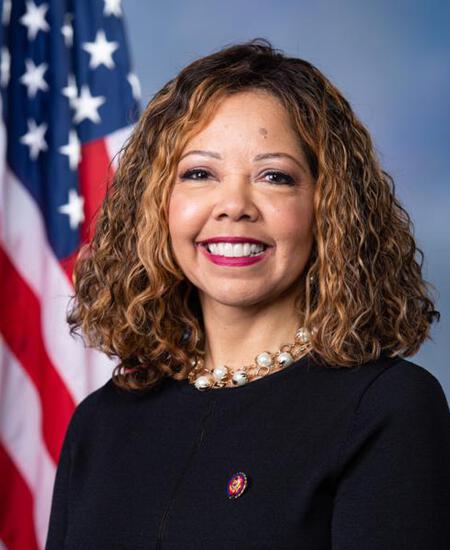
Photo of Lucy McBath
D United States House · District 6 · Georgia On the 2026 ballot

Rep. Lucy McBath

Compare
Total votes
2,818
all sessions
Attendance
98%
66 missed
Lower than 77% of chamber peers
With party
97%
of cast votes
Near the chamber average
Bipartisan score
1%
crosses aisle rarely
Near the chamber average
Sponsored
1,121
bills & resolutions
Near the chamber average
Committees
5
assignments
1,121 bills and resolutions

Sponsored bills

Total
1,121
Primary
58
Co-sponsor
1,063
This page
1,121
matching current filters
Co-sponsor HR 8914
In committee · Delaware House · Co-sponsor
No Taxpayer-Funded Settlement Slush Funds Act of 2026

Maddy summaryThe No Taxpayer-Funded Settlement Slush Funds Act of 2026 prohibits the use of federal money to pay specific settlements involving high-ranking government officials and their close associates. It bars payments to the President, Vice President, their immediate families, cabinet members, senior executive staff, political appointees, and individuals connected to these roles, as well as any entity owned by the President or Vice President. Additionally, the bill restricts settlements related to claims about the January 6 Capitol attack, foreign election interference, or previously dismissed lawsuits, while requiring Treasury reports for large settlements and allowing the government to seek repayment if rules are broken.

In committee May 20, 2026 1 co-sponsor
Co-sponsor HR 7024
In committee · Delaware House · Co-sponsor
Hemp Planting Predictability Act

Hemp Planting Predictability Act This bill extends by two years the implementation of changes to the regulation of hemp products, which reimpose certain federal controls over some hemp products. Specifically, Congress enacted the FY2026 agriculture appropriations act (P.L. 119-37) on November 12, 2025. Effective November 12, 2026, the act modifies the statutory definition of hemp products that are considered to be lawful. This bill extends the effective date to November 12, 2028. As background, the 2018 farm bill excluded hemp from the Controlled Substances Act definition of marijuana and defined hemp . As a result, hemp and hemp-derived products at or below the 0.3% delta-9 tetrahydrocannabinol (THC, the psychoactive component of marijuana) concentration threshold were no longer regulated as Schedule I controlled substances and registration with the Drug Enforcement Administration was no longer required to cultivate or handle hemp and hemp-derived products. However, hemp remained subject to Department of Agriculture and Food and Drug Administration regulation. The 2025 changes to the definition of hemp, include changing the limit to a total THC concentration of not more than 0.3% on a dry weight basis rather than only delta-9 THC, explicitly including industrial hemp, excluding seeds from a cannabis plant that exceed a certain THC concentration, and excluding various types of hemp-derived cannabinoid products. Cannabinoids refer to unique chemical compounds that are found in hemp and marijuana (e.g., THC) and are known to exhibit a range of psychological and physiological effects.

In committee May 20, 2026 1 co-sponsor
Co-sponsor HR 6819
In committee · Delaware House · Co-sponsor
Bridge to Summer Nutrition Act of 2025

Maddy summaryThis bill increases federal reimbursement for states operating summer nutrition programs. It requires the Secretary of Agriculture to pay states 90% of monthly administrative costs for two programs: the summer electronic benefits transfer program for children (under the School Lunch Act) and the Supplemental Nutrition Assistance Program (SNAP). This directly affects states that administer these programs, providing them with significantly more federal funding to cover operational expenses. The key change is raising the reimbursement rate from previous levels to 90% for both programs' administrative costs during fiscal years they are operated.

In committee May 20, 2026 1 co-sponsor
Co-sponsor HR 8907
In committee · Delaware House · Co-sponsor
IMPACT to Save Moms Act

Maddy summaryThe IMPACT to Save Moms Act directs the Centers for Medicare & Medicaid Services to run a five-year demonstration project from 2027 to 2031, allowing states to test new payment models for maternity care under Medicaid and state child health plans. This initiative aims to improve health outcomes for pregnant and postpartum individuals, with a specific focus on reducing disparities among groups that experience higher rates of maternal mortality and severe complications. To achieve these goals, the project requires states to consider alternative payment structures that account for pregnancy risk levels, include diverse care teams with training on bias, and address social factors affecting health. The bill also mandates that the federal government evaluate the project's impact on health outcomes and spending, and submit a final report to Congress with recommendations on whether to expand the program nationwide.

In committee May 19, 2026 1 co-sponsor
Co-sponsor HR 8811
In committee · Delaware House · Co-sponsor
Moms Matter Act

Maddy summaryThe Moms Matter Act directs the Department of Health and Human Services to create two main grant programs aimed at improving maternal mental health and reducing health disparities among pregnant and postpartum individuals. The first program provides funding to community organizations and healthcare providers to expand services that integrate mental health care into prenatal and postpartum settings, with a specific focus on groups facing higher risks of mortality and morbidity. The second program offers grants to educational institutions to train and recruit a diverse workforce of mental health professionals who specialize in caring for pregnant and postpartum patients. Both initiatives require recipients to submit annual reports on their activities and outcomes, while the legislation authorizes $25 million and $15 million respectively for each program from fiscal years 2027 through 2031.

In committee May 14, 2026 1 co-sponsor
Co-sponsor HR 8807
In committee · Delaware House · Co-sponsor
Maternal Health Pandemic Response Act

Maddy summaryThe Maternal Health Pandemic Response Act allocates $200 million to the Centers for Disease Control and Prevention to improve data collection, surveillance, and research on how public health emergencies affect pregnant and postpartum individuals. This funding supports efforts to gather detailed demographic information on maternal health outcomes, establish regional centers of excellence, and expand surveys to better reach underrepresented communities. The legislation also requires the CDC to make this data publicly available in a disaggregated format while protecting patient privacy, and mandates public education campaigns to ensure accurate information reaches families and healthcare providers. Additionally, the bill creates a diverse task force to develop federal recommendations for respectful maternity care during emergencies, addressing issues such as telehealth access, doula coverage, and the treatment of mental health and substance use disorders. These measures aim to reduce health disparities and improve care quality for pregnant people from racial and ethnic minority groups during public health crises.

In committee May 14, 2026 1 co-sponsor
Co-sponsor HR 8802
In committee · Delaware House · Co-sponsor
January 6th Law Enforcement Heroes Compensation Fund Act

Maddy summaryThis bill establishes a compensation fund to provide financial support to law enforcement officers who actively defended the U.S. Capitol on January 6, 2021, and suffered injuries, emotional distress, or death as a result. The program is administered by a Special Master appointed by the Attorney General, who will review individual claims for economic and non-economic losses while ignoring any questions of negligence. Eligible officers can receive specific payments for their injuries or the death of a colleague, with a guaranteed minimum of $4.975 million for death claims, plus an additional equal distribution to all qualifying officers regardless of injury status. The legislation also includes provisions to reduce payouts by any other compensation the claimant has already received and grants the federal government the right to recover funds if they are later paid out in related legal settlements.

In committee May 13, 2026 1 co-sponsor
Co-sponsor HR 8798
In committee · Delaware House · Co-sponsor
Universal School Meals Program Act of 2026

Maddy summaryThe Universal School Meals Program Act of 2026 mandates that all public schools provide free breakfast and lunch to every enrolled student, regardless of income. It establishes specific funding rates for these meals, adjusts payments based on the use of locally sourced food, and eliminates the ability of schools to collect debt for unpaid charges. Additionally, the bill expands free meal access to summer programs, afterschool care, and incarcerated juveniles while updating poverty measurement standards across various federal education and nutrition laws.

In committee May 13, 2026 1 co-sponsor
Co-sponsor HR 8791
In committee · Delaware House · Co-sponsor
IGNITE HBCU Excellence Act

Maddy summaryThe IGNITE HBCU Excellence Act authorizes federal grants to Historically Black Colleges and Universities (HBCUs) to fund long-term improvements to their campus facilities and infrastructure. These grants are awarded competitively to eligible HBCUs based on criteria such as the age of their facilities, deferred maintenance needs, financial capacity, and student enrollment levels. Recipients may use the funds to construct or renovate buildings, upgrade technology and broadband systems, improve safety measures, and develop workforce training hubs, while being prohibited from using the money for routine maintenance or athletic facilities. The legislation also includes provisions for reporting on project outcomes and requires institutions to create comprehensive master plans that involve consultation with diverse campus and community stakeholders.

In committee May 13, 2026 1 co-sponsor
Co-sponsor HR 2853
Passed · Delaware House · Co-sponsor
Combating Organized Retail Crime Act of 2025

Maddy summaryThis bill would amend federal law to strengthen penalties for organized retail crime by expanding definitions of theft to include digital goods, gift cards, and setting a $5,000 aggregate value threshold for charges over a 12-month period. It would establish a new "Organized Retail and Supply Chain Crime Coordination Center" under Homeland Security to coordinate Federal, State, local, and Tribal law enforcement efforts against cross-jurisdictional theft groups. The Center would share information with retailers, transportation companies, and law enforcement agencies, track crime trends, and produce annual reports on organized retail crime. This legislation directly affects retailers, supply chain businesses, and law enforcement agencies, while targeting organized crime groups responsible for a 93% increase in larceny incidents and rising safety concerns for retail employees. The bill aims to address significant financial losses and supply chain disruptions noted in the National Retail Federation's 2023 data.

Passed May 13, 2026 1 co-sponsor
Showing 31 to 40 of 1,121 bills
Previous 1 3 4 5 113 Next