

Maddy summaryThis resolution expresses the House of Representatives' support for keeping the words 'one Nation under God' in the Pledge of Allegiance. It highlights historical events, such as the 1954 amendment and recent 250th anniversary celebrations, to emphasize the phrase's role in American civic tradition. The bill does not change any laws or alter the Pledge itself; instead, it serves as a formal statement of the House's position on the matter.
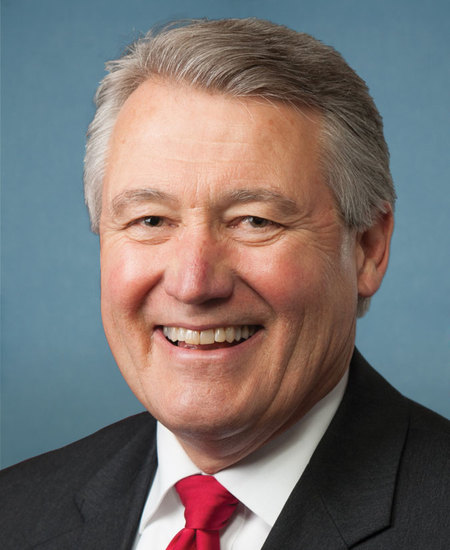
Rep. Rick W. Allen
Sponsored bills
Maddy summaryThis bill simplifies filing requirements for employer-sponsored retirement plans. It extends the deadline for submitting Form 5500 (the annual report for retirement plans) from 210 days or 6 months after the plan year end to 15 days after the end of the 9th calendar month following the plan year. It also allows electronic signatures for these filings and requires agencies to update regulations to reflect these changes. The bill directly affects employers and plan administrators who manage retirement plans under federal law, reducing administrative burdens and modernizing the filing process.
Maddy summaryThis bill would add pharmacist services to Medicare Part B coverage for beneficiaries, specifically covering pharmacist-led testing and treatment for illnesses like flu, COVID-19, or strep throat during public health emergencies. It defines covered services as those performed under state law, often requiring collaboration with a physician, and sets payment at 80% of the lesser of the actual charge or 85% of physician payment rates. Pharmacists would be prohibited from balance billing for these services, ensuring Medicare beneficiaries pay only their standard copayment. The changes would take effect January 1, 2026.
Maddy summaryHR 7195 provides financial assistance to forest harvesting, hauling businesses, and qualifying landowners affected by specific market disruptions. It authorizes the Secretary of Agriculture to declare a market disruption (e.g., facility closures, trade barriers, or significant price drops) and then issue payments to eligible entities meeting strict revenue and operational criteria. Payments include an initial up to $20,000 and a second payment based on revenue loss compared to prior years, with potential annual follow-up payments for five years if disruptions persist. Funding comes directly from anti-dumping duties on Canadian softwood lumber imports, and funds must be used for operational costs or expanding market access within the forest product sector.
Maddy summaryThe In God We Trust Act requires the Administrator of General Services to display the national motto "In God We Trust" on every public building within the United States. This mandate applies to all federal buildings and must be completed no later than one year after the law is enacted. The bill specifies that the motto must be inscribed or displayed in a prominent location on each structure.
Maddy summaryThe IGNITE HBCU Excellence Act authorizes federal grants to Historically Black Colleges and Universities (HBCUs) to fund long-term improvements to their campus facilities and infrastructure. These grants are awarded competitively to eligible HBCUs based on criteria such as the age of their facilities, deferred maintenance needs, financial capacity, and student enrollment levels. Recipients may use the funds to construct or renovate buildings, upgrade technology and broadband systems, improve safety measures, and develop workforce training hubs, while being prohibited from using the money for routine maintenance or athletic facilities. The legislation also includes provisions for reporting on project outcomes and requires institutions to create comprehensive master plans that involve consultation with diverse campus and community stakeholders.
Maddy summaryThis bill would amend federal law to strengthen penalties for organized retail crime by expanding definitions of theft to include digital goods, gift cards, and setting a $5,000 aggregate value threshold for charges over a 12-month period. It would establish a new "Organized Retail and Supply Chain Crime Coordination Center" under Homeland Security to coordinate Federal, State, local, and Tribal law enforcement efforts against cross-jurisdictional theft groups. The Center would share information with retailers, transportation companies, and law enforcement agencies, track crime trends, and produce annual reports on organized retail crime. This legislation directly affects retailers, supply chain businesses, and law enforcement agencies, while targeting organized crime groups responsible for a 93% increase in larceny incidents and rising safety concerns for retail employees. The bill aims to address significant financial losses and supply chain disruptions noted in the National Retail Federation's 2023 data.
Maddy summaryThe SMART Kids Act directs the Surgeon General to create evidence-based guidelines on daily screen time limits for children across six specific age groups. To ensure objectivity, the Surgeon General must work with an independent expert panel that has no financial conflicts of interest before finalizing these recommendations. Once completed, the guidelines will be published online and submitted to Congress within one year of the law's enactment. This legislation does not impose new legal restrictions on families but instead establishes a federal process for generating health advice on device usage.
Maddy summaryHR 6373 modifies the Clean Air Act to create new permitting flexibility for specific facilities. It allows the President to waive certain emission offset requirements for new or modified semiconductor manufacturing facilities or critical mineral facilities (like those processing lithium or cobalt) if deemed necessary for national security. States can also permit these facilities to use alternative offset methods - such as paying an emissions fee capped at 1.5 times local control costs - if all standard offsets are exhausted, with fees required to fund further emissions reductions in the area. The bill directly affects advanced manufacturing and critical mineral operations seeking streamlined permitting.
Maddy summaryHR 4214 requires the Environmental Protection Agency (EPA) to publish final implementing regulations and guidance for new or revised national air quality standards at the same time as the standards themselves. This affects developers seeking preconstruction permits for facilities like factories or power plants, as the new standards cannot be applied to permit reviews until the EPA provides this guidance. The bill also includes a specific provision delaying the application of the 2024 PM2.5 air quality standard to certain permit applications if they meet timing conditions related to the EPA's final designation of affected areas. It does not change the air quality standards or pollution limits themselves, but ensures permit applicants receive clear guidance alongside new rules. The bill focuses on procedural timing for EPA rulemaking to streamline the permitting process.