

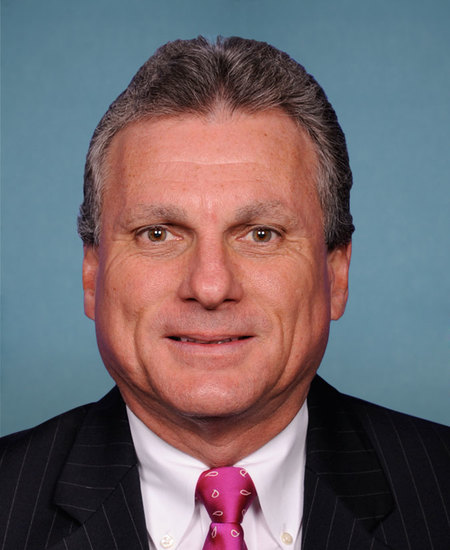
Photo of Earl L. "Buddy" Carter
R United States House · District 1 · Georgia

Rep. Earl L. "Buddy" Carter

Compare
Total votes
2,818
all sessions
Attendance
96%
101 missed
Lower than 79% of chamber peers
With party
96%
of cast votes
Higher than 90% of chamber peers
Bipartisan score
2%
crosses aisle rarely
Lower than 91% of chamber peers
Sponsored
1,337
bills & resolutions
Higher than 78% of chamber peers
Committees
5
assignments
1,337 bills and resolutions

Sponsored bills

Total
1,337
Primary
159
Co-sponsor
1,178
This page
1,337
matching current filters
Co-sponsor HR 9811
In committee · Delaware House · Co-sponsor
Anti-Fraud Fund Act of 2026

Maddy summaryThe Anti-Fraud Fund Act of 2026 increases funding for the Health Care Fraud and Abuse Control Account by $7 billion annually from fiscal year 2027 through 2030. This additional money is intended to support the government's efforts in detecting and preventing fraud within the healthcare system. The bill modifies existing laws to ensure these funds are available for the specified period without altering other spending limits.

In committee Jul 21, 2026 1 co-sponsor
Co-sponsor HR 7332
In committee · Delaware House · Co-sponsor
Whale CHARTS Act of 2026

Maddy summaryThe Whale CHARTS Act of 2026 establishes a program to protect migratory whales and other large cetaceans through improved mapping, monitoring, and mitigation measures. It requires the creation of detailed, high-resolution maps of whale habitats, including calving grounds and migration routes, which will be integrated into vessel navigation systems to prevent collisions. The bill authorizes $8 million annually through 2030 for mapping, surveys, and a $10 million grant program to fund new detection technologies that reduce harmful interactions between whales and ocean users. It also mandates regular reporting to Congress on the program's effectiveness and progress in filling knowledge gaps about whale habitats.

In committee Jul 21, 2026 1 co-sponsor
Co-sponsor HR 5362
Passed · Delaware House · Co-sponsor
To name the Department of Veterans Affairs multispecialty clinic in Marietta, Georgia, as the "Colonel Michael H. Boyce Department of Veterans Affairs Multispecialty Clinic".

Maddy summaryThis bill names the Department of Veterans Affairs multispecialty clinic at 1263 Cobb Parkway NW in Marietta, Georgia, as the "Colonel Michael H. Boyce Department of Veterans Affairs Multispecialty Clinic." It is a ceremonial resolution with no policy changes or funding impacts - it solely updates the facility's official designation in government records. The clinic itself remains unchanged, and the bill does not alter services, funding, or operations for veterans.

Passed Jul 21, 2026 1 co-sponsor
Co-sponsor HR 3747
Passed · Delaware House · Co-sponsor
Accelerating Access to Dementia and Alzheimer’s Provider Training Act

Maddy summaryThe AADAPT Act reauthorizes and expands Project ECHO grants to improve Alzheimer’s and dementia care through technology-enabled training. It specifically funds grants for healthcare providers in rural, frontier, or medically underserved areas to enhance early diagnosis, quality care, and provider retention for dementia patients. The bill authorizes $1 million annually (2027-2032) for these dementia-focused training programs, requiring funds to supplement - not replace - existing resources. This directly supports primary care providers licensed to serve underserved communities, using collaborative online learning to address care gaps.

Passed Jul 21, 2026 1 co-sponsor
Primary HR 2821
Passed · Delaware House · Lead sponsor
FDA Modernization Act 3.0

Maddy summaryHR 2821, the FDA Modernization Act 3.0, requires the FDA to update regulatory language within one year of enactment. It directs the agency to replace all references to "animal tests" with "nonclinical tests" in 22 specific sections of the Code of Federal Regulations related to drug development and approval processes. The bill also adds a definition for "nonclinical test" into relevant FDA regulations to align with prior legislative changes. This update applies directly to pharmaceutical manufacturers and FDA reviewers who follow these regulatory guidelines during drug development. The changes aim to modernize terminology without altering current testing requirements.

Passed Jul 21, 2026 0 co-sponsors
Co-sponsor HR 2715
Passed · Delaware House · Co-sponsor
Destruction of Hazardous Imports Act

Maddy summaryHR 2715, the *Destruction of Hazardous Imports Act*, expands the authority to destroy imported goods that pose public health risks. It amends the Federal Food, Drug, and Cosmetic Act to allow the Secretary of Health and Human Services to order the destruction of any refused import (not just drugs or devices) if it presents a significant health concern. The bill also prohibits the unauthorized movement, sale, or export of such refused goods. These changes apply to importers of hazardous refused articles 180 days after enactment, with the FDA required to finalize implementing regulations within 90 days.

Passed Jul 21, 2026 1 co-sponsor
Co-sponsor HR 1266
In committee · Delaware House · Co-sponsor
Combating Illicit Xylazine Act

Maddy summaryHR 1266, the Combating Illicit Xylazine Act, adds xylazine - a veterinary sedative increasingly found in illicit drug mixtures - to Schedule III of the Controlled Substances Act, regulating its use and trafficking. It directly affects veterinarians, animal owners, and manufacturers by allowing xylazine to be legally dispensed for animal use under specific veterinary prescriptions, while prohibiting non-veterinary human use. The bill includes transition periods (60 days for practitioners, 1 year for labeling) to ease compliance for manufacturers and practitioners, and requires the DEA and FDA to expedite necessary applications. It also mandates two congressional reports on xylazine's illicit use and trafficking patterns, and directs the Sentencing Commission to review penalties for offenses involving xylazine.

In committee Jul 21, 2026 1 co-sponsor
Co-sponsor HR 9788
In committee · Delaware House · Co-sponsor
FORMULA Act of 2026

Maddy summaryThe FORMULA Act of 2026 requires the U.S. Food and Drug Administration to set strict limits on contaminants in infant formula, including heavy metals, microplastics, and synthetic pesticides. Manufacturers must test their products to meet these new standards and keep records of their testing for at least two years after the formula's shelf life expires. The law also mandates that the FDA report annually to Congress on any violations and the progress made in reducing contaminant levels in the domestic supply chain. These regulations will take effect 180 days after the bill is signed into law.

In committee Jul 20, 2026 1 co-sponsor
Co-sponsor HR 9743
In committee · Delaware House · Co-sponsor
TRUTH in Coverage Act of 2026

Maddy summaryThe TRUTH in Coverage Act of 2026 requires group health plans and health insurance issuers that cover gender-affirming procedures to also cover medical services intended to treat physical and psychological complications resulting from those procedures. This mandate applies regardless of whether the original gender-affirming treatment was covered by the plan and ensures that any required follow-up care faces the same cost-sharing rules and limitations as standard medical benefits. The bill defines "sex-rejecting procedures" broadly to include hormone therapy, surgeries, and puberty blockers, while explicitly excluding treatments for intersex conditions, life-threatening emergencies, and standard puberty suppression for early puberty. These provisions would take effect for plan years beginning on or after January 1, 2027, affecting individuals with access to employer-sponsored or individual health insurance.

In committee Jul 16, 2026 1 co-sponsor
Co-sponsor HR 9693
In committee · Delaware House · Co-sponsor
Patients First Act of 2026

Maddy summaryThe Patients First Act of 2026 modifies how Medicare reimburses physicians and primary care providers to improve access and stabilize payments. It establishes a new hybrid payment model for primary care services from 2027 to 2031, which pays a monthly fee per patient to eligible independent practices while covering specific services like care management and telehealth without cost-sharing for patients. The bill also updates the formula for calculating reimbursement rates to account for high inflation years and requires more frequent updates to the costs used in calculating payments. Additionally, the legislation reforms the performance-based payment system by adding care efficiency measures, creating a task force to recommend new quality metrics, and adjusting penalties for providers who fail to report on certain data.

In committee Jul 15, 2026 1 co-sponsor
Showing 21 to 30 of 1,337 bills
Previous 1 2 3 4 134 Next