

Maddy summaryThe FIREWALL Act prevents the use of federal funds administered by the FCC and NTIA to buy fiber-optic cable from companies owned by designated countries of concern or their officials. This restriction applies to all purchases made 90 days after the law is enacted and covers both solid-core and hollow-core fiber technology. The bill aims to limit financial support for telecommunications infrastructure that could be controlled by foreign adversaries, directly affecting individuals and entities seeking federal funding for cable projects.
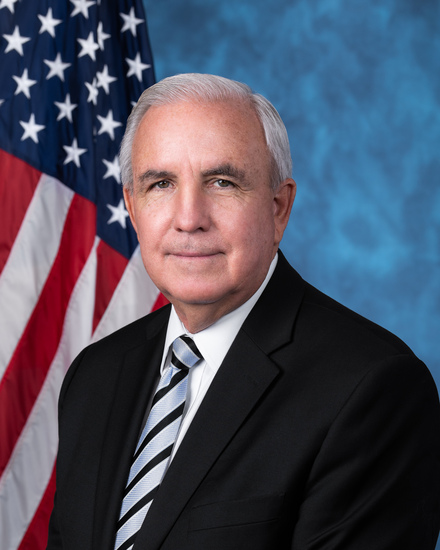
Rep. Carlos A. Gimenez
Sponsored bills
Maddy summaryThe Boat Loan Interest Deduction Act of 2026 expands the tax deduction for interest paid on consumer loans to include recreational motorboats, alongside existing vehicles like cars and trucks. This change allows taxpayers who take out loans for boats assembled in the United States to deduct the interest they pay on their federal income tax returns, provided the boat is used primarily for recreation. The law applies to debts incurred after December 31, 2025, and requires taxpayers to report the boat's hull identification number on their tax filings.
Maddy summaryThe Securing Agriculture's Workforce Act of 2026 modernizes the H-2A visa program by transferring administrative authority to the Department of Homeland Security and introducing a unified online platform to streamline applications for employers and workers. Key provisions include establishing new housing standards with mandatory inspections, creating a system for staggered worker entry and exit, and allowing workers to transfer between employers without losing their status. The bill also defines specific job classifications for wage calculations, expands the scope of covered agricultural activities, and provides legal protections for employers who document the employment of workers seeking visa status. Additionally, it requires agencies to develop a heat illness prevention plan and allows for contract termination due to natural disasters.
Maddy summaryHR 4398, the Veteran Burial Timeliness and Death Certificate Accountability Act, requires Veterans Affairs (VA) physicians or nurse practitioners to certify the death of a veteran who dies of natural causes within 48 hours of learning of the death. This directly affects veterans' families, who previously faced delays of up to eight weeks in burial and access to survivor benefits due to slow death certifications. The bill mandates annual reports to Congress on VA compliance with the 48-hour rule, including statistics on delays and their causes. The key change is establishing a strict timeline for death certification to prevent unnecessary delays in honoring veterans' final arrangements.
Maddy summaryThis bill redesignates the existing National Parks and Public Land Legacy Restoration Fund as the America's Legacy Restoration Fund to address deferred maintenance on federal lands. It directs revenue from recreation fees and a portion of energy development income into the fund, which must be used primarily for repairing critical infrastructure like roads, trails, and buildings managed by agencies such as the National Park Service and the Forest Service. The legislation establishes strict rules requiring that most funds go toward non-transportation projects, mandates transparency through public dashboards tracking project status, and sets aside a small percentage for matching private donations. Additionally, the bill increases entrance fees for foreign visitors to ensure they contribute to the fund, while prohibiting the use of these specific funds for land acquisition or employee bonuses.
Maddy summaryThe Disaster Loan Accountability and Reform Act (DLARA) requires the Small Business Administration (SBA) to improve transparency and accountability for disaster loans. It mandates monthly reports detailing loan funding status, new budget requests with historical cost comparisons, and strict limits on loan obligations when funds fall below 10% of a 10-year average. The bill also requires GAO and SBA Inspector General reviews of funding shortfalls, cost impacts of recent policy changes, and enhanced forecasting for disaster loan budgets. These provisions directly affect the SBA’s operations and its reporting to Congress, aiming to prevent future funding crises through better data and oversight.
Repealing Big Brother Overreach Act This bill repeals the Corporate Transparency Act. The act requires existing companies and newly created companies to report beneficial ownership information to the Department of the Treasury’s Financial Crimes Enforcement Network for purposes of addressing the financing of terrorism and money laundering.
Maddy summaryThis bill appropriates $3.5 billion to help Florida farmers and growers recover from the severe freeze that occurred in March 2026. The funds are distributed as block grants specifically to cover losses in crops, trees, bushes, and vines caused by the cold weather, including compensation for multi-year crops. Assistance is restricted to counties officially designated as disaster areas by the Secretary of Agriculture on March 4, 2026, and requires a request from a state agriculture department to release the money. The Secretary of Agriculture must also submit quarterly reports to Congress detailing how the funds are being used until the budget is exhausted.
Country of Origin Labeling Requirement Act or the COOL Online Act This bill requires sellers of imported products online to conspicuously disclose the country of origin of the products and the country where the seller's principal place of business is located. This requirement does not apply to specified products, such as agricultural commodities, food or drugs, or previously owned items. The Federal Trade Commission must enforce violations of this requirement as unfair or deceptive trade practices.
Maddy summaryThe PANA Act of 2026 creates a new fund in the U.S. Treasury to support democratic governance, human rights, independent media, and anti-corruption efforts in Venezuela. This fund will be financed by assets forfeited from individuals or entities linked to the regimes of Hugo Chávez or Nicolás Maduro after the bill is enacted. The money can be used by the State Department without needing additional annual approval from Congress, and officials must report annually to Congress on how the funds are being used.