

Health Standards To Advance Transparency, Integrity, Science, Technology Infrastructure, and Confidential Statistics Act of 2021 or the Health STATISTICS Act of 2021 This bill requires efforts to standardize reporting of public health data, including for COVID-19 (i.e., coronavirus disease 2019) data. It also expands access to federal databases for health research. Specifically, the Centers for Disease Control and Prevention (CDC) must develop uniform standards for health departments and other entities that report public health data. The Department of Health and Human Services (HHS) may award grants to entities for adopting the uniform standards and otherwise improving their reporting capabilities. Furthermore, the CDC must, in consultation with the National Institutes of Health, establish specific standards within 30 days for reporting COVID-19 data. HHS must also disseminate this data subject to privacy and other requirements. Additionally, the Office of Management and Budget must issue guidance on federal health data collection that covers, for example, ensuring data quality and increasing access to health data for research. The National Center for Health Statistics (NCHS) must carry out a demonstration program to expand an existing program that links different federal data sets for statistical public health research, including research on food insecurity, housing instability, and other social determinants of health. In particular, the program must link to the National Death Index, a database of death records maintained by the NCHS. Finally, the bill requires the CDC to award grants to research entities and public health departments to increase their capacity for conducting statistical public health research.
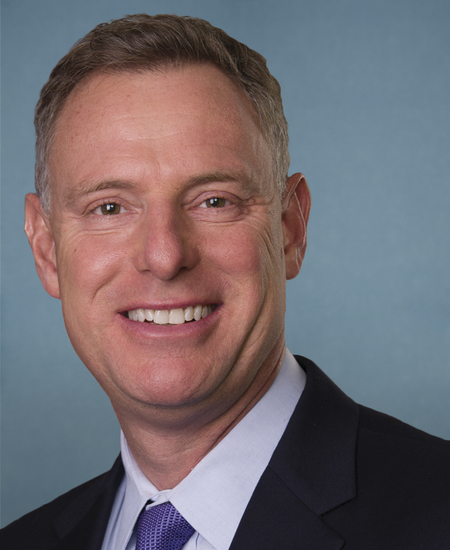
Rep. Scott H. Peters
Sponsored bills
Tracking COVID-19 Variants Act This bill expands viral genomic sequencing, disease surveillance, and other public health research activities. Specifically, the Centers for Disease Control and Prevention (CDC) must issue guidance on the sequencing of the virus that causes COVID-19 (i.e., coronavirus disease 2019). Additionally, the CDC must establish a program to strengthen genomic sequencing, analytics, and disease surveillance activities. As part of this program, the CDC must provide grants and technical assistance to health departments to build their capacity to carry out such activities. Furthermore, the National Center for Health Statistics (NCHS) must carry out a demonstration program to expand an existing program that links different federal data sets for statistical public health research, including research on food insecurity, housing instability, and other social determinants of health. In particular, the program must support linkages with the National Death Index, a database of death records maintained by the NCHS.
This resolution removes Representative Marjorie Taylor Greene from the House Committee on the Budget and the House Committee on Education and Labor.
Real Economic Support That Acknowledges Unique Restaurant Assistance Needed To Survive Act of 2021 or the RESTAURANTS Act of 2021 This bill temporarily establishes and provides funding for the Restaurant Revitalization Fund, from which the Department of the Treasury shall make grants to eligible food and beverage purveyors to cover specified costs such as payroll, operational expenses, and paid sick leave. For the grant program's initial period, Treasury must (1) prioritize awarding grants to marginalized and underrepresented communities, and (2) only award grants to eligible food and beverage purveyors with annual revenues of less than $1.5 million in 2019. For tax purposes, grant amounts are excluded from the recipient's gross income. An entity that received a loan under the Paycheck Protection Program established to support small businesses in response to COVID-19 (i.e., coronavirus disease 2019) may not apply for or use a restaurant revitalization grant for the same expenses for which the entity received the paycheck protection loan. Further, a grant applicant may request an additional amount to cover the cost of providing 10 days of paid sick leave to its employees. Treasury must report a list of grant recipients with the amount each recipient received, as well as demographics and other specified information.
Wage Increase Fairness Act This bill prohibits a state or municipality from establishing minimum wage requirements that treat independently owned franchises differently than other businesses based on the status of such franchises under federal law as distinct enterprises from their franchisors.
Supporting State and Local Leaders Act This bill repeals the prohibition against granting state and local governments a tax credit for paid sick and paid family and medical leave.
Designates the facility of the United States Postal Service located at 24930 Washington Avenue in Murrieta, California, as the "Riverside County Iraq and Afghanistan Veterans Memorial Post Office."
Family and Medical Insurance Leave Act or the FAMILY Act This bill entitles every employee to a family and medical leave insurance (FMLI) monthly benefit payment of two-thirds of the employee's regular pay, limited to a maximum of $4,000, for not more than 60 days of qualified caregiving. The bill establishes the Office of Paid Family and Medical Leave within the Social Security Administration to administer the FMLI program. An FMLI benefit payment must be coordinated with any periodic benefits received under a state or local temporary disability insurance or family leave program. The bill imposes a tax on employers, employees, and self-employed individuals to fund FMLI benefits. It also establishes the Federal Family and Medical Leave Insurance Trust Fund to hold tax revenues.
Air Traffic Noise and Pollution Expert Consensus Act of 20 21 This bill requires the Federal Aviation Administration to enter into an arrangement with the National Academies of Sciences, Engineering, and Medicine to examine and report on the various health impacts of air traffic noise and pollution.
This resolution identifies women's cardiovascular health as an important health care issue and supports gender-specific cardiovascular health research, prevention, and treatment.