

American Energy Independence from Russia Act This bill addresses U.S. energy security, the production of oil and gas, and the importation and exportation of oil and gas. Specifically, the President must submit an energy security plan that (1) evaluates U.S. crude oil, petroleum products, and natural gas imports and exports; (2) assesses the energy security risks of such imports; and (3) includes strategies to encourage increased domestic production of crude oil, petroleum products, and natural gas to offset Russian imports. The bill also approves the TransCanada Keystone Pipeline in Phillips County, Montana for the import of oil from Canada to the United States. In addition, the bill grants the Federal Energy Regulatory Commission the authority to approve or deny applications for facilities to export natural gas from the United States to foreign countries or import natural gas from foreign countries. The President and federal agencies must obtain congressional approval before (1) prohibiting or substantially delaying certain new energy mineral leases or permits on federal lands, or (2) withdrawing certain federal lands from mineral and geothermal leasing activities. The Department of the Interior must resume issuing oil and gas leases on federal lands and offshore submerged lands in the Outer Continental Shelf as specified under the bill. Finally, the bill limits the drawdown of petroleum in the Strategic Petroleum Reserve until the Department of Energy develops a plan to increase the percentage of federal lands leased for oil and gas production.
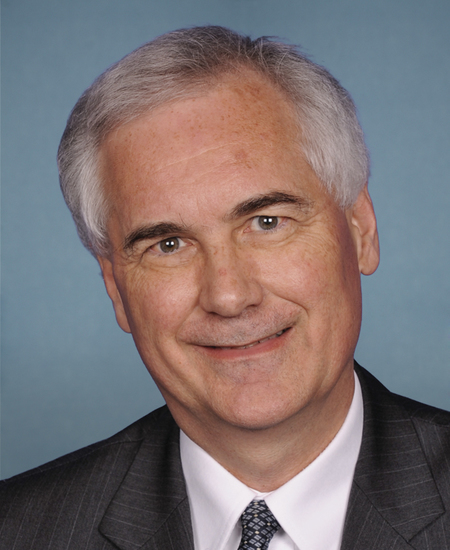
Rep. Tom McClintock
Sponsored bills
Stop the Nosy Obsession with Online Payments Act of 2022 or the SNOOP Act of 2022 This bill modifies requirements for third party settlement organizations to eliminate their reporting requirement with respect to the transactions of their participating payees unless they have earned more than $20,000 on more than 200 separate transactions in an applicable tax period. A third party settlement organization is the central organization that has the contractual obligation to make payments to participating payees (generally, a merchant or business) in a third party payment network. This reverses a provision in the American Rescue Plan Act of 2021 that lowered the reporting threshold to $600 with no minimum on the number of transactions.
Israel Anti-Boycott Act This bill prohibits participation by certain entities and individuals in boycotts or requests for boycotts imposed by international governmental organizations (i.e., the United Nations and the European Union). Specifically, the bill applies to covered persons the prohibition of specified actions in compliance with or in support of a boycott against a country that is friendly to the United States and that is not itself the object of a U.S. boycott. The bill defines a covered person as a domestic concern, the U.S. government or a state government, or a representative or official of such domestic concern or government. The bill also adds to the list of specified prohibited actions the act of furnishing information to any foreign country or international governmental organization that furthers an imposed boycott. Under current law, a person who violates the prohibitions against such boycotts may be subject to a monetary fine or imprisonment; however, the bill removes imprisonment as a potential penalty for certain violations.
Maddy summaryThis non-binding resolution, introduced in March 2022, calls for the House wing of the U.S. Capitol and House Office Buildings to reopen to the public, citing the unprecedented closure since March 2020 as the longest in history. It urges removing visitor restrictions like logs and prioritizing public access, noting that other state capitols and public venues operated safely during the same period. As a "sense" resolution, it does not mandate action but expresses the House’s position on restoring public access to a democratic symbol. The resolution specifically targets the House wing (not the full Capitol) and aims to encourage the Capitol Police and House leadership to act.
This joint resolution nullifies the rule titled Medicare and Medicaid Programs; Omnibus COVID-19 Health Care Staff Vaccination , which was issued by the Centers for Medicare & Medicaid Services on November 5, 2021. The rule requires health care providers, as a condition of Medicare and Medicaid participation, to ensure that staff are fully vaccinated against COVID-19.
Freedom to Fly Maskless Act of 2022 This bill restricts the authority of the Department of Health and Human Services and the Federal Aviation Administration to issue regulations or safety standards that apply to interstate travelers for preventing the spread of communicable diseases. Specifically, the bill prohibits regulations or safety standards that require an interstate traveler to (1) undergo screening, testing, or treatment (e.g., vaccination); (2) quarantine or isolate; or (3) wear a face covering.
This resolution recognizes the two-year anniversary of the November 2019 massacre by Iran. The resolution also condemns the human rights atrocities committed against Iranians by Supreme Leader Ayatollah Ali Khamenei. Finally, the resolution urges the Department of State to restore the recognized death toll of the November 2019 massacre to 1,500.
Upholding the 1995 Jerusalem Embassy Law Act of 2021 This bill prohibits using federal funds to establish any diplomatic facility in Jerusalem other than the U.S. Embassy to Israel.
Designates the facility of the United States Postal Service located at 120 4th Street in Petaluma, California, as the "Lynn C. Woolsey Post Office Building."
Strengthening Enforcement and Criminalizing Unlawful Records Enabling Flights Act or the SECURE Flights Act This bill prohibits the use of warrants and other documents issued by U.S. Immigration and Customs Enforcement (ICE) as proof of identification at airport security checkpoints unless the individual is leaving the United States pursuant to immigration laws. If an individual uses prohibited documents as a proof of identification, the Transportation Security Administration (TSA) must (1) inform ICE and local law enforcement to determine whether the individual is in violation of any term of release, and (2) collect the individual's biometric information unless the TSA can verify the individual is a U.S. national. The TSA must also submit the biometric information to a national biometric identification system.