

No Retaining Every Gun In a System That Restricts Your Rights Act This bill modifies the retention requirements for firearm transaction records of federal firearms licensees (FFLs) that go out of business. Current law generally requires FFLs that go out of business to deliver their firearm transaction records to the Bureau of Alcohol, Tobacco, Firearms and Explosives (ATF). This bill removes the requirement for FFLs that go out of business to deliver their firearm transaction records to the ATF. Further, the bill requires the ATF to destroy all out-of-business records it has collected from FFLs.
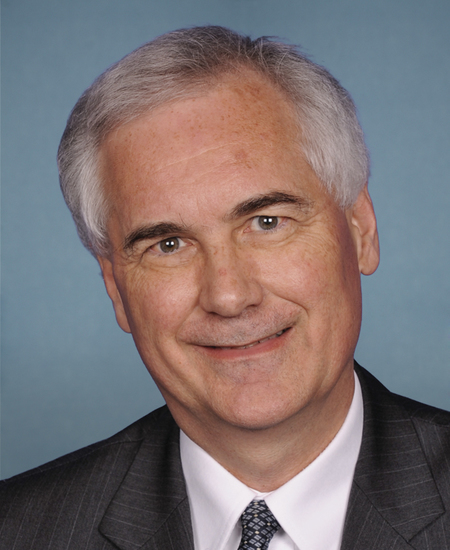
Rep. Tom McClintock
Sponsored bills
No Backdoor Gun Control Act of 2022 This bill removes the category of any other weapon from the definition of firearm under the National Firearms Act. The bill treats persons who acquire or possess any other weapon as meeting registration or licensing requirements under the National Firearms Act. The bill requires the Department of Justice to destroy any records relating to the registration of any other weapon not later than one year after the enactment of this bill.
Midland Over Moscow Act This bill imposes sanctions related to the Nord Stream 2 pipeline and revises the expedited approval process for natural gas imports and exports in or out of the United States. (Nord Stream 2 is a pipeline constructed to increase the export of natural gas from Russia to Europe.) Within 10 days of this bill's enactment, the President must impose sanctions on any entity responsible for the planning, construction, maintenance, financing, or operation of Nord Stream 2, as well as any corporate officer or principal shareholder with a controlling interest in such an entity. The bill also revokes the President's authority to waive certain sanctions related to Nord Stream 2 and TurkStream, another Russian natural gas pipeline project. The bill also allows any nation, with specified exclusions, to use an expedited process to receive approval to import or export natural gas in or out of the United States (currently only a nation with a free trade agreement with the United States may use the expedited process). Specifically, the bill excludes any nation (1) subject to U.S.-imposed sanctions or trade restrictions, or (2) excluded by the President or Congress for national security reasons.
No Taxpayer Funds for Illegal Immigrants Act This bill prohibits using federal funds pursuant to a federal contract, grant, loan, or cooperative agreement for any organization that provides legal representation or legal orientation for non-U.S. nationals ( aliens under federal law) who are unlawfully present in the United States and are placed in removal proceedings. The bill also prohibits using any federal funds for the Legal Access at the Border program, any successor programs, or federal solicitations for commercial products or services related to such programs.
States Reform Act This bill removes marijuana from Schedule I of the Controlled Substance Act and provides for federal regulation of marijuana in a manner similar to alcohol. Among other provisions, the bill establishes a federal permitting process for marijuana businesses, provides for federal oversight of interstate medical marijuana products, and creates an excise tax structure for marijuana.
Restoring America's Leadership in Innovation Act of 2021 This bill revises several aspects of patent law. The bill changes the U.S. patent system back to a first-to-invent system, in which the first inventor to conceive of an invention is entitled to a patent. Currently, the first person to file an application that meets all the necessary requirements is entitled to the patent. Several types of administrative patent challenge proceedings are abolished, as well as the Patent and Trademark Office (PTO) body that decides those proceedings. The bill relaxes the standard for what constitutes patent-eligible subject matter. The only ineligible inventions shall be those that exist in nature independent or prior to human activity or that exist solely in the human mind. The bill also makes it easier for a patent owner that has won an infringement case in court to secure a permanent injunction against the infringing defendant. Specifically, there shall be a presumption that further infringement would cause irreparable harm to the prevailing patent owner, and the burden shall be on the infringer to prove otherwise. (Currently, a prevailing patent owner seeking a permanent injunction must prove, among other things, that further infringement would cause irreparable harm.) The bill limits what types of publications shall be treated as prior art that could be used to make an invention be considered to be anticipated or obvious (and therefore not patentable). The bill authorizes the PTO to keep and spend all the fees that it collects.
Illegal Immigrant Payoff Prohibition Act This bill prohibits the payment of a settlement to an alien for a civil action brought against the United States in connection with the alien's inadmissibility to, or unlawful presence in, the United States.
Criminal Alien Removal Clarification Act of 2021 This bill subjects to deportation an alien who at any time after admission has been convicted of a felony or two misdemeanors under state or federal law. Currently, an alien is subject to deportation for a single conviction for certain felonies (such as an aggravated felony), two or more convictions for crimes involving moral turpitude, or being a drug addict.
Second Amendment is Essential Act of 2021 This bill directs the Department of Homeland Security to designate the business of importing, manufacturing, or dealing firearms, or importing or manufacturing ammunition, as a critical infrastructure sector. Additionally, the bill states that individuals who are employed by those entities are critical infrastructure workers. The term critical infrastructure means systems and assets, physical or virtual, so vital to the United States that the incapacity or destruction of such systems and assets would have a debilitating impact on security, national economic security, national public health and safety, or any combination of those matters.
Open America's Ports Act This bill allows foreign vessels to transport passengers between U.S. ports and places. (Under current law, such vessels generally must be built in the United States and owned and crewed by U.S. citizens.)